
When the Shipment Can’t Afford to Fail: The Case for White Glove Treatment
White glove treatment is a premium service standard defined by meticulous attention to detail, careful handling, and a complete end-to-end experience — far beyond what standard delivery provides.
Quick answer: What is white glove treatment?
| Feature | What It Means |
|---|---|
| Definition | A premium service level focused on careful handling, setup, and full in-home or in-facility placement |
| Core services | Scheduled delivery, room-of-choice placement, assembly, debris removal |
| Who needs it | Businesses shipping high-value, fragile, or complex freight |
| Key benefit | Reduces damage, protects brand reputation, and improves client satisfaction |
| Common industries | Furniture, medical equipment, electronics, fine art, fitness equipment |
Think about the last time a critical shipment arrived damaged. Or late. Or left at a loading dock with no one to move it.
For logistics managers handling high-value or fragile cargo, standard delivery simply isn’t built for what’s at stake. A missed delivery window doesn’t just inconvenience a customer — it can shut down a clinical environment, stall a hotel renovation, or damage an irreplaceable piece of equipment.
That’s the gap white glove treatment fills.
The concept has roots in domestic service standards, where white gloves were literally used to inspect furniture for dust and fingerprints — a symbol of zero tolerance for error. Today, the same principle drives a specialized tier of logistics built around one idea: nothing is left to chance.
At Pro Express Inc., with 17+ years of experience and 6,000+ shipments delivered nationwide, we’ve seen what happens when carriers cut corners on high-stakes freight. This guide explains exactly what white glove treatment involves, who needs it, and how to decide if your next shipment qualifies.
Important white glove treatment terms:
Defining the White Glove Treatment in Modern B2B Logistics
The Origins and Evolution of the White Glove Treatment
Historically, the term “white glove” conjured images of formal English butlers or meticulous inspectors running a gloved finger over a mahogany table to check for dust. In those days, white gloves served a dual purpose: they protected delicate surfaces from natural skin oils and fingerprints, and they acted as the ultimate test of cleanliness and precision.
Over the decades, this standard of meticulous care migrated from household estates into commercial service industries. Today, in modern B2B logistics, the white glove treatment has evolved into a comprehensive, high-touch fulfillment model. It transforms shipping from a basic, transactional handoff into a brand-enhancing experience.
When your operations rely on delivering critical assets, you are no longer just moving a box from Point A to Point B. You are managing a critical touchpoint. To understand how this standard applies to complex relocations and commercial projects, you can read more about the transition in this guide on What Is White Glove Moving Service and Is It Worth It?.
Standard Shipping vs. Premium White Glove Treatment
Standard shipping is designed for volume, speed, and efficiency at the loading dock. It operates on a “curbside” or “dock-to-dock” model. The carrier’s responsibility ends the moment the liftgate drops or the pallet is rolled onto the receiving platform. For standard cargo, this works perfectly.
However, when a shipment consists of fragile, oversized, or highly complex equipment, standard shipping introduces massive operational risks. If a standard carrier leaves a delicate server rack on an outdoor loading dock during a rainstorm, or expects a single unassisted driver to navigate a heavy medical device up a flight of stairs, project failure is almost guaranteed.
Premium white glove logistics reduces these physical and operational risks through intense preparation and specialized execution.

To see why this level of care has become the baseline for high-stakes projects, explore this analysis on Why White Glove Delivery Is the Gold Standard for Shipping.
The differences between these two operational tiers are distinct:
| Service Attribute | Standard Shipping | Premium White Glove Treatment |
|---|---|---|
| Delivery Point | Loading dock, curbside, or front door | Precise room-of-choice inside placement |
| Handling Crew | Single driver (unassisted) | Trained, multi-person specialized teams |
| Unpacking & Assembly | Receiver’s responsibility | Professional on-site assembly and setup |
| Debris Management | Packaging left on-site | Full debris removal and site cleanup |
| Scheduling | Broad multi-hour delivery windows | Precise, pre-coordinated appointments |
| Tracking & Visibility | Standard portal milestone tracking | Real-time GPS and proactive communication |
Core Components and Exclusions of Premium Final-Mile Delivery
What is Included in Premium Final-Mile Delivery?
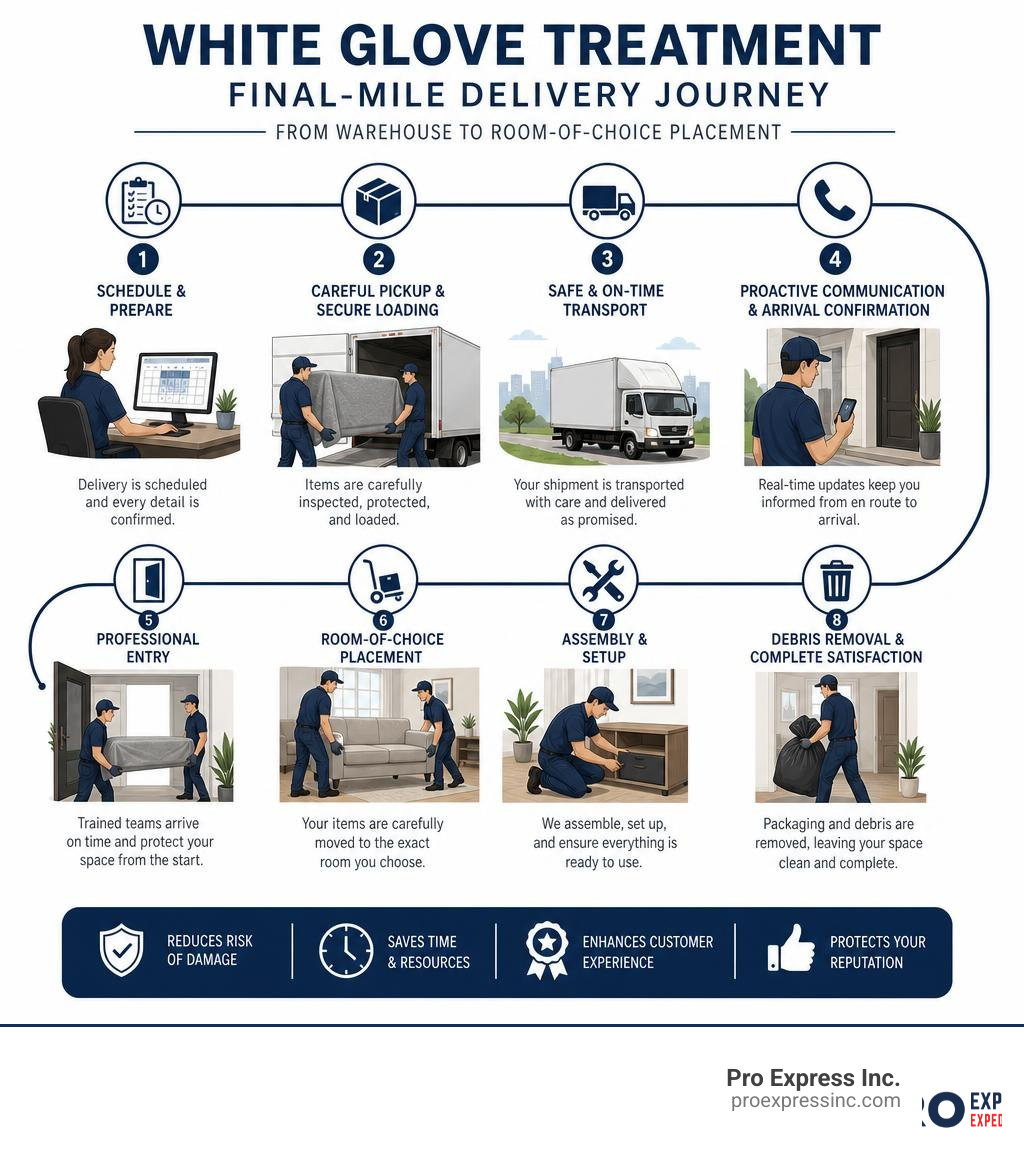
A true white glove service program does not start at the destination; it is an end-to-end operational protocol. The process is highly structured to ensure zero-defect execution.
- Pre-Delivery Coordination and Scheduling: Before the wheels even turn, dispatchers coordinate with the on-site team to confirm delivery windows, verify dock heights, identify potential obstacles (such as narrow hallways or freight elevator weight limits), and ensure the site is ready.
- Custom Crating and Packaging: Standard cardboard boxes are replaced with tailored wooden crates, custom foam inserts, corner protectors, and heavy-duty wrapping designed specifically for the cargo’s dimensions and fragility.
- Room-of-Choice Placement: Specialized crews transport the freight past the threshold, navigating stairs, elevators, and tight corridors to place the asset in its exact operational location.
- Professional On-Site Assembly: Technicians unpack, position, and assemble the equipment according to precise manufacturer specifications.
- Debris and Packaging Removal: All crates, plastic wrap, foam, and cardboard are immediately cleared from the facility, leaving the workspace clean and ready for immediate use.
For a deeper dive into how these steps are executed seamlessly during final-mile operations, consult our In-Depth Guide to White Glove Delivery.
Common Exclusions and Limitations of Specialized Logistics
While white glove logistics teams are highly trained, there are strict operational boundaries to ensure safety, regulatory compliance, and liability management. It is critical for operations managers to understand what specialized logistics crews cannot do:
- Licensed Trade Tasks: Logistics teams are not licensed electricians, plumbers, or structural engineers. They cannot hard-wire equipment into a building’s electrical grid, connect water lines to main building valves, or perform complex HVAC integrations.
- Structural Wall Mounting: Securing heavy displays, art, or medical monitors directly to structural studs often requires a licensed contractor. Logistics crews will place, assemble, and position items, but permanent wall alterations are typically excluded.
- Hazardous Materials (HAZMAT): Standard white glove crews are not equipped to handle or transport highly volatile chemicals, biohazards, or regulated hazardous waste unless specialized HAZMAT certifications are active for that specific run.
- Structural Alterations: If a piece of equipment does not fit through a doorway, the delivery crew cannot remove door frames, windows, or modify walls. Pre-delivery site surveys are designed to prevent these exact bottlenecks.
Key Industries Relying on Specialized High-Touch Shipping
High-Value Electronics and Medical Equipment
In the technology and healthcare sectors, shipping delicate equipment is a high-stakes endeavor. Servers, data center racks, MRI machines, and laboratory analyzers are highly sensitive to vibration, dust, and temperature fluctuations.

A single hard bump during transit can misalign optical sensors or ruin delicate calibration settings, resulting in severe operational downtime.
When delivering to clinical environments, the logistics crew must operate with extreme care, adhering to strict clean-room standards and avoiding disruption to active medical staff. This requires specialized equipment like air-ride suspension trucks, stair-climbing hand trucks, and non-marking floor protection.
To learn more about how specialized transit networks support these complex setups, review the industry capabilities highlighted at White Glove Shipping & Delivery Services.
Luxury Furniture, Fine Art, and Fitness Equipment
For high-end commercial spaces, luxury hospitality projects, and upscale offices, the delivery of designer furniture and fine art represents the final step in a long creative process. A single tear in custom leather upholstery or a scratch on an irreplaceable painting can derail an entire project.
Similarly, commercial fitness equipment—such as smart treadmills and heavy strength machines—demands specialized assembly and digital onboarding. The delivery team must position the equipment, assemble heavy steel frames, manage internal wiring, and verify connectivity to the facility’s network.
To see real-world examples of how premium brands leverage these services to protect their products, read our guide on 8 White Glove Service Examples That Redefine Luxury.
Operational Excellence: Technology, Training, and Measuring ROI
Technology and Training Requirements for Specialized Crews
Delivering a flawless premium experience requires a robust combination of advanced technology and intensive personnel training.
Modern white glove operations rely on integrated logistics platforms that provide real-time GPS tracking, predictive routing to bypass traffic bottlenecks, and digital proof-of-delivery (including instant photo documentation of the installed asset).
Equally important is the human element. Crews must undergo comprehensive training that covers:
- Specialized Handling Techniques: Proper use of two-person lift systems, straps, ramps, and specialized dollies.
- Product-Specific Assembly: Hands-on training with complex furniture, electronics, and mechanical systems.
- B2B Communication and Soft Skills: Professional interaction with site managers, engineers, and corporate clients, ensuring the crew blends seamlessly into a professional environment.
Measuring Success: Key Metrics and ROI
For operations and logistics decision-makers, choosing a premium service tier must translate into clear operational advantages. While standard shipping might seem functional on paper, the hidden costs of carrier failures, cargo damage, and delayed projects quickly add up.
According to industry data, 70% of organizations have suffered at least one project failure in the last year, often due to logistics breakdowns. Implementing a dedicated white glove program directly addresses this vulnerability:
- 95% Damage Reduction: Utilizing custom crating, air-ride suspension, and trained teams reduces transit and handling damage rates by up to 95% compared to standard freight.
- 30% Higher Repeat Business: Providing a seamless, hassle-free delivery experience dramatically improves brand reputation, leading to a 30% increase in customer retention and repeat contracts.
- 97%+ On-Time Delivery Rates: High-touch logistics providers maintain rigorous scheduling protocols, achieving on-time delivery rates above 97% for complex fitness and medical rollouts.
- 4.68/5 Customer Satisfaction Scores: Eliminating delivery friction results in exceptional client feedback and stronger business partnerships.
To evaluate how these operational metrics can safeguard your supply chain, read our detailed breakdown on Why Your Business Needs the White Glove Treatment for Shipping.
Frequently Asked Questions About Premium Shipping
What is the difference between final-mile and white glove shipping?
Final-mile shipping refers strictly to the last leg of the delivery journey, moving the product from a local distribution hub to the destination. It can be as simple as a curbside drop-off. White glove shipping is a highly specialized subset of final-mile delivery that adds value-added services, including inside placement, unboxing, professional assembly, and full debris cleanup.
How does premium handling reduce cargo damage?
Premium handling targets the primary causes of transit damage. It utilizes custom-engineered packaging and crating, transports items in specialized air-ride suspension vehicles to minimize road vibrations, and employs trained, multi-person handling teams who navigate tight spaces without dropping or bumping the cargo.
When should a business choose expedited white glove services?
A business should choose expedited white glove services when shipping high-value, fragile, or complex assets that must arrive on a strict, time-sensitive schedule. If a delayed or damaged delivery will result in immediate operational downtime, missed project deadlines, or compromised client relationships, the project demands expedited premium handling.
Conclusion: Partnering for Flawless Execution
When your reputation, operational uptime, and high-value assets are on the line, standard shipping is a risk you cannot afford to take. Every touchpoint in the final mile requires precision, speed, and absolute reliability.
At Pro Express Inc., we have spent nearly two decades perfecting the art of expedited logistics. With US-wide operations—including specialized coverage across North America, Alaska, and Hawaii—our team brings 17+ years of experience and a proven track record of over 6,000 successfully delivered shipments to every single project.
Our 99% client satisfaction rating is a direct result of our commitment to flawless execution. Whether you need same-day delivery, next-day delivery, hot-shot shipping, or a comprehensive white glove program, our 24/7 customer support team is always standing by to keep your business moving forward without delay.
Don’t let carrier failures or shipping damage stall your next critical project. Partner with the trusted experts in high-stakes logistics.
Request a Quote for White Glove Services from Pro Express Inc. today, or contact our dispatch team to secure your next urgent shipment.