
Why a Debris Removal Business Is One of the Most Profitable Service Businesses You Can Start
A debris removal business is a high-demand, scalable service operation — and if you run it right, it can be seriously lucrative.
Here’s a quick snapshot of what you need to know:
- What it is: A debris removal business hauls away construction waste, yard debris, estate junk, and commercial waste for residential and business clients.
- Startup costs: Roughly $2,000 to $25,000+ depending on whether you need a vehicle.
- Revenue potential: Owners report up to $200,000 per year in revenue, with profits reaching $80,000 annually.
- Growth ceiling: With the right systems, teams, and B2B contracts, some operators have scaled from $120,000 to over $1 million in annual revenue.
- Key differentiator: Specializing in commercial, industrial, or construction debris — rather than general junk — dramatically increases your earning power.
The market is real. The demand is consistent. And the barrier to entry is low enough that many operators start with a single truck.
But starting a debris removal operation and making it truly profitable are two different things. Most businesses stay small because they don’t build the right foundation — the right structure, equipment, pricing model, and client base.
This guide walks you through exactly how to build and grow a debris removal business that generates serious, sustainable revenue in today’s market.
Establishing a Professional Foundation for Your Debris Removal Business
To transition from “two people and a pickup” to a legitimate industrial logistics partner, you must establish a professional legal and regulatory framework. As of April 2026, the industry has become increasingly regulated, with a heavy focus on environmental compliance and safety.
We recommend starting with a formal business structure, such as an LLC. This protects your personal assets and provides the professional appearance necessary to secure high-value B2B contracts. Once registered, obtaining an Employer Identification Number (EIN) is essential for tax purposes and for hiring your first crew members.
In Debris Removal – Haul Away Maryland, professionalism is non-negotiable. You must secure comprehensive insurance coverage, including general liability and workers’ compensation. General liability protects you if a crew member accidentally damages a client’s property, while workers’ comp is vital given the physical risks associated with heavy lifting and industrial machinery.
Furthermore, check your local and state requirements for specific permits. In many regions, operating a debris removal business requires a Washington State Utilities and Transportation Commission (UTC) permit or its equivalent in your specific geography. Being fully licensed and permitted ensures that you are hauling and disposing of waste legally, which is a major selling point for commercial clients who cannot risk the liability of illegal dumping.
Essential Equipment for Your Debris Removal Business
Your fleet is the backbone of your operations. While you can start small, scaling requires specialized assets that increase efficiency.
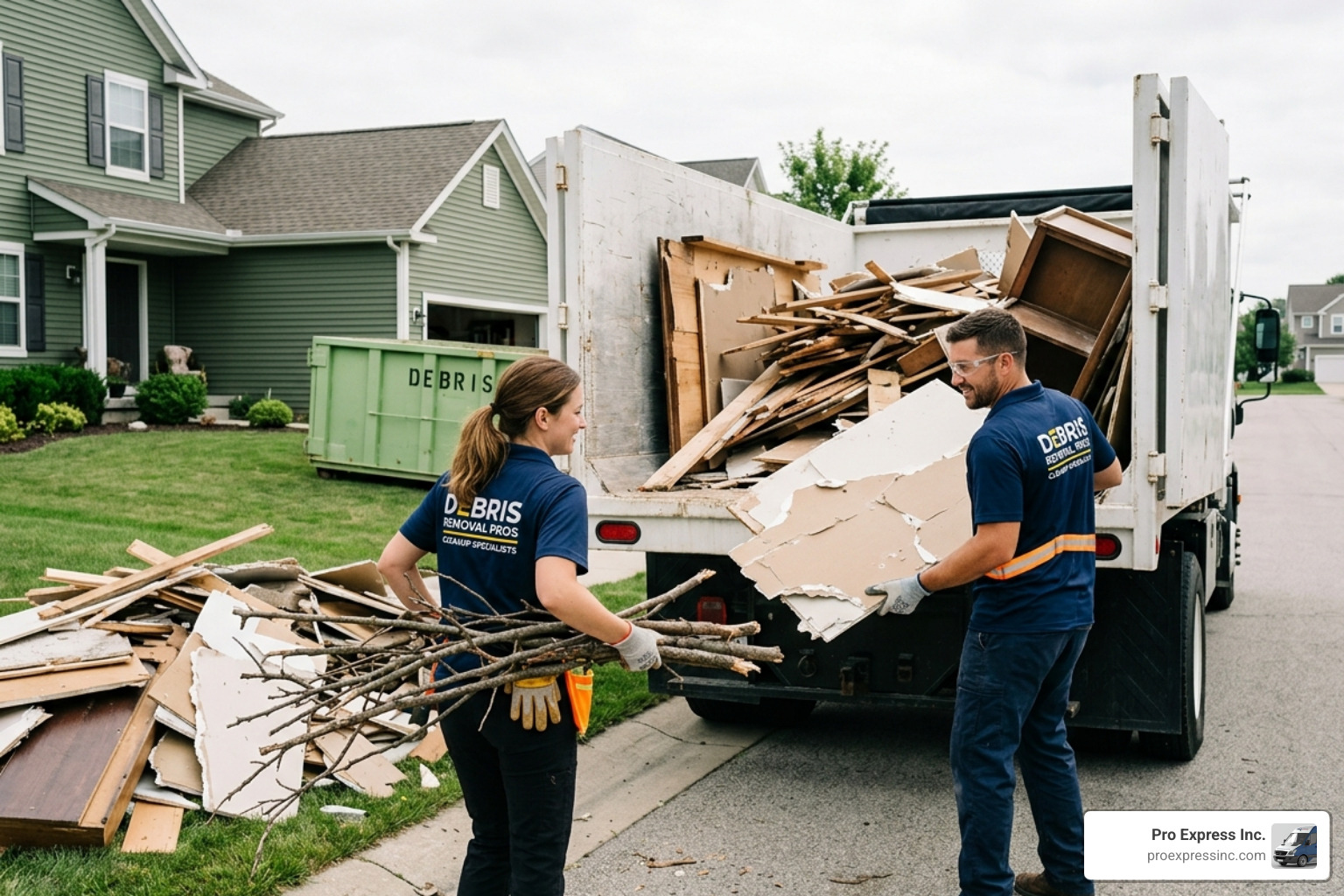
- Grapple Trucks: These are game-changers for bulk waste. A 60-yard grapple truck can handle massive loads of tree limbs or construction waste that would take hours to load by hand.
- Roll-off Containers: Offering various sizes (10, 20, 30, or 40 yards) allows you to cater to different project scales, from residential bathroom remodels to major commercial renovations.
- Compact Track Loaders: These machines make quick work of moving heavy piles of dirt, concrete, or asphalt, reducing the physical toll on your team.
- Industrial Wood Chippers: For businesses focusing on yard and tree waste, a chipper reduces volume on-site, allowing you to fit more into a single truckload.
- Safety Gear: Never skimp on high-visibility vests, steel-toed boots, puncture-resistant gloves, and hard hats. Professionalism starts with a team that looks and acts like they belong on a secure industrial site.
Strategic Growth for Your Debris Removal Business
Lucrative businesses don’t just wait for the phone to ring; they optimize their revenue streams. In the debris removal business, revenue optimization often comes down to your pricing model. Moving away from hourly rates toward volume-based or weight-based modeling ensures you are compensated for the actual resources used.
We have seen that the most successful operators integrate their hauling with broader Logistics Service offerings. This might include “hot-shot” debris removal for contractors who need a site cleared immediately to stay on schedule.
To achieve long-term scalability, focus on B2B contract acquisition. While residential one-offs are fine for filling gaps, property management partnerships and ongoing contracts with construction firms provide the predictable cash flow needed for expansion. By April 2026, market trends show that commercial clients are increasingly looking for “logistics partners” rather than just “junk haulers.” They want reliability, rapid response, and documented disposal chains.
Scaling Your Debris Removal Business with Technology
In 2026, pen-and-paper scheduling is a recipe for missed appointments and lost revenue. Modern software solutions allow you to manage your business from a smartphone.
- Scheduling Software: Automates dispatch and prevents overbooking.
- Real-Time Fleet Tracking: Allows you to give clients accurate ETAs and monitor driver behavior for safety.
- Automated Booking Systems: Enables clients to book and pay for services online, reducing administrative overhead.
- Digital Inventory Management: Tracks your roll-off containers so you always know which bins are at which sites and how long they’ve been there.
High-Volume Service Specializations and Market Differentiation
To stand out, you must offer specialized services that generalists avoid. High-volume specializations like warehouse decommissioning and large-scale land clearing command higher margins. Warehouse decommissioning, for instance, requires a sophisticated understanding of logistics, as you may be removing miles of racking, old pallets (pallet purges), and industrial equipment simultaneously.
When a disaster strikes, such as a hurricane or severe storm, the demand for urgent debris removal skyrockets. Having the equipment ready for immediate deployment allows you to serve as a critical part of the recovery infrastructure. This is where your expertise in Freight Service comes into play—moving massive amounts of material quickly and efficiently under pressure.
| Feature | Full-Service Debris Removal | General Junk Hauling |
|---|---|---|
| Primary Client | Commercial, Industrial, Contractors | Residential, Small Homeowners |
| Equipment | Grapple Trucks, Loaders, Roll-offs | Pickup Trucks, Small Trailers |
| Volume | High (15+ yards per load) | Low (1-5 yards per load) |
| Compliance | Industrial Logistics & UTC Permits | Basic Business License |
| Pricing | Volume & Weight Based | Per Item or Per Load |
Prohibited Materials and Compliance
A lucrative business is a compliant one. Taking prohibited materials can lead to massive fines and the loss of your operating licenses. Standard debris removal business operations generally exclude:
- Hazardous Waste: Chemicals, solvents, and lead-based paints.
- Asbestos: Requires specialized abatement certification and disposal protocols.
- Biohazards: Medical waste or items contaminated with bodily fluids.
- Chemical Disposal: Motor oil, gasoline, and pesticides.
Always have a list of local hazardous waste facilities to refer your clients to. Being helpful even when you can’t take the load builds trust and professional standing.
Operational Excellence and Sustainability Practices
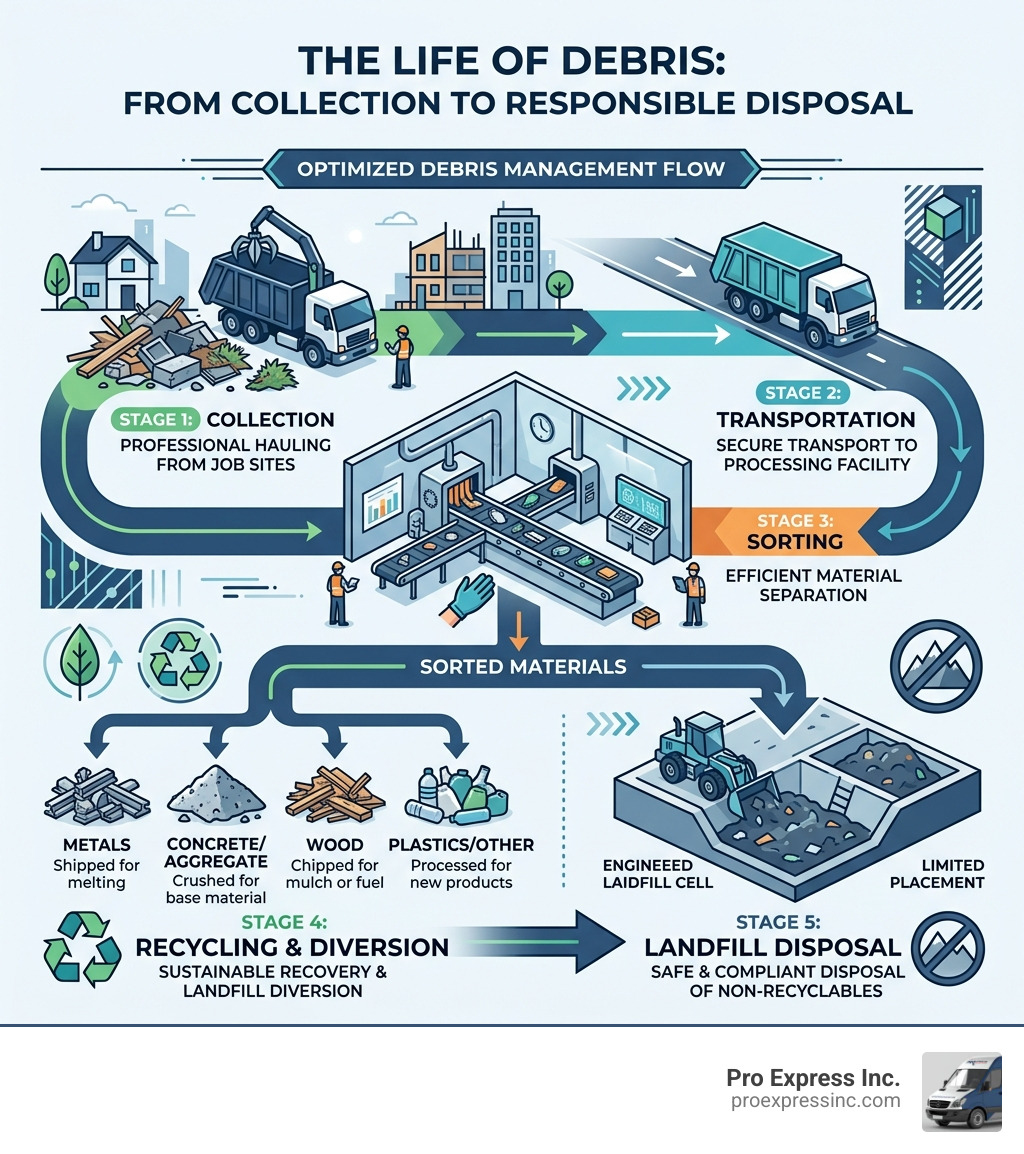
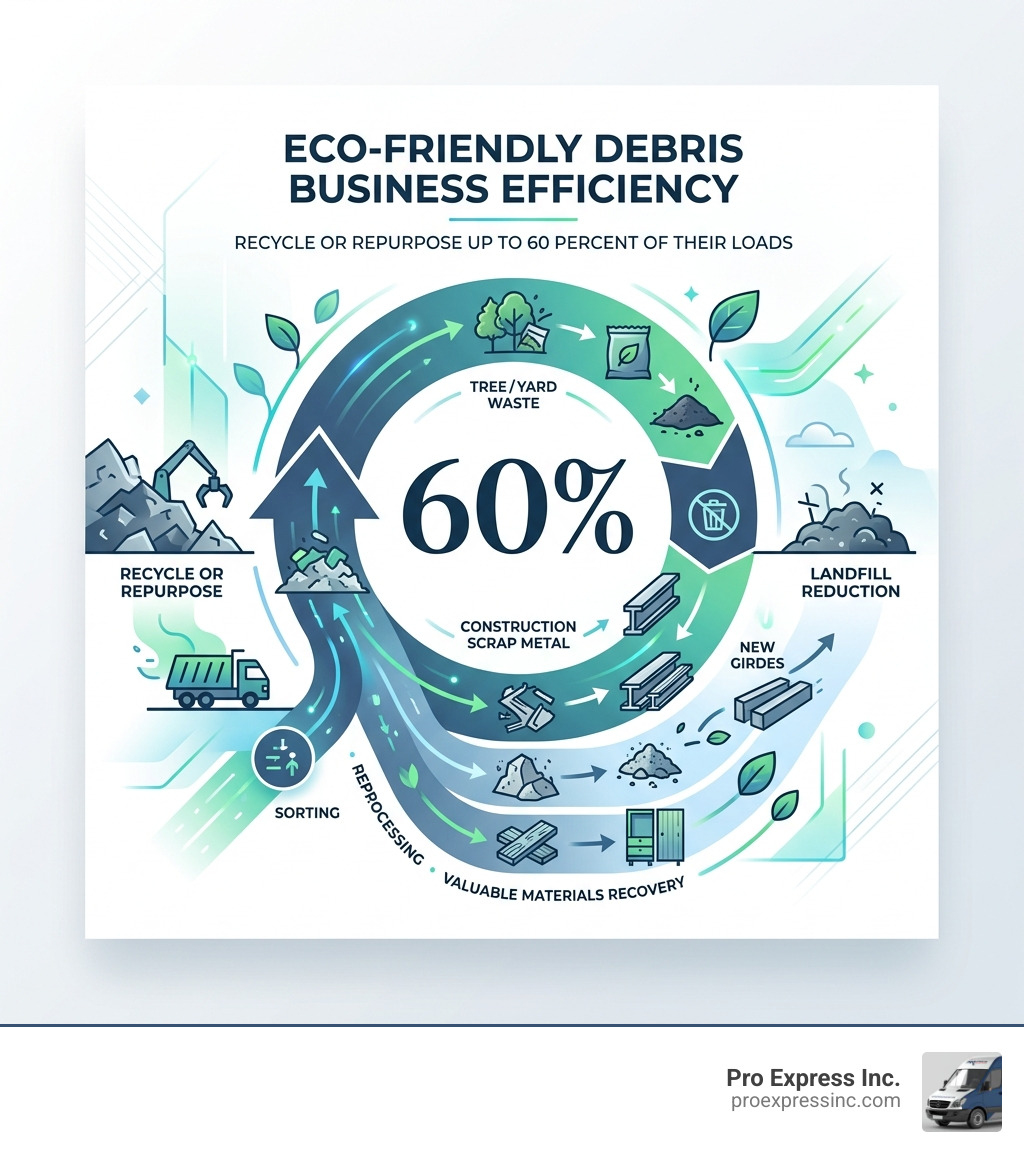
Sustainability is no longer just a “nice-to-have”—it is a core business requirement. Many commercial contracts now require “landfill diversion metrics,” meaning you must prove that a percentage of the debris you haul is being recycled.
Establishing Debris Eater style partnerships with recycling facilities is vital. For example, tree and yard waste can be processed into mulch or organic topsoil. Construction debris like scrap metal, wood, and concrete can often be sorted and sold to specialized processors.
By focusing on Other Services like organic waste processing, you turn a disposal cost into a potential revenue stream or, at the very least, reduce your tipping fees at the landfill. Eco-friendly branding also resonates deeply with modern consumers and corporate social responsibility (CSR) departments.
Hiring and Training for Safe Operations
Your team is your most valuable asset. Debris removal is physically demanding and inherently dangerous. Implementing strict heavy lifting protocols and equipment certification programs is essential for preventing injuries.
We recommend “team safety sweeps” at the start of every major job to identify potential hazards like overhead power lines or unstable ground. Background checks and drug testing are also standard for professional operations, ensuring that the people you send onto a client’s property are reliable and trustworthy. To improve retention, offer a clear career path—show your loaders how they can become equipment operators or dispatch managers.
Frequently Asked Questions about Debris Removal
What is the difference between debris removal and junk removal?
Junk removal typically focuses on residential items like old furniture and appliances. A debris removal business handles larger volumes of industrial, construction, and organic waste, often requiring heavy machinery like grapple trucks and skid steers.
What items are typically restricted from standard debris hauling?
Most providers cannot haul hazardous materials, including wet paint, asbestos, chemicals, motor oil, and biohazardous waste. These items require specialized transport and disposal permits that fall outside standard hauling licenses.
How is revenue calculated in a professional debris removal operation?
Revenue is usually calculated based on the volume (cubic yards) the debris takes up in the truck or the weight (tons) for heavy materials like concrete and dirt. Professional firms also factor in “drop fees” for roll-off containers and mileage for long-distance hauls.
Conclusion
Pro Express Inc. leverages nearly two decades of experience and a track record of over 6,000 successful shipments to provide the urgent, ground-expedited logistics support that modern businesses require. With a 99% client satisfaction rate and 24/7 customer support, we ensure your time-sensitive freight and industrial needs are met with absolute reliability. Contact Us Today to secure your next-day or hot-shot delivery solution.