
When Next Day Roses Delivery Can’t Afford to Fail
Next day roses delivery is exactly what it sounds like — ordering fresh-cut roses online and having them arrive at the destination the following day. But behind that simple promise is a complex logistics operation that depends on cold-chain integrity, tight cut-off windows, and reliable carriers.
How next day roses delivery works — quick answer:
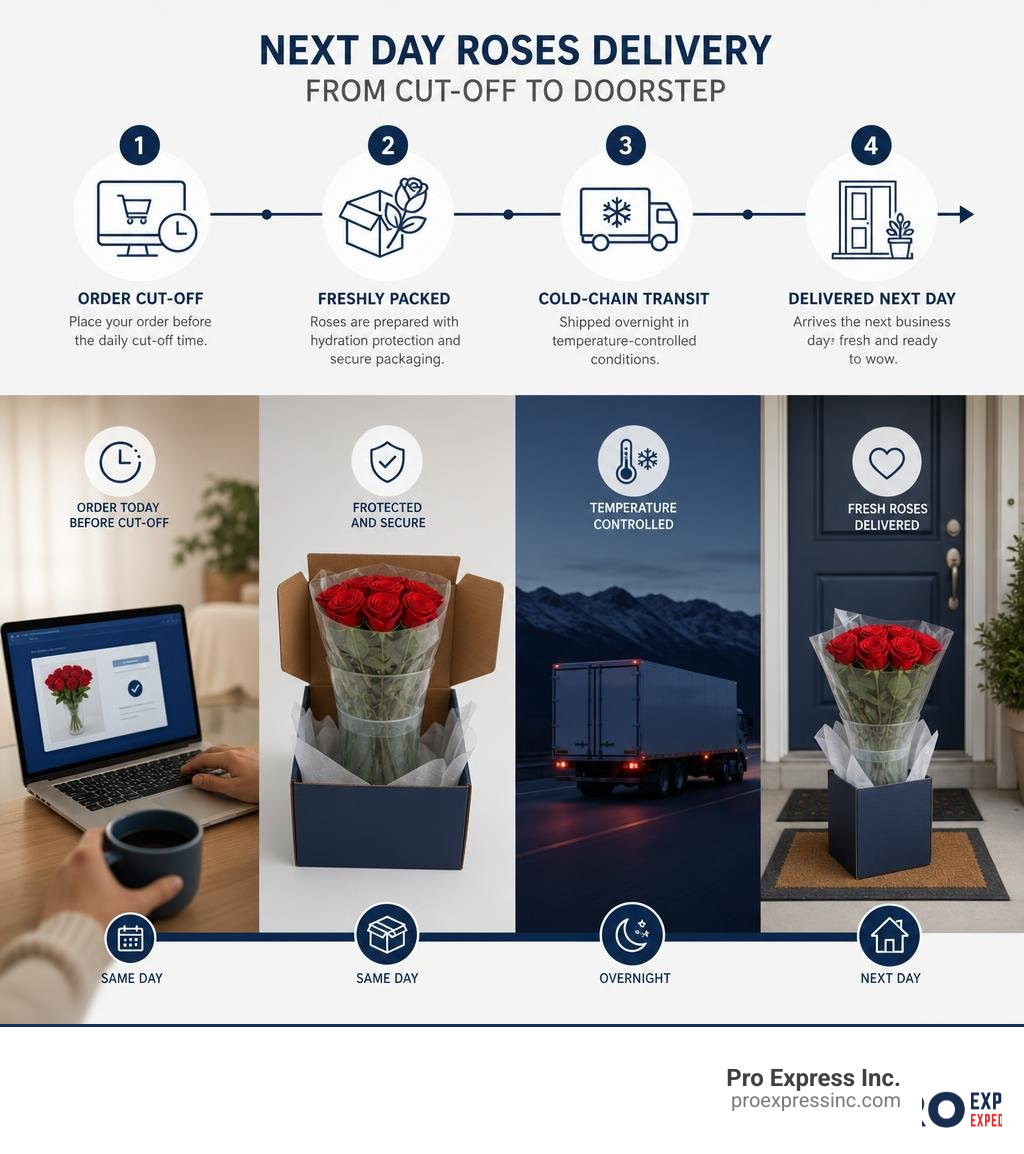
- Place your order before the florist’s cut-off time (typically 10 PM Mon–Fri, 4 PM Sat, 2 PM Sun)
- Roses are packed in hydration packaging and protective boxes to survive overnight transit
- A carrier picks up the shipment and delivers it the next business day
- The recipient receives fresh roses — provided nothing goes wrong in the chain
Next-day flower delivery now accounts for roughly 35% of all online flower orders in the U.S. That number reflects how much pressure is on the logistics side to execute flawlessly, every time.
Miss a cut-off. Ship without cold-chain controls. Use the wrong carrier. Any one of those failures means wilted roses and a missed occasion.
For logistics managers moving time-sensitive floral shipments — whether for a single high-value order or a bulk fulfillment operation — the stakes are real. Roses are perishable, fragile, and unforgiving of transit delays.
This guide breaks down exactly how to get next day roses delivery right, from cut-off times and packaging to carrier selection and last-mile challenges.
Essential next day roses delivery terms:
The Logistics Behind Next Day Roses Delivery
Moving a highly perishable commodity like fresh-cut roses overnight is one of the most demanding tasks in modern logistics. Unlike non-perishable freight, roses are living, breathing organisms that continue to respire after harvest. This means they consume stored sugars and release moisture and heat. If this respiration process is not tightly managed, the roses will deteriorate rapidly before they ever reach the recipient’s door.
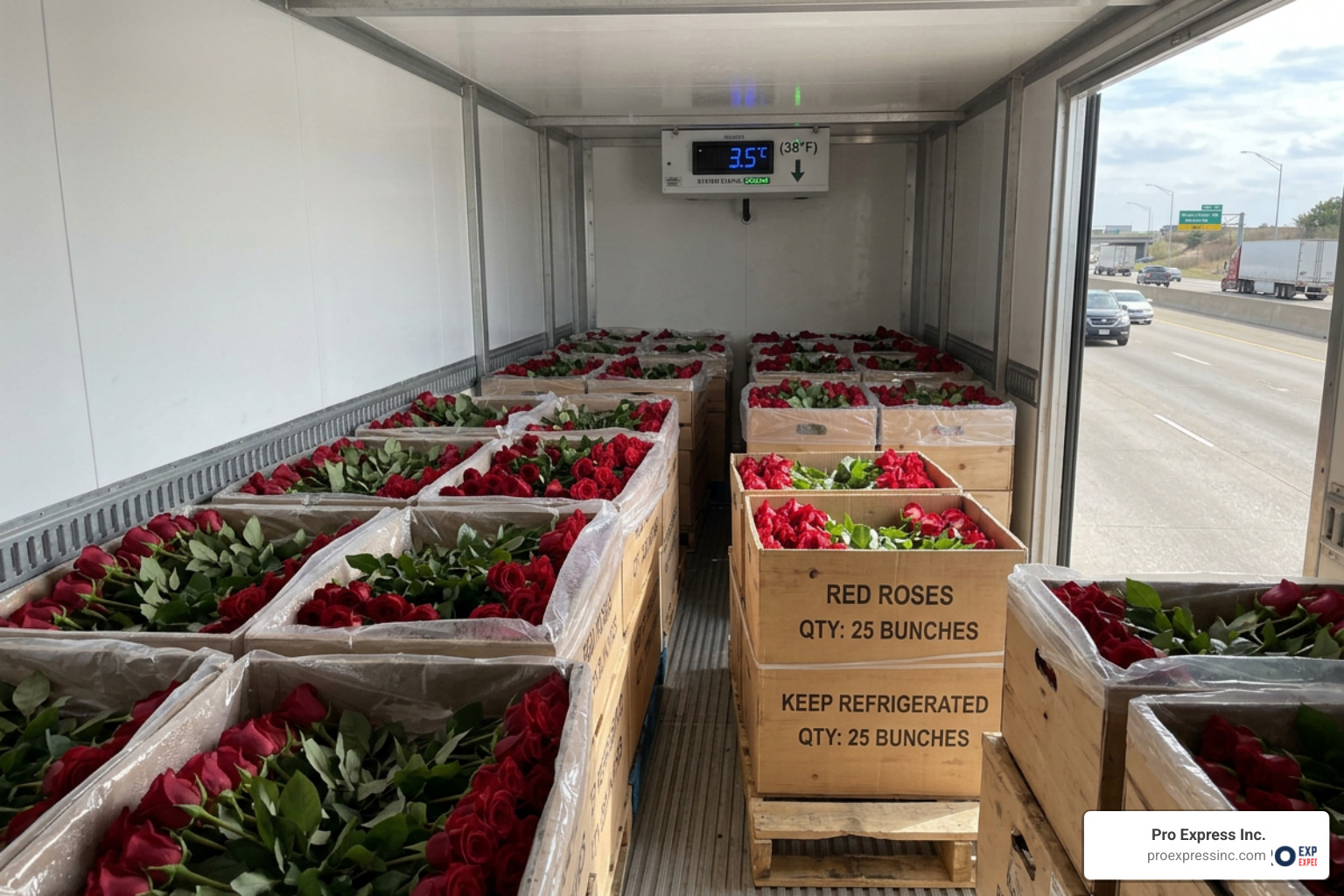
To prevent this, logistics operations must maintain strict cold-chain integrity from the moment the roses are harvested and processed at the farm until they are delivered. The optimal temperature range for shipping cut roses is between 0°C and 12°C (32°F to 54°F). Any exposure to temperatures outside this window—especially during cross-docking or overnight transit—accelerates the aging process.
Humidity management is equally critical. If the air inside the transit container is too dry, the roses will dehydrate, causing the petals to bruise and wilt. Conversely, if humidity is too high without proper ventilation, condensation can form on the petals, creating a breeding ground for gray mold (Botrytis cinerea).
Furthermore, roses are highly sensitive to ethylene gas—a natural plant hormone produced by ripening fruits and vehicle exhaust. Exposure to even trace amounts of ethylene during transit causes premature bud drop and petal shattering.
Because every hour in transit adds physical stress to the flowers, minimizing transit time is the ultimate goal. Understanding the fundamentals of Next Day Delivery 101 is essential for shippers who need to coordinate these rapid handoffs without breaking the cold chain.
How Cut-Off Times Impact Next Day Roses Delivery
In next-day logistics, the clock is the ultimate constraint. For a florist or fulfillment center to guarantee next-day arrival, they must enforce strict daily cut-off times. These cut-off times are not arbitrary; they are determined by the precise schedules of overnight transportation networks.
When an order for next day roses delivery is placed, a multi-step fulfillment process begins:
- Order Processing: The order is verified, and the gift card message is printed.
- Stem Selection and Conditioning: Florists select the freshest stems, trim them, and arrange them.
- Hydration and Packaging: The arrangement is secured in protective packaging with a hydration source.
- Carrier Hand-off: The packaged flowers are sorted and loaded onto outbound transport vehicles before the carrier’s final departure window.
If any of these steps are delayed, the shipment misses the carrier’s dispatch window, pushing the delivery back by an entire day—a critical failure for time-sensitive events like birthdays or anniversaries.
Different providers establish varying cut-off times based on their logistics partnerships. For instance, nationwide services like Next Day Flowers from The Bouqs Co. structure their operations around tight morning or early afternoon cut-offs to ensure packages can be processed and transferred to regional shipping hubs in time for overnight flights.
Similarly, online retailers like Farmgirl Flowers must align their daily order cut-offs with strict carrier pickup schedules to maintain their next-day shipping guarantees. In the UK market, platforms such as 123 Flowers and Moonpig leverage extensive regional courier networks to offer late-evening cut-off times, sometimes as late as 10 PM, by utilizing highly localized sorting hubs.
Packaging and Care Methods for Overnight Transit
To survive the physical rigors of overnight shipping, roses must be packaged using specialized materials and methods. They cannot simply be placed in a standard cardboard box and sent on their way.
- Aqua-Gel Wrap: To keep the stems hydrated without the risk of water leakage during transit, shippers wrap the cut ends in a specialized aqua-gel. This biodegradable, water-retaining gel slowly releases moisture to the stems throughout the journey, ensuring the roses do not dehydrate.
- In-Bud Shipping: Many premium rose bouquets are shipped “in-bud,” meaning the petals are closed when they leave the facility. Shipping in-bud protects the delicate inner petals from bruising and ensures the roses open gradually over several days once placed in a vase by the recipient, maximizing their overall display life.
- Structural Cushioning: Bouquets are typically arranged with delicate blossoms positioned in the center, shielded by sturdier foliage and durable greenery on the outside. They are then secured inside heavy-duty, corrugated cardboard boxes using custom inserts that prevent the arrangement from shifting during transit.
- Ventilation and Liners: Sturdy outer cartons feature precise ventilation holes to prevent heat buildup, combined with inner moisture-resistant liners that manage humidity levels and protect the box from structural softening.
Choosing the Right Shipping Method for Perishable Floral Shipments
For businesses managing high-value floral logistics, relying on standard parcel networks can be a high-risk gamble. Standard postal or parcel services route packages through massive, automated sorting hubs where delicate boxes are subjected to rough handling, conveyor belt drops, and prolonged exposure to unconditioned warehouse environments. A single carrier delay or missed connection in a standard network can leave a shipment of premium roses sitting on a hot loading dock, ruining the product.
To mitigate these risks, operations managers frequently turn to Expedited Ground Shipping. Dedicated expedited ground services bypass intermediate sorting hubs entirely. The shipment is loaded onto a dedicated vehicle and driven directly to the destination point, drastically reducing both transit times and physical handling. This direct routing minimizes the risk of carrier failure and ensures that temperature-sensitive cargo remains secure and intact.
Comparing Same-Day, Standard, and Next Day Roses Delivery
When planning floral shipments, logistics coordinators must weigh the trade-offs between delivery speed, geographic reach, and reliability.
| Shipping Option | Typical Transit Time | Geographic Reach | Reliability & Risk Level | Best Used For |
|---|---|---|---|---|
| Standard Delivery | 3 to 5 business days | Nationwide | High Risk: Prolonged transit increases the likelihood of dehydration, bruising, and temperature exposure. | Dried floral arrangements, hardy potted plants, or non-perishable floral supplies. |
| Next-Day Delivery | Overnight (under 24 hours) | Nationwide (including major regional hubs) | Moderate to Low Risk: Fast transit limits exposure; requires strict adherence to packaging and cold-chain protocols. | High-value fresh rose bouquets, time-sensitive corporate gifts, and nationwide romantic occasions. |
| Same-Day Delivery | 2 to 6 hours | Highly localized (major metropolitan areas only) | Low Risk: Direct local courier delivery with minimal handling, but highly vulnerable to local traffic delays. | Last-minute emergency gifts, local funeral arrangements, and immediate local celebrations. |
While standard shipping is unsuitable for fresh-cut roses due to the long transit times, same-day delivery provides maximum freshness but is limited by geography. Local florists, such as those offering premium arrangements through NYC Midtown Florist or regional services like Just Roses Flowers & More, excel at same-day local delivery because they operate within a tight geographic radius.
However, for nationwide campaigns, next-day shipping represents the optimal balance. By partnering with dedicated logistics networks like UrbanStems or premium exporters like Roses Only USA, shippers can access reliable overnight transportation networks that span the entire country, delivering fresh roses to almost any ZIP code within 24 hours.
Overcoming Regional and Last-Mile Delivery Challenges
The final mile of delivery is often the most complex and unpredictable phase of the entire logistics journey. This is especially true for perishable shipments traveling to remote locations or highly congested urban centers.
When shipping to remote or geographically isolated regions, such as Alaska and Hawaii, standard overnight ground networks are not an option. Perishable shipments destined for these states require seamless integration with specialized air cargo networks. Shippers must work with local experts who understand the unique regional logistics landscapes.
For example, delivering fresh florals in northern climates requires partners like Bagoys Florist or utilizing networks supported by Teleflora to navigate the vast distances and extreme winter temperatures of Alaska. Similarly, shipping to island destinations requires coordination with established Hawaiian entities, such as Beretania Florist or Honolulu Florist, to ensure that high humidity and tropical heat do not degrade the shipments during airport-to-doorstep transfers.
In dense urban environments like New York City, Chicago, or San Francisco, the challenges shift from vast distances to security and access barriers. Delivery couriers must navigate high-rise office buildings, secure apartment complexes, and strict doorman protocols.
If a courier cannot gain access to a building or if the recipient is not available to receive the package, the roses cannot simply be left on a busy sidewalk. Logistics providers must coordinate with building concierges, obtain pre-clearance for deliveries, or utilize temperature-controlled drop-off lockers to prevent the flowers from spoiling in the sun or freezing on a doorstep. Shippers looking to optimize these complex residential deliveries can find detailed strategies in our Next Day Shipping Guide.
Best Practices for High-Value Floral Shipments
To ensure that premium floral shipments arrive in pristine condition, logistics managers should implement several operational best practices:
- Deploy Real-Time Tracking: Utilize cellular-enabled data loggers inside high-value shipments to track location, ambient temperature, and humidity levels in real time.
- Establish Clear Delivery Protocols: Determine in advance whether a signature is required upon delivery. For residential deliveries, provide couriers with clear instructions on where to leave the package if the recipient is not home (e.g., with a doorman or in a shaded porch area).
- Optimize Delivery Windows: Schedule deliveries for morning windows to avoid leaving perishable items in delivery vans during the hottest parts of the afternoon. Shippers can learn more about securing these precise delivery slots by reading our Morning Delivery Guide.
Frequently Asked Questions
Which rose varieties are best suited for next-day shipping?
Not all roses are created equal when it comes to shipping durability. The best varieties for next-day transit are premium, long-stemmed roses (typically 60 to 80 cm in length) grown at high altitudes, such as those from the volcanic regions of Ecuador or Colombia.
High-altitude environments produce roses with thicker, sturdier stems, larger heads, and higher petal counts. These physical characteristics make them highly resilient to the vibrations and temperature fluctuations of overnight travel. Varieties like Freedom (a classic, robust red rose) and Mondial (a hardy, elegant white rose) are highly favored by shippers because they maintain an exceptional vase life of 7 to 10 days after arrival.
How do logistics providers keep roses fresh during transit?
Logistics providers maintain freshness through a combination of active and passive cold-chain controls. Passively, roses are packed in insulated thermal liners with gel ice packs and wrapped in moisture-retaining aqua-gel.
Actively, shipments are transported in temperature-controlled vehicles and held in refrigerated cross-dock facilities maintained at 2°C to 4°C. Proper air circulation inside the transport containers is maintained using ventilated cartons to prevent the buildup of heat and ethylene gas.
What happens if a next-day floral delivery is delayed?
If a standard carrier experiences a transit delay, a time-sensitive floral shipment is at extreme risk of spoilage. To mitigate this, shippers should partner with expedited logistics providers capable of executing rapid recovery operations.
If a primary air or ground link fails, an experienced logistics partner can deploy a hot-shot ground courier or a dedicated white-glove delivery team to intercept the shipment at the nearest hub and complete the delivery using temperature-controlled vehicles, rescuing the shipment before the product degrades.
Conclusion: Reliable Logistics for Critical Deadlines
When it comes to next day roses delivery, there is no room for error. A single logistics failure can turn a premium floral arrangement into a ruined product and a damaged relationship. Ensuring that these delicate, time-sensitive shipments arrive on time and in perfect condition requires a logistics partner with a proven track record of execution.
At Pro Express Inc., we bring nearly two decades of expedited shipping experience to every delivery. With US-wide operations—including specialized logistics capabilities in Alaska, Hawaii, and across North America—we specialize in managing high-stakes, time-sensitive shipments. Our 24/7 customer support, 99% client satisfaction rating, and history of delivering over 6,000 successful shipments make us the trusted choice when your regular carrier cannot guarantee the speed and care your cargo demands.
Whether you are moving high-value perishables, expedited ground freight, or urgent hot-shot shipments, we have the network and expertise to keep your supply chain moving without interruption.
Don’t leave your critical shipments to chance. Contact Us Today to request a fast, reliable shipping quote.