
When Expedited Overnight Shipping Keeps a Critical Deadline Alive
Expedited overnight shipping is a time-critical delivery option for freight that must arrive the next business day, often within a defined morning or end-of-day window. When a regular carrier misses a pickup, production is at risk, or a customer deadline cannot move, the right approach is to confirm the shipment’s ready time, dimensions, weight, pickup location, delivery deadline, and any handling requirements immediately.
For B2B teams, overnight service is not just “faster shipping.” It is a coordinated plan to move urgent freight through the right mode, whether that means priority air cargo or a dedicated ground hot-shot route.
Pro Express Inc. has spent nearly 20 years arranging urgent freight through a vetted carrier network. We help manufacturers, distributors, and medical suppliers coordinate reliable recovery options when standard transit fails and every hour matters.
This guide explains how overnight options differ from standard and expedited transit, what affects service availability, and how to prepare critical freight for an on-time handoff.
Basic expedited overnight shipping glossary:
Understanding Expedited Overnight Shipping: Velocity vs Standard Transit
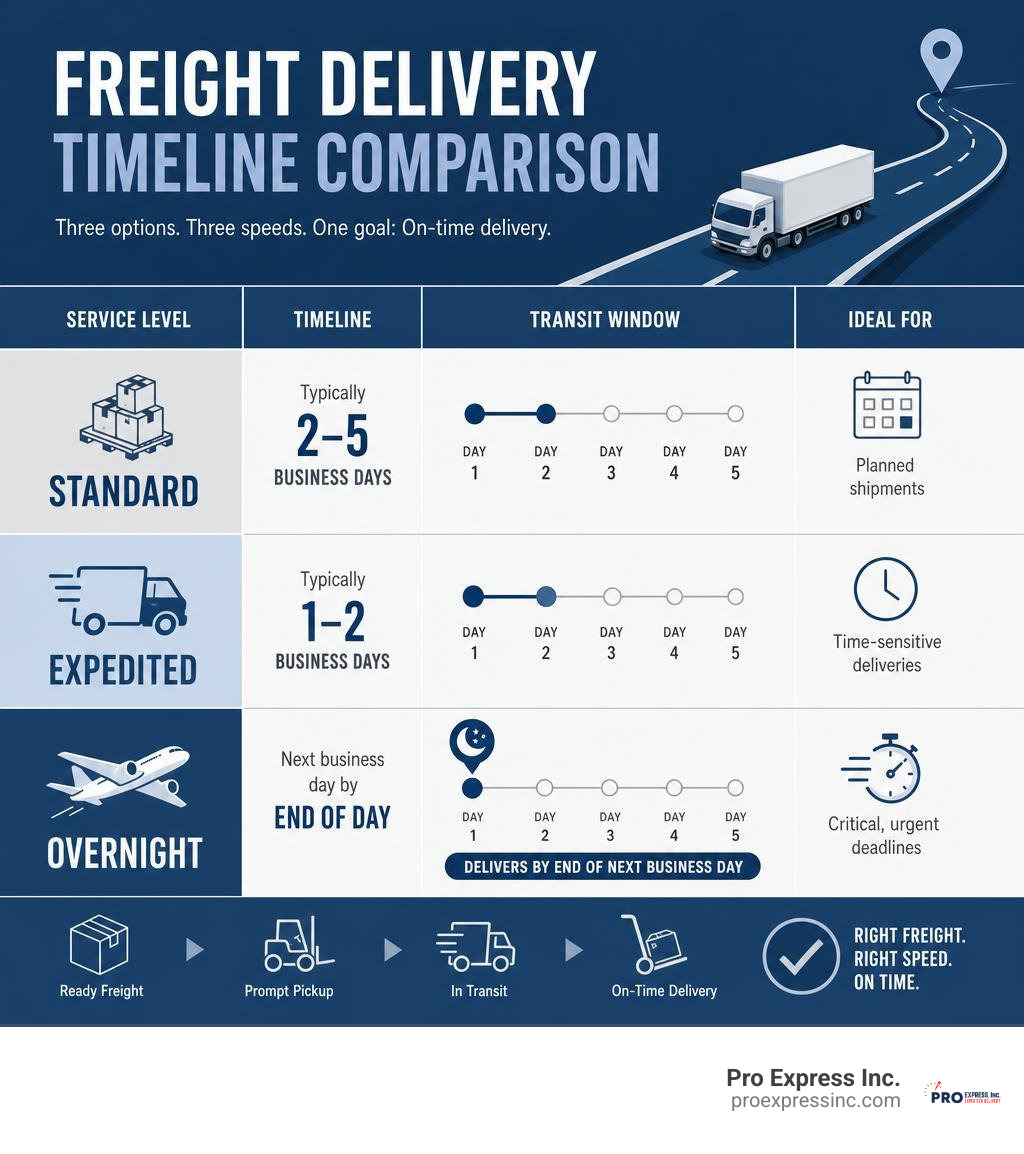
In modern supply chain management, delivery speed represents operational resilience. When assessing freight movement, logistics managers face three core speeds: standard transit, multi-day expedited transit, and guaranteed overnight delivery. Grasping what is expedited shipping in an industrial context requires looking past traditional parcel models to evaluate dedicated asset mobilization and direct linehauls.
Standard freight shipping moves through hub-and-spoke networks, sorting terminals, and scheduled consolidation points. While highly predictable for routine inventory replenishment, this model introduces multiple touchpoints and intermediate dwell times. If an assembly plant faces an unexpected component deficit, standard multi-day transit risks production shutdowns.
Expedited shipping reduces transit times by eliminating unnecessary consolidation steps, typically delivering within two to three business days. However, when a delivery window allows zero margin for delay, next-day transit becomes imperative. Understanding the distinction between overnight vs next business day differences ensures logistics coordinators select the precise service commitment required to meet their operational milestones.
| Shipping Tier | Typical Transit Window | Network Structure | Cargo Handling Profile | Primary B2B Application |
|---|---|---|---|---|
| Standard Freight | 3 to 5 Business Days | Hub-and-Spoke / LTL Terminals | Multiple cross-dock transfers | Routine warehouse restocking |
| Expedited Freight | 2 to 3 Business Days | Accelerated Linehaul | Minimized terminal handling | Buffer stock & critical restock |
| Overnight Shipping | Next Day (Morning to EOD) | Dedicated Direct Ground or Priority Air | Direct origin-to-destination transport | Assembly lines, emergency medical, critical parts |
Key Transit Windows in Expedited Overnight Shipping
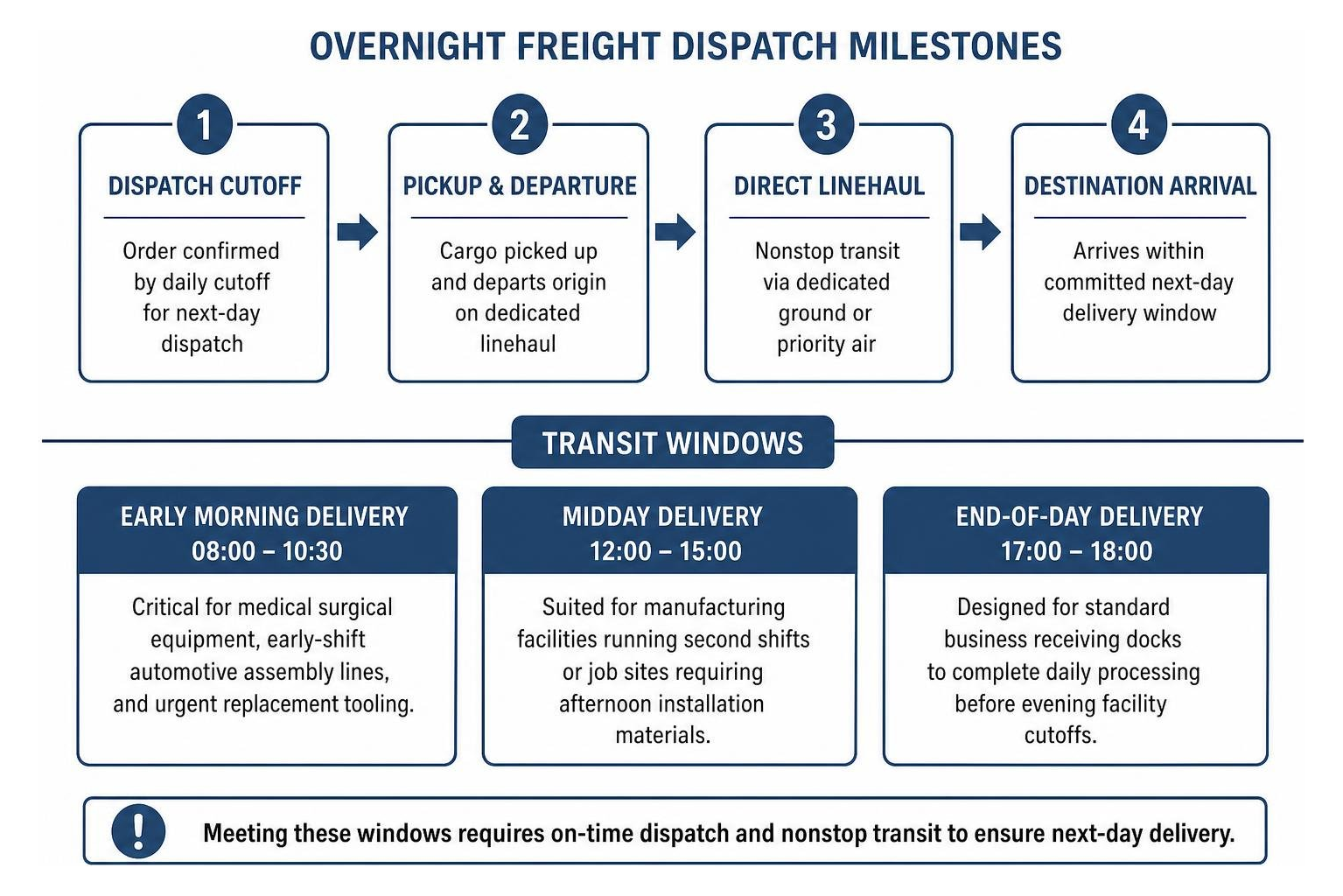
Overnight freight execution relies on strict transit commitments tailored to facility receiving schedules:
- Early Morning Delivery (08:00 – 10:30): Critical for medical surgical equipment, early-shift automotive assembly lines, and urgent replacement tooling.
- Midday Delivery (12:00 – 15:00): Suited for manufacturing facilities running second shifts or job sites requiring afternoon installation materials.
- End-of-Day Arrival (17:00 – 18:00): Designed for standard business receiving docks to complete daily processing before evening facility cutoffs.
Achieving these arrival targets requires strict adherence to dispatch cutoffs. Unlike standard shipping where missed windows result in minor delays, next-day freight demands precise coordination between production readiness, carrier dispatch, and linehaul departures.
Choosing Expedited Overnight Shipping for High-Value Industrial Freight
High-value, time-critical cargo requires specialized transport protocols. Standard consolidation exposes sensitive industrial freight to forklift damage, excessive vibration, and misrouting. Implementing an expedited ground freight strategy protects mission-critical assets across key sectors:
- Automotive Manufacturing: Moving stamped components, electronic control units, and powertrain subassemblies to prevent factory downtime.
- Medical & Pharmaceuticals: Transporting clinical diagnostic systems, surgical devices, and temperature-monitored lab supplies requiring unbroken custody chains.
- High-Tech & Industrial Machinery: Delivering replacement turbines, programmable logic controllers (PLCs), and precision robotics directly to operating facilities.
- Commercial Lighting & Construction: Coordinating scheduled job-site drops for architectural fixtures requiring liftgate deployment and inside delivery.
Operational Mechanics: How Time-Critical Next-Day Transit Works
Executing overnight delivery requires precise dispatch protocols and continuous transit visibility. When standard transportation networks encounter service disruptions or unexpected volume surges, utilizing a dedicated 24-hour shipping service allows shippers to bypass regional consolidation terminals entirely.

The operational process follows a clear workflow:
- Immediate Cargo Profiling: Evaluating actual weight, dimensional volume, packaging integrity, and delivery site constraints (such as dock availability or liftgate requirements).
- Dedicated Capacity Matching: Routing the shipment through specialized priority air cargo networks or dispatching a dedicated ground vehicle solely committed to that freight.
- Direct Point-to-Point Linehaul: Moving cargo directly from the pickup dock to the receiving facility without intermediate terminal sorting.
- Active Transit Monitoring: Utilizing expedited freight services tracking to provide real-time location updates and proactive milestone validation through final physical handoff.
Ground Hot-Shot vs Priority Air Cargo Execution
Choosing between dedicated ground transport and scheduled priority air cargo depends primarily on origin-to-destination distance and freight dimensions:
- Exclusive Hot-Shot Ground: For regional freight lanes (generally within 300 to 700 miles), dedicated ground transit provides rapid door-to-door transit. An exclusive vehicle—such as a sprinter van, straight truck, or dedicated flatbed—picks up at the shipper’s dock and drives straight to the destination. This approach eliminates air cargo cutoff constraints, airport transfer delays, and strict aircraft dimensional limits.
- Priority Air Cargo: For transcontinental shipments moving across long distances within North America, priority air solutions utilize scheduled freighter networks or commercial cargo space to traverse thousands of miles overnight, followed by dedicated ground courier recovery at destination airports.
Dimensional Capacity and Cargo Specifications
Overnight logistics requires careful management of dimensional weight (DIM weight) and physical vehicle payloads:
$$text{Dimensional Weight (lbs)} = frac{text{Length (in)} times text{Width (in)} times text{Height (in)}}{166}$$
When volumetric space exceeds actual physical mass, cargo aircraft and expedited linehauls calculate capacity based on dimensional volume. Ensuring accurate measurements of crated machinery, palletized skids, and custom packaging prevents payload rejections and equipment mismatches during critical dispatch windows.
Best Practices for Managing Urgent Next-Day Shipments
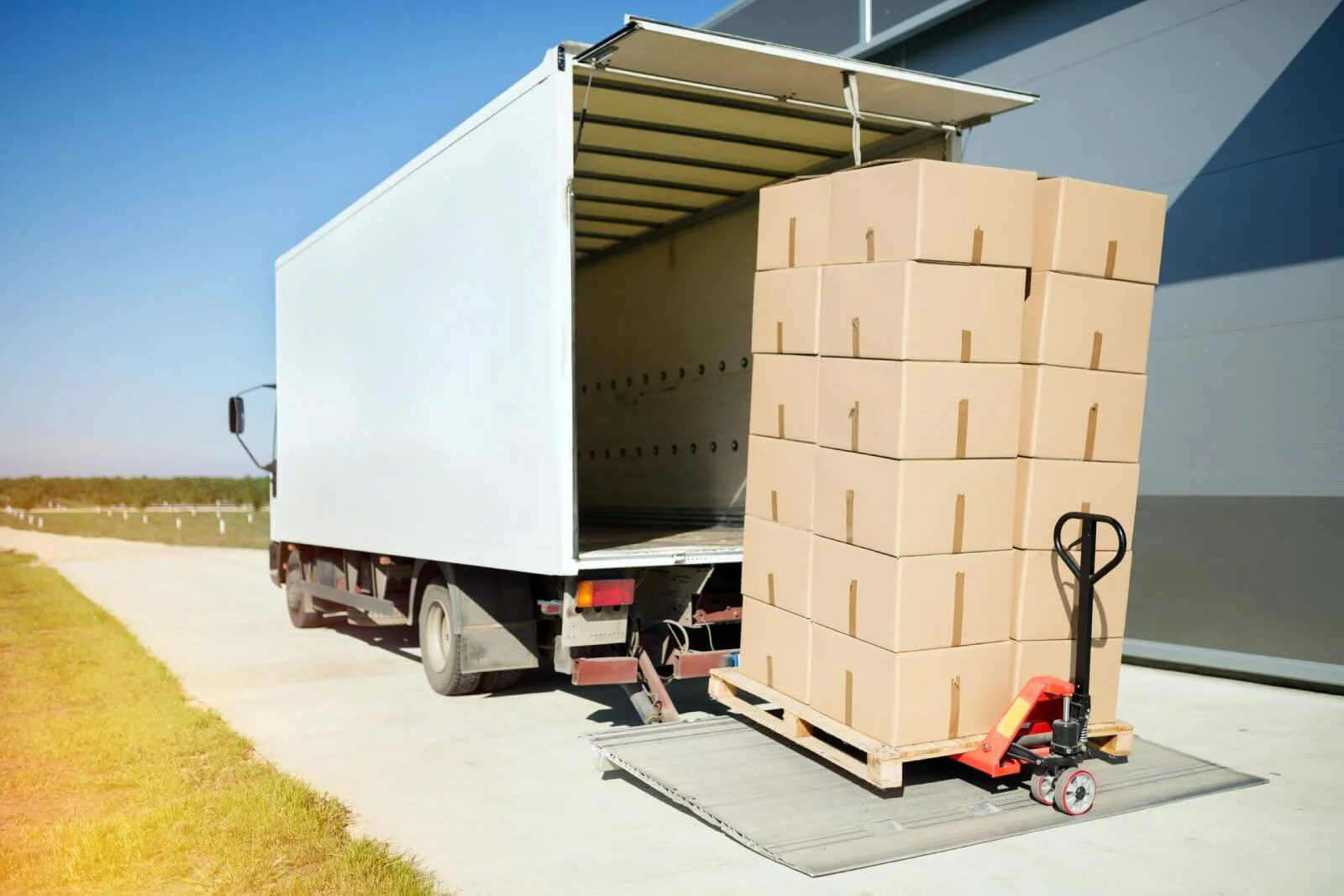
Ensuring on-time arrival for time-sensitive cargo requires rigorous dock-level preparation and strategic staging:
- Establish Clear Dispatch Cutoffs: Align facility manufacturing schedules with carrier transit parameters. Freight staged and documented by early afternoon ensures seamless linehaul integration.
- Stage Palletized Inventory for Direct Access: Keep urgent freight near accessible dock bays with clear labeling, avoiding double-stacking or obstruction by routine standard shipments.
- Ensure Structural Packaging Integrity: Use heavy-duty banding, edge protectors, and durable shrink-wrapping. Direct hot-shot moves experience fewer transfers than hub systems, but packaging must withstand high-velocity road transit.
- Specify Final Delivery Handling Requirements: Clearly state whether the receiving facility requires specialized equipment such as liftgates, inside delivery, two-man handling teams, or white-glove uncrating.
- Verify Complete Documentation: Ensure commercial invoices, bills of lading (BOL), and security declarations are complete and verified prior to driver arrival to prevent gate-release delays.
Hazardous Materials and Cargo Restrictions in Overnight Transit
Time-critical transit involves strict compliance standards, especially when dangerous goods or regulated commodities are involved:
- Lithium Batteries & Electronics: Class 9 hazardous materials, including standalone lithium-ion batteries and battery-powered industrial tools, face stringent packaging, labeling, and air-transport cargo-capacity limitations.
- Chemical Reagents & Industrial Fluids: Flammable liquids, corrosives, and oxidizing agents must comply with Department of Transportation (DOT) and hazardous material regulations, often restricting them to dedicated ground transport.
- Temperature-Sensitive Pharmaceuticals: Medical biologicals, specialized resins, and diagnostic specimens require dedicated thermal packaging, dry ice compliance documentation, or validated reefer equipment throughout transit.
- Oversized and Heavy Industrial Cargo: Machinery exceeding standard vehicle dimensions must be matched with appropriate flatbed, drop-deck, or specialized trailing equipment to ensure safety and compliance during next-day transit.
Frequently Asked Questions About Overnight Transit
What is the primary difference between ground expedited and overnight air transit?
Dedicated ground expedited services utilize exclusive-use vehicles that travel directly from origin dock to destination facility without intermediate stops or cross-dock transfers. Overnight air transit utilizes commercial or cargo aircraft linehauls to cross long distances, requiring initial airport drop-off, air sorting, flight transit, and final-mile delivery at destination airports.
How late can an urgent overnight shipment be dispatched?
Dispatch timing depends on the required transit mode and distance. For dedicated ground hot-shot transport, vehicles can often be arranged and dispatched 24 hours a day, immediately following cargo staging. Priority air cargo typically requires drop-off at airport freight facilities several hours before flight departure, establishing rigid late-afternoon cutoffs.
Can oversized or heavy palletized cargo move on an overnight schedule?
Yes. Heavy palletized freight and industrial machinery can move on overnight timelines through dedicated ground hot-shot networks utilizing straight trucks, dry vans, or flatbeds. By assigning exclusive capacity to the freight, oversized cargo moves continuously to meet the morning delivery schedule.
Conclusion
When standard freight schedules fail to meet urgent production milestones, successful execution depends on experienced brokerage coordination and clear communication. Pro Express Inc. brings nearly 20 years of freight brokerage expertise to high-stakes logistics, coordinating urgent shipments through a rigorously vetted carrier network across North America. Having coordinated over 10,000 time-critical shipments with a 99% client satisfaction rating, we help industrial, automotive, and medical enterprises protect their supply chains when deadlines cannot be compromised. Explore our comprehensive expedited logistics services to coordinate your critical next-day freight requirements.