
When an Exclusive Hot Shot Service Makes Sense
An exclusive hot shot service dedicates an entire commercial transport vehicle strictly to a single shipper’s urgent freight, providing direct point-to-point ground delivery without intermediate transfers, freight consolidation, or co-loading delays. This model safeguards critical production schedules by transporting high-priority industrial components, custom tooling, and machinery directly from origin docks to destination facilities.
When unexpected equipment failures, urgent maintenance schedules, or manufacturing bottlenecks threaten plant uptime, logistics coordinators must secure dedicated transportation quickly. Before arranging transport, dispatchers and plant managers should compile critical details, including exact freight dimensions, total weight, precise site access requirements, and dock timing windows.
Pro Express Inc. coordinates urgent ground freight throughout the contiguous United States through a vetted carrier network. Whether managing time-sensitive construction freight hot shot movements or critical industrial transfers like hot shot trucking Chicago corridors, dedicated ground transport eliminates unnecessary handling and transit interruptions.
What Defines an Exclusive Hot Shot Service in Industrial Logistics

In manufacturing logistics, timing and freight security remain central to plant productivity. Traditional freight distribution relies heavily on co-loading, where multiple shippers share space within a single trailer. In standard Less-Than-Truckload (LTL) setups, freight moves through regional terminals, break-bulk facilities, and cross-dock hubs. While this consolidated model functions well for general distribution inventory, it introduces multi-stop handling cycles, transit variability, and potential transfer risks that active assembly lines and time-critical industrial operations cannot afford.
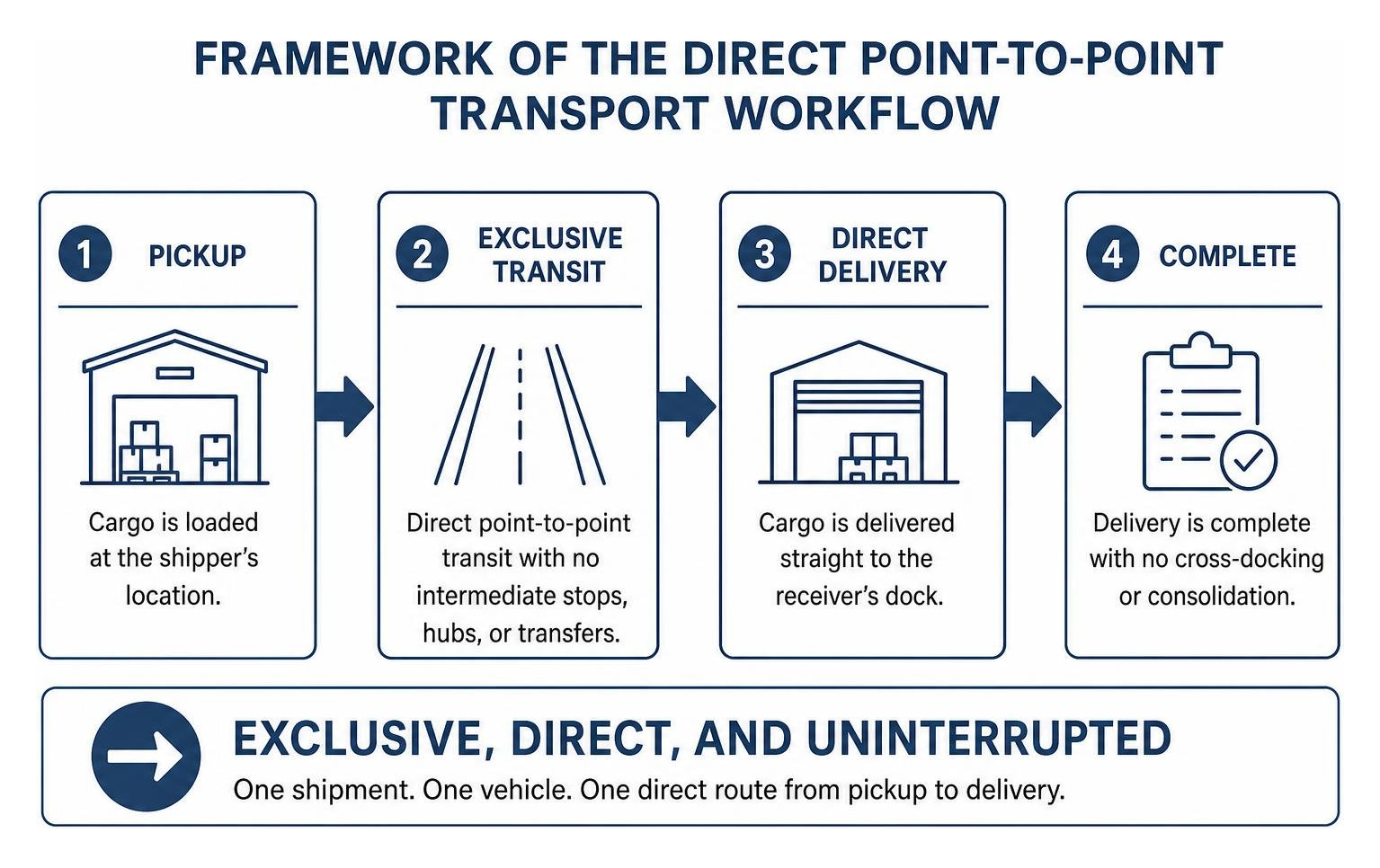
An exclusive hot-shot arrangement secures an entire vehicle solely for your cargo. As detailed in the ultimate guide to hot shot trucking services, dedicated ground transport moves cargo straight from your pickup point to the delivery dock without mid-transit cross-docking or consolidation stops. By assigning a dedicated vehicle to a single consignment, shippers bypass regional sorting hubs entirely, keeping freight secured on the initial trailer bed from origin loading until destination arrival.
| Operational Feature | Standard Hot Shot Hauling | Dedicated Hot Shot Hauling |
|---|---|---|
| Cargo Space | Shared among multiple shippers (LTL model) | 100% dedicated to a single shipper |
| Routing | Multi-stop routes with hub transfers | Direct point-to-point transit |
| Handling Risk | Multiple loading and unloading cycles | Zero handling between pickup and drop-off |
| Transit Speed | Variable based on other delivery windows | Optimized for rapid point-to-point delivery |
Commercial Vehicles and Trailer Configurations
Dedicated hot shot transport relies on specialized medium-duty and heavy-duty equipment matched to the dimensions, weight, and loading requirements of industrial freight:
- Super-Duty Pickups: Class 3, 4, and 5 commercial trucks (such as dual-rear-wheel models) provide the power, turning radius, and agility needed to access tight industrial yards, urban plants, and factory loading bays.
- Gooseneck Trailers: Attached via a ball hitch mounted in the truck bed directly over the rear axle, goosenecks provide enhanced stability, superior weight distribution, and higher carrying capacities for dense, heavy machinery components.
- Lowboy and Dovetail Trailers: These open-deck options provide lower clearance profiles and integrated loading ramps, allowing technicians and riggers to load tall equipment or roll-on industrial machinery safely.
- Flatbed and Bumper-Pull Trailers: Standard flatbeds allow rapid side-loading with forklifts, overhead cranes, or dock equipment, while bumper-pull trailers excel for shorter, lighter freight runs requiring fast turnaround.
Compliance, Licensing, and Weight Thresholds
Operating commercial ground transport requires strict adherence to federal and state transportation safety standards. According to Federal Motor Carrier Safety Administration commercial driver regulations, vehicle combinations with a Gross Vehicle Weight Rating (GVWR) exceeding 26,000 pounds require the driver to hold a valid Commercial Driver’s License (CDL).
Carriers operating setups with a combined truck-and-trailer GVWR of 26,000 pounds or less can operate as non-CDL hot shot transporters. However, all interstate hot shot carriers must maintain active USDOT authority, Motor Carrier (MC) operating authority, up-to-date BOC-3 process agent filings, required public liability coverage, and compliance with the International Fuel Tax Agreement (IFTA).
Strategic Value of Dedicated Hot Shot Transport for Plant Operations

Factory floors operate on precise synchronization across fabrication, sub-assembly, and final testing. When a stamping press fails, a robotic weld arm malfunctions, or a crucial raw material component is missing, an entire production shift can stall. Partnering with a dedicated logistics specialist helps safeguard your supply chain against unplanned downtime, as outlined in our guide on why your business needs a hot shot delivery partner.
Coordinating with the best hot shot freight haulers and parts delivery services ensures your high-priority machinery, custom tooling, and critical replacement parts travel under continuous supervision with point-to-point routing.
Integrating an Exclusive Hot Shot Service into Just-In-Time Assembly
Just-In-Time (JIT) manufacturing keeps warehouse footprints lean by timing part arrivals to match real-time assembly schedules. When a tier-one supplier encounters production delays or machinery breakdowns, standard delivery channels cannot make up the lost ground.
Using hot shot delivery small trucks for big deadlines bridges these operational gaps. Dedicated vehicles can be dispatched at specific hours to keep assembly lines moving, allowing plant managers to maintain lean inventory buffers without risking costly work stoppages. Because the freight does not mix with other cargo, receiving docks can plan precise unloading schedules that align directly with technician availability.
Mitigating Production Stoppages and Equipment Failures
A single damaged component inside a consolidated LTL trailer can ripple across an entire operation. Because dedicated ground transport eliminates intermediate freight handling and terminal sorting, equipment moves securely from origin to destination without unnecessary touchpoints. Direct transit protects fragile calibration instruments, high-precision molds, and custom assemblies from the shift-and-settle damage commonly associated with multi-stop freight networks.
How to Implement Dedicated Logistics for High-Priority Freight
Setting up an expedited transport protocol before an emergency occurs keeps plant managers, maintenance supervisors, and supply chain directors prepared. When an urgent need arises, knowing the 5 critical steps to find an emergency hot shot courier service helps streamline your team’s response and minimizes operational delays.
Key Criteria for Selecting an Exclusive Hot Shot Service Carrier
When evaluating transportation brokers for dedicated freight, logistics decision-makers should focus on these core capabilities:
- Vetted Carrier Network: Ensure the freight brokerage enforces strict carrier vetting procedures, verifying active operating authority, safety ratings, vehicle inspections, and adequate commercial insurance limits before dispatch.
- 24/7 Dispatch Coordination: Manufacturing disruptions happen around the clock. Your logistics partner must provide continuous dispatch coordination, proactive communication, and real-time support day or night.
- Clear Documentation: Transparent proof-of-delivery (POD) confirmations, time-stamped pickup signatures, and electronic bills of lading keep receiving supervisors fully informed.
- Equipment Versatility: Access to diverse trailer configurations, including flatbeds, lowboys, goosenecks, and dovetails, ensures exact matching for oversized or irregularly shaped cargo.
Telematics and Real-Time Tracking Integration
Modern industrial transport relies on GPS telematics and electronic logging devices (ELDs). These digital systems provide end-to-end visibility throughout the shipment’s journey:
- Continuous Location Tracking: Plant managers can monitor vehicle progress across transit corridors and prepare dock teams and unloading machinery for immediate receiving upon arrival.
- Dynamic Route Monitoring: Dispatch coordinators can identify traffic congestion, road closures, or adverse weather conditions early, communicating with drivers to plan efficient alternate routes across the contiguous United States.
- Automated Milestone Notifications: Automated check-in alerts keep receiving teams updated at initial pickup, intermediate geographic checkpoints, and final drop-off.
Frequently Asked Questions About Exclusive Hot Shot Transport
How does an exclusive hot shot service differ from standard hot shot trucking?
An exclusive hot shot service reserves an entire vehicle for a single customer’s shipment, eliminating freight co-loading and multiple delivery stops. Standard hot shot trucking often combines multiple less-than-truckload shipments onto one trailer, which can add transit time and increase handling across regional consolidation yards.
Is a CDL required to operate an exclusive hot shot vehicle?
A Commercial Driver’s License is required whenever the combined Gross Vehicle Weight Rating (GVWR) of the truck and loaded trailer exceeds 26,000 pounds. Vehicle and trailer setups rated at 26,000 pounds or less can operate without a CDL, provided the carrier complies with all other federal motor carrier regulations, including DOT registration and hours-of-service rules.
Which manufacturing sectors rely most on exclusive hot shot ground transport?
Automotive assembly plants, industrial machinery manufacturers, aerospace fabrication facilities, medical equipment suppliers, and commercial lighting producers rely heavily on dedicated ground transport. These sectors operate on strict production schedules where a delayed component or specialized machine part can interrupt critical assembly shifts.
How quickly can dedicated ground freight be coordinated during an urgent line-down situation?
Dedicated ground transport can be coordinated rapidly through 24/7 brokerage dispatch networks across the contiguous United States. Dispatchers immediately match load specifications with qualified nearby carriers operating appropriate trailer configurations, ensuring direct pickup and immediate non-stop transit to the destination facility.
Conclusion
Manufacturing supply chains require precision, speed, and clear communication. When emergency replacement parts, urgent production tooling, or critical sub-assemblies must move without delay across the contiguous United States, using dedicated ground transport protects your project timelines.
Pro Express Inc. coordinates seamless, reliable freight solutions through a vetted carrier network across the lower 48 states. As an expedited freight broker in business since 2007, we bring nearly 20 years of experience to your supply chain challenges, having coordinated over 10,000 delivered shipments with a 99% client satisfaction rate and long-standing clients who have partnered with us for over 13 years. Learn more about our specialized exclusive hot shots options to keep your operations running smoothly.