
How to Judge Hot Shot Delivery Reviews Before You Book
To judge hot shot delivery reviews effectively, logistics managers must look past aggregate star ratings and evaluate specific operational details such as pickup punctuality, driver communication, equipment suitability, and cargo securement. Patterns of recurring delays or mechanical breakdowns signal operational risks. Direct verification of carrier qualifications and transit plans ensures reliable execution for urgent freight.
A single positive review merely records a past trip under specific conditions; it cannot confirm whether a carrier is equipped and prepared for your urgent shipment. Industrial manufacturers, automotive facilities, and energy operations require consistent execution on every run. When evaluating prospective transport partners, supply chain leaders must analyze technical feedback, equipment readiness, and communication discipline.
This guide breaks down what online feedback reveals, what standard ratings hide, and how Pro Express Inc. coordinates urgent ground shipments through a thoroughly vetted carrier network.
Key resources for evaluating ground transport solutions:
- Understanding what is a hot shot delivery
- Selecting a reliable hot shot delivery partner
- Evaluating specialized rapid response courier service options
Evaluating Carrier Performance Through Hot Shot Delivery Reviews
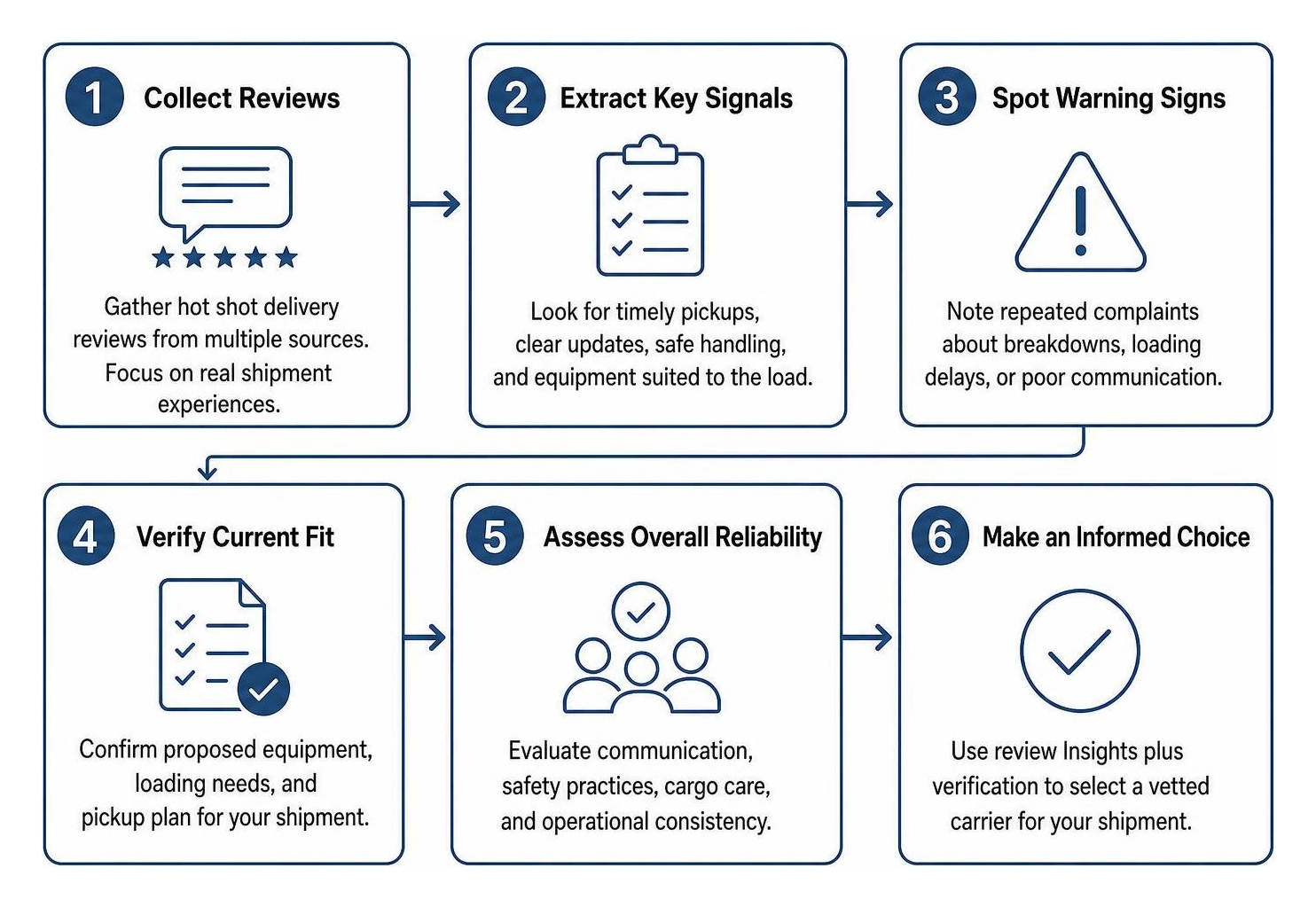
When industrial components fail, energy production halts, or automotive assembly lines face an imminent shutdown, logistics and plant managers cannot tolerate transit disruptions. Choosing the right ground transport partner requires a thorough analysis of past performance histories, driver safety discipline, and equipment standards. Analyzing verified hot shot delivery reviews provides valuable operational intelligence into whether an expedited carrier network maintains rigorous standards across point-to-point routes.
A high-value review profile goes far beyond simple on-time arrival timestamps. Meaningful feedback documents proactive dispatch updates, adherence to stringent safety protocols, proper weight distribution, and meticulous cargo securement during direct ground transit across the contiguous United States.
What Verified Hot Shot Delivery Reviews Reveal About Equipment Reliability
Mechanical failure represents a primary driver of transit delays in expedited ground freight. Practical operator discussions shared in experienced driver insights on equipment wear emphasize the immense mechanical strain hot shot rigs endure daily. Pulling heavy freight on commercial gooseneck trailers places severe continuous stress on engine drivetrains, turbochargers, commercial braking systems, and heavy-duty suspensions.
When reviewing feedback regarding carrier reliability, examine how operators manage vehicle maintenance and wear:
- Drivetrain Strain and Thermal Fatigue: Medium-duty and heavy pickup engines operating under sustained maximum payload experience accelerated component wear. Turbochargers and engine cooling systems require aggressive preventative maintenance to prevent sudden roadside thermal failure.
- Braking Efficiency and Pad Wear: Stopping heavy machinery or steel payloads safely demands robust, commercial-grade braking systems. Operators must conduct regular inspections of brake pad thickness, rotor condition, and trailer brake controller calibration.
- Structural Integrity and Hitch Systems: Gooseneck hitches, kingpins, and trailer structural crossmembers undergo severe road vibration and dynamic shock loads during transit, necessitating daily structural safety inspections.
Spotting Operational Red Flags in Hot Shot Delivery Reviews
Negative feedback frequently exhibits clear operational patterns that reveal deeper organizational shortcomings. Identifying these common red flags allows shippers to protect critical production schedules:
- Loading Facility Misalignments: Reviews detailing dock delays or loading confusion often indicate an operator who failed to confirm trailer deck height, ramp availability, or facility loading clearance prior to dispatch.
- Inadequate Cargo Protection and Tarping: Reports of water ingress, rust, road grime, or shifted freight indicate substandard tarping techniques, worn straps, or improper tie-down procedures.
- Repeated Roadside Breakdowns: Chronic mentions of blown trailer tires, overheated transmissions, or electrical failures point to deferred maintenance practices and superficial pre-trip inspections.
- Communication Gaps During Transit: Reviews noting unreturned dispatch calls or missing milestone check-ins signal poor visibility that compromises emergency supply chain management.
Equipment Capabilities and Fleet Standards for Hot Shot Freight

The physical capabilities and mechanical condition of transport equipment determine whether freight can move safely without encountering roadside mechanical failures or regulatory enforcement stops. Partnering with an experienced dedicated hot shot delivery partner ensures your cargo is matched with the exact vehicle classification and trailer configuration required for your specific freight profile.
Medium-Duty Trucks Versus 1-Ton Pickups for Heavy Gooseneck Loads
Payload weight, cargo dimensions, and required deck space dictate whether a standard 1-ton pickup (Class 3) or a medium-duty commercial cab-chassis (Class 5 or 6) is the appropriate tool for the run. While Class 3 trucks offer agility for lighter emergency parts, heavier industrial machinery demands the robust frame and braking capacity of a medium-duty platform.
| Vehicle Classification | Typical Chassis Examples | Mechanical Durability & Braking | Operational Use Case |
|---|---|---|---|
| Class 3 (1-Ton Pickups) | F-350, Ram 3500, Silverado 3500 | Standard hydraulic disc brakes, lighter suspension components; accelerated wear under sustained maximum loads | Urgent single-pallet components, light fabrication tooling, small agricultural and electrical replacement parts |
| Class 5–6 (Medium-Duty) | F-550, International 4900, GMC 6500 | Commercial-grade disc or air brakes, reinforced steel frames, oversized cooling systems | Full 40-foot gooseneck loads, heavy manufacturing machinery, structural steel assemblies, crated industrial pumps |
Essential Rig Maintenance, Cargo Tarping, and Tire Management
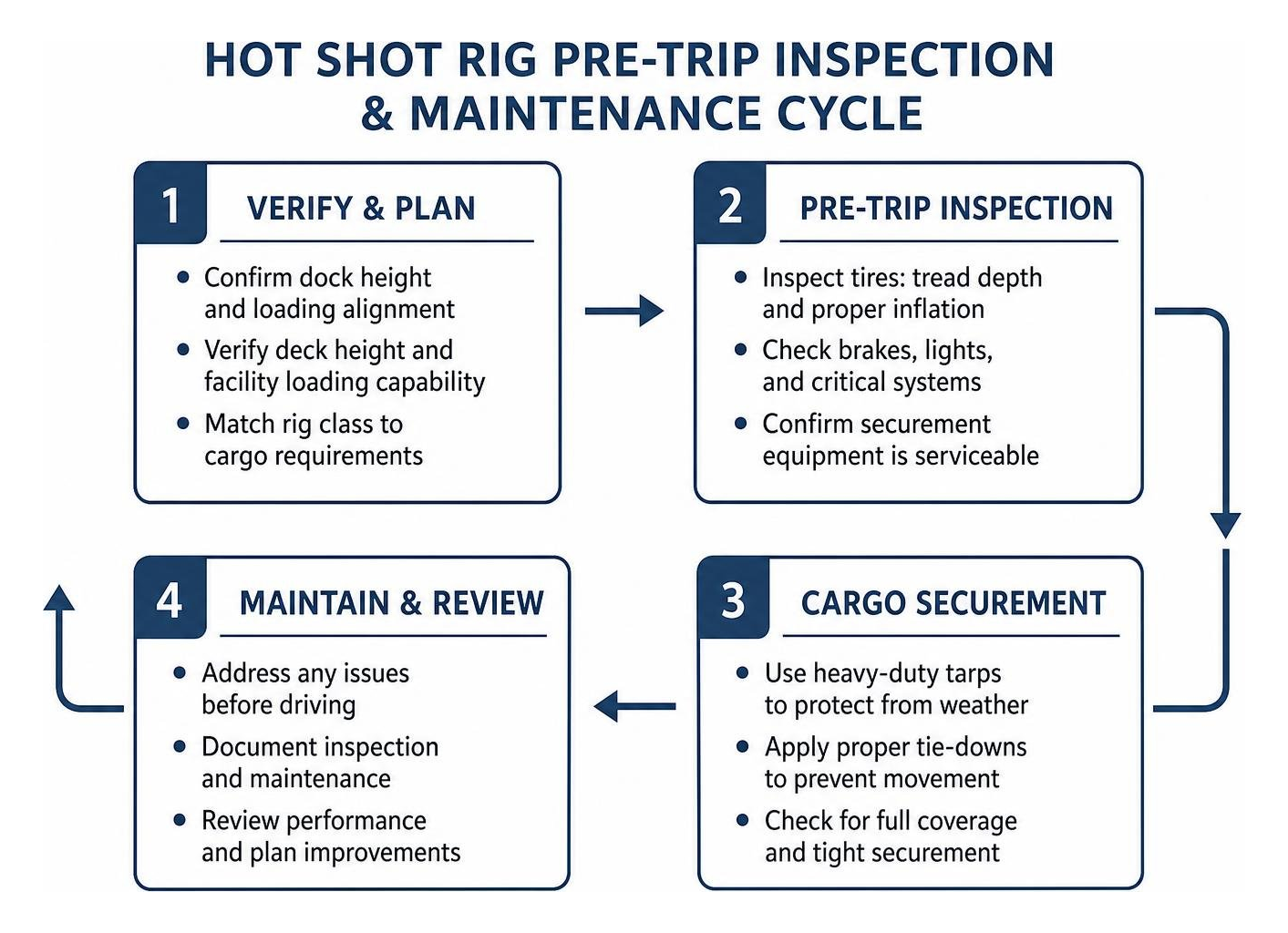
Professional expedited operators implement rigorous preventative maintenance programs to preserve cargo integrity across long-distance ground transit:
- Commercial Tire Management: Hot shot operations generate severe friction and heat across trailer axles. Dedicated operators monitor cold inflation pressures daily, inspect tread depth, and replace tires well before reaching safety wear bars.
- Weatherproof Cargo Tarping: Sensitive machinery, electrical panels, and precision tooling require heavy-duty waterproof lumber or steel tarps fitted securely with durable bungee straps and corner protectors to eliminate moisture penetration and wind buffeting.
- Loading Alignment and Securement Protocols: Checking deck heights against warehouse docks and using calibrated Grade 70 transport chains ensures stable loading, precise weight distribution, and safe transit.
Regulatory Compliance, Weight Thresholds, and CDL Standards
Operating commercial ground transport requires strict adherence to federal and state safety regulations. The Federal Motor Carrier Safety Administration establishes binding operational guidelines governing commercial drivers, vehicle weight thresholds, and mandatory rest periods. Shippers coordinating an emergency hot shot courier dispatch must verify that assigned carriers maintain full regulatory compliance.
A central compliance requirement involves the vehicle weight rating. Under federal safety mandates, when a commercial truck and trailer combination has a gross combination weight rating (GCWR) of 26,001 pounds or more—and the towed unit exceeds 10,000 pounds—the driver must hold an appropriate commercial driver’s license (CDL). Official driver qualification guidelines and licensing standards are detailed in the FMCSA commercial driver’s license requirements.
In addition to licensing mandates, drivers must log their driving and on-duty hours using certified electronic logging devices (ELDs) in compliance with federal hours-of-service (HOS) rules. Ensuring that carriers strictly obey HOS regulations protects your critical shipments from roadside out-of-service orders and preventable transit delays throughout the lower 48 states.
Assessing Dedicated Hot Shot for Expedited Ground Freight
Dedicated hot shot transport provides exclusive, point-to-point ground movement without intermediate consolidation hubs or freight transfers. Matching your operational timeline with dedicated vehicle capabilities ensures reliable delivery for time-critical industrial shipments.
| Shipment Requirement | Dedicated Hot Shot Capabilities | Operational Benefit |
|---|---|---|
| Urgent Production Timelines | Direct point-to-point ground transit with zero intermediate stops | Minimizes transit time for critical assembly line parts and replacement components |
| Specialized Handling Needs | Flatbed open-deck, dry van, or hydraulic liftgate configurations | Accommodates oversized machinery, palletized crates, and non-dock facilities |
| Cargo Protection & Security | Exclusive vehicle space with zero co-loaded third-party freight | Eliminates cross-dock handling, sorting errors, and transit damage risks |
| 24/7 Operational Visibility | Real-time GPS tracking and continuous dispatch route monitoring | Delivers transparent shipment updates from initial pickup to final delivery |
Frequently Asked Questions About Hot Shot Delivery Services
Do hot shot drivers need a commercial driver’s license (CDL)?
Commercial driver’s license requirements depend on the combined weight ratings of the vehicle and trailer. The FMCSA mandates a commercial driver’s license whenever the gross combination weight rating is 26,001 pounds or greater, provided the towed unit has a gross vehicle weight rating exceeding 10,000 pounds.
What weight limits define standard hot shot trucking?
There is no single universal weight threshold for hot shot operations. Allowable cargo payload depends directly on the truck chassis rating, trailer axle capacities, tongue weight distribution, and state-level gross vehicle weight limits across the contiguous United States.
When is dedicated hot shot transport preferred over other expedited ground shipping?
Dedicated hot shot shipping is preferred when freight requires exclusive trailer capacity, rapid point-to-point transit, or specialized flatbed loading. Dedicated transport bypasses freight distribution centers and cross-dock facilities, eliminating handling touchpoints for fragile, oversized, or mission-critical industrial cargo.
Conclusion
Navigating urgent ground freight demands a trusted logistics partner that rigorously evaluates carrier safety records, mechanical reliability, and regulatory compliance. Pro Express Inc. has been in business since 2007, offering nearly 20 years of experience as an expedited freight broker. With over 10,000 delivered shipments and a 99% client satisfaction record, we coordinate dedicated ground freight 24/7 across the lower 48 contiguous United States.
To arrange dedicated, point-to-point transport for your time-sensitive shipments, explore our exclusive hot shot freight logistics solutions.