
Understanding the Door to Door Courier Service Model and Operations
A door to door courier service provides end-to-end logistics coordination where commercial cargo is collected directly from the sender’s facility, warehouse, or plant and transported directly to the recipient’s facility. When managing industrial supplies, critical components, or high-value freight, traditional multi-node parcel and freight networks introduce multiple physical touchpoints. Each transfer between sorting centers, cross-docks, and consolidation hubs increases the potential for delay, misrouting, or cargo damage.
By contrasting traditional hub-and-spoke networks with dedicated direct transport, operations leaders can better evaluate risk across critical supply chains:
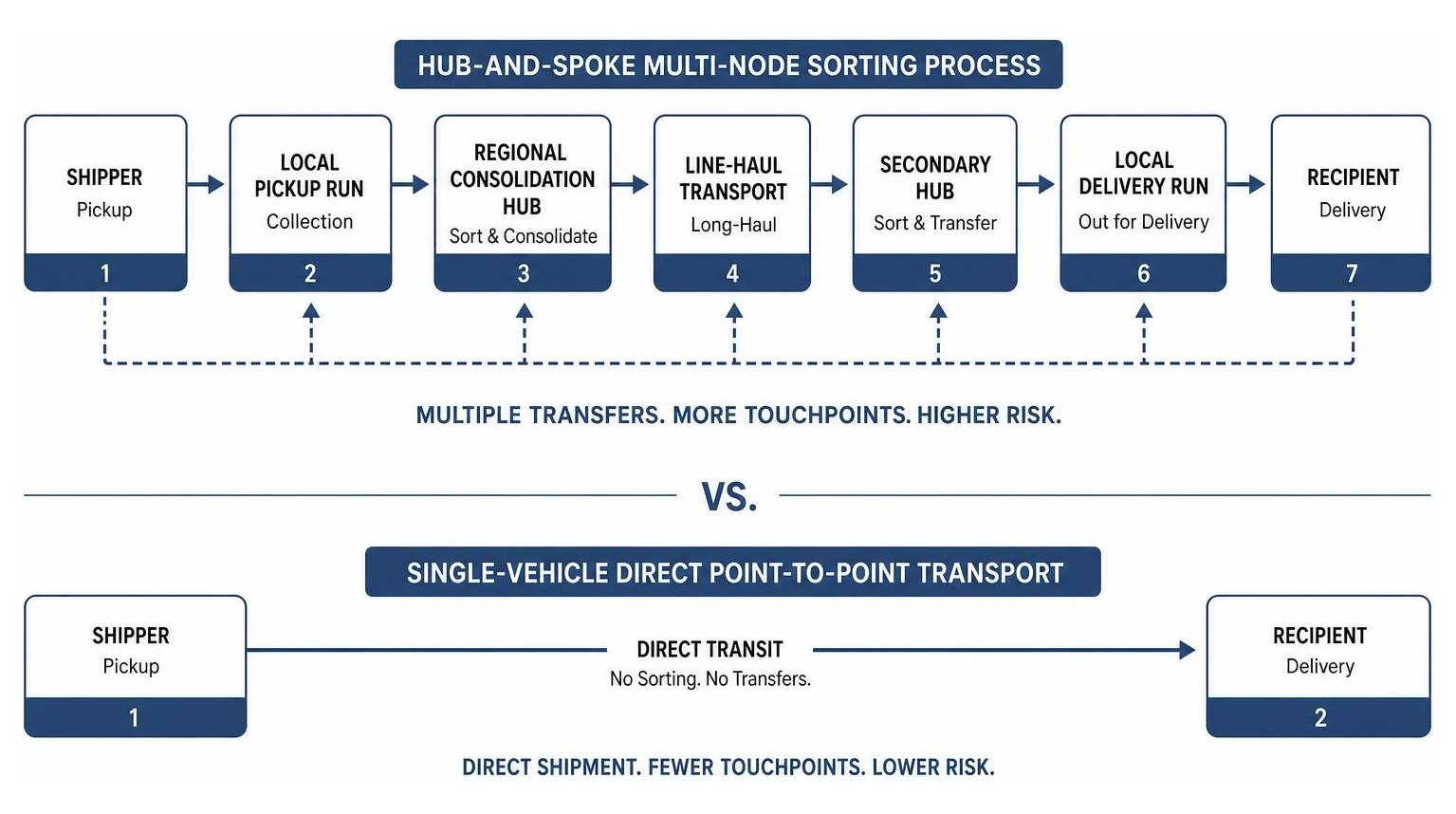
When a shipper leverages specialized courier delivery services, the logistics provider arranges for a vetted carrier to handle the shipment continuously. Direct ground transit eliminates warehouse sorting queues, automated conveyor transfers, and terminal staging delays. By securing dedicated capacity through a trusted freight broker, enterprises maintain a clear chain of custody from loading dock to receiving bay.
Demystifying B2B Delivery Mechanics vs. Standard Shipping
Standard parcel and standard less-than-truckload (LTL) shipping rely on network efficiency over individual shipment speed. Packages and pallets are gathered during local pickup runs, taken to a regional consolidation hub, sorted by zip code, transferred via line-haul trucks to secondary hubs, and eventually assigned to final delivery routes. While effective for routine inventory replenishment, this structure introduces inherent vulnerabilities:
- Handling Touchpoints: Every time cargo is reloaded, moved via forklift, or sorted on automated belts, the potential for freight damage or misplaced paperwork multiplies.
- Depot Staging Holds: Hub-and-spoke systems depend on strict cut-off times. If line-haul transport experiences delays, cargo sits at intermediate sorting facilities until the next scheduled dispatch window.
- Inflexible Transit Timelines: Standard freight networks follow rigid operational schedules, offering minimal flexibility when shipment routing must be adjusted mid-transit due to operational emergencies.
In contrast, dedicated door to door courier service logistics bypass intermediate sorting hubs entirely. By coordinating a single vehicle—such as an exclusive hot-shot vehicle or dedicated cargo van—the shipment moves directly from point A to point B without entering terminal facilities.
Essential Cargo Suited for a Door to Door Courier Service
Direct, dedicated shipping models are designed specifically for mission-critical commercial cargo where delayed delivery leads to substantial operational downtime or financial penalties. Primary cargo categories suited for dedicated ground transport include:
- Automotive Parts & Assemblies: Emergency tooling, stamped body panels, engine components, and assembly line hardware required to avoid severe plant shutdowns.
- Healthcare & Pharmaceutical Supplies: Critical lab equipment, diagnostic devices, medical instruments, and urgent healthcare supplies requiring uninterrupted hand-offs.
- Manufacturing & Industrial Machinery: Replacement valves, pumps, electrical circuit boards, and custom-machined replacement hardware for heavy industrial production lines.
- High-Value & Delicate Commercial Goods: Architectural lighting fixtures, sensitive electronics, and high-precision scientific testing equipment demanding white-glove, two-man handling and zero sorting hub transfers.
Direct Same-Day Dispatch and Emergency Logistics Solutions
When operational failures jeopardize critical business operations, securing immediate transportation is vital. Expedited logistics providers specialize in coordinating rapid direct dispatch, connecting shippers with vetted independent carriers capable of reaching pickup locations within tight timeframes.

Logistics coordinators assessing urgent transport requirements can reference key operational milestones outlined in Same-Day Courier Service Your 2026 Guide to structure high-priority shipping protocols.
How Same-Day Hot-Shot Shipping Solves Time-Critical Logistics Gaps
Hot-shot shipping involves arranging an exclusive vehicle dedicated solely to a single customer’s urgent freight. Unlike standard courier networks that consolidate multiple shipments into single delivery routes, dedicated hot-shot logistics ensure that your cargo is the sole payload on board.
This non-stop transport model addresses urgent operational challenges:
- Preventing Line-Down Disruption: In manufacturing, a missing component can idle an entire assembly line. Hot-shot vehicles travel non-stop from the supplier directly to the factory floor to restore production quickly.
- Eliminating Consolidation Delays: Freight is loaded at the supplier dock and departs immediately, eliminating standard loading dock waiting periods.
- Continuous Route Execution: The arranged carrier proceeds directly along optimal highway routes, bypassing regional terminals and consolidation cross-docks entirely.
Navigating Freight Hand-Offs and Delivery Responsibilities
Executing flawless emergency transportation requires precise operational coordination across every leg of the shipment journey:
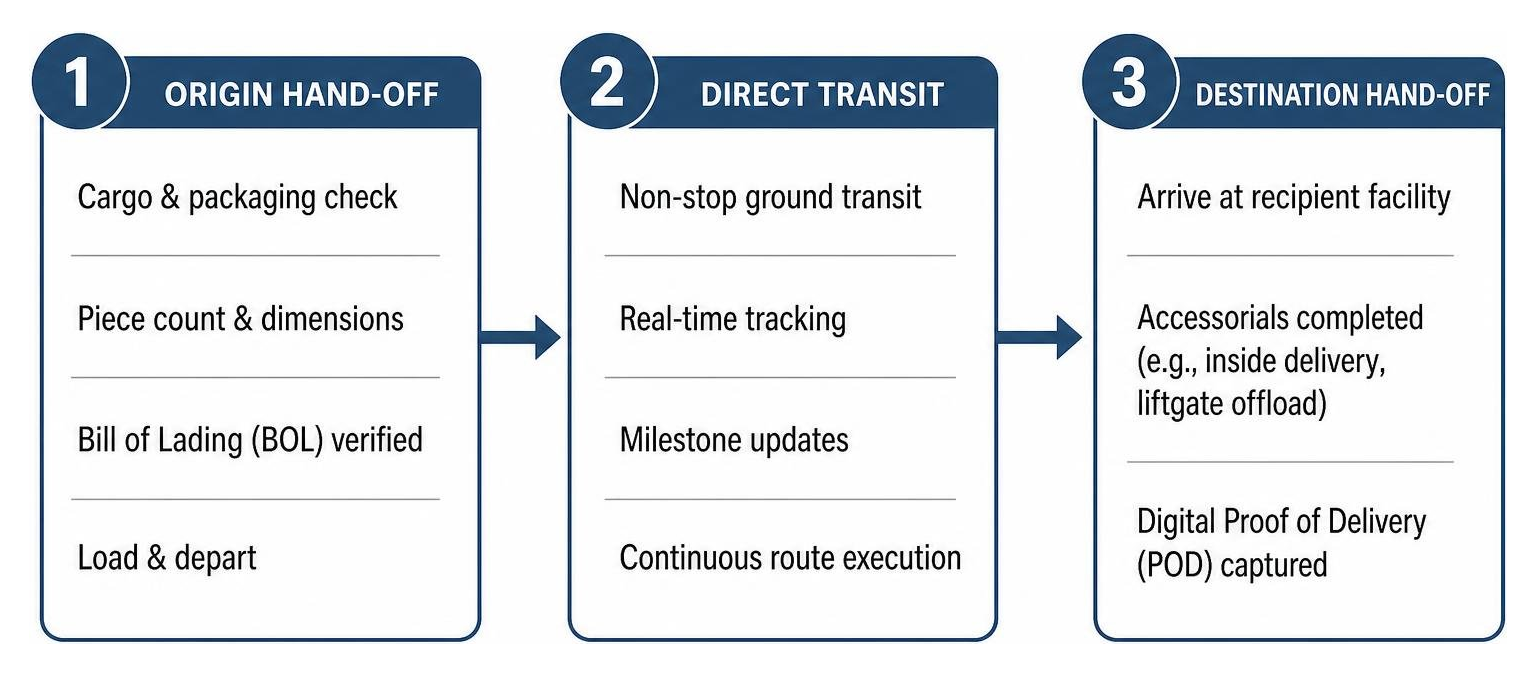
- Origin Hand-Off: Verification of cargo dimensions, piece count, packaging integrity, and precise bill of lading (BOL) documentation at the loading site.
- Direct Transit Protocol: Maintaining continuous ground transit monitored via automated tracking updates and milestone checkpoints.
- Destination Hand-Off: Direct arrival at the recipient’s facility, execution of required accessorial services (e.g., inside delivery or liftgate offloading), and obtaining a verified digital proof of delivery signature.
Commercial D2D Logistics vs. ICC Incoterms
In international and domestic logistics, clarity regarding transport terminology is critical to avoid contractual misunderstandings. A common area of confusion involves confusing operational service definitions, like door to door courier service, with formal trade terms defined by the International Chamber of Commerce (ICC).

For a broader understanding of how business delivery frameworks function across commercial channels, review The Ultimate Guide to Courier Delivery Services.
Key Differences Between Logistics Terms and Official Incoterms
“Door-to-door” is an operational description that outlines the physical shipping method—meaning cargo is collected at the sender’s door and delivered directly to the recipient’s door. It is not an official Incoterm recognized by the International Chamber of Commerce.
In contrast, formal shipping terms define the precise legal responsibilities between buyer and seller regarding delivery points, insurance obligations, and transfer of risk.
| Category | Door-to-Door (D2D) Shipping | Official ICC Incoterms (e.g., DDP, DAP) |
|---|---|---|
| Primary Focus | Operational transportation execution and physical transport routing | Legal risk allocation, delivery obligations, and transfer of title |
| Defined By | Freight brokers, couriers, and transport carriers | International Chamber of Commerce (ICC) |
| Delivery Handling | Operational service requiring explicit contractual arrangements | Automatically outlines which party handles import tariffs and clearance |
| Scope of Coverage | Domestic and international physical transportation workflows | Global commercial trade contracts and international sales terms |
When arranging door-to-door shipping, businesses should explicitly confirm which pickup, handling, and delivery services are included in the coordinated service or managed separately.
Real-Time Visibility and Security Features for a Door to Door Courier Service
Maintaining full shipment visibility is critical when transporting urgent or high-value freight. Modern freight brokerages utilize advanced visibility technology to provide continuous cargo tracking throughout the delivery cycle:
- Real-Time GPS Tracking: Live monitoring systems track the vehicle’s location continuously, providing automated location updates and estimated time of arrival (ETA) predictions.
- Milestone Alerts: Automated notifications trigger upon pickup execution, en-route regional checkpoints, and final arrival at the delivery destination.
- Chain-of-Custody Verification: Digital signatures, timestamped photo verification, and electronic bills of lading (eBOL) capture exact hand-off details at the receiving dock, ensuring accountability.
Key Criteria for Selecting a Reliable Logistics Freight Broker
When standard carrier networks encounter capacity bottlenecks or regional service delays, partnering with an experienced freight broker ensures your critical shipments remain moving. A qualified freight broker evaluates shipment specs, selects the proper vehicle class, and coordinates vetted independent carriers to meet strict operational schedules.
Logistics managers can review strategic evaluation methods in The Ultimate Guide to Choosing the Right Courier Service for Your Business Needs to align brokerage capabilities with enterprise requirements.
Cargo Insurance Protection and Transit Risk Mitigation
Protecting valuable commercial cargo requires rigorous risk management standards before freight ever leaves the dock. A professional freight broker enforces comprehensive carrier vetting standards to protect your assets:
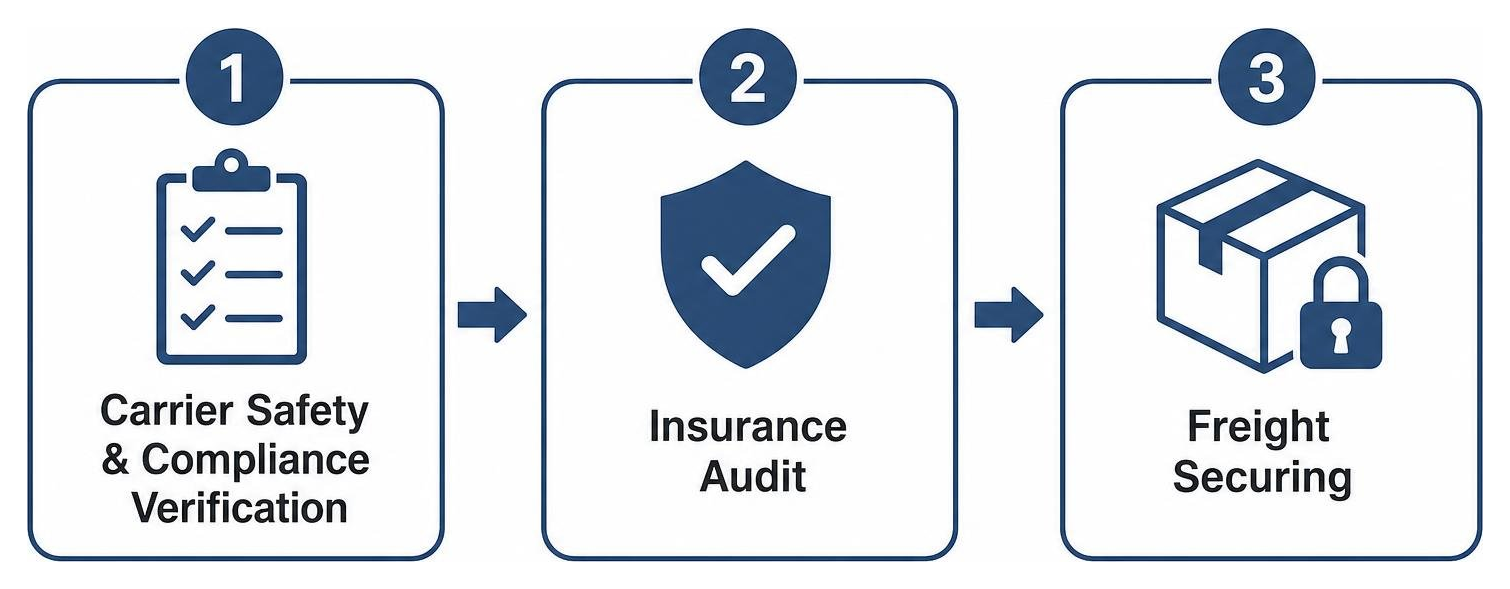
- Carrier Safety & Compliance Verification: Verifying active Department of Transportation (DOT) registration, Federal Motor Carrier Safety Administration (FMCSA) safety ratings, and carrier operating authority.
- Insurance Audit: Ensuring carriers carry adequate motor truck cargo insurance and primary commercial auto liability coverage suited for the freight value.
- Direct Hand-Off Protocols: Eliminating multi-hub sorting drops to minimize physical cargo handling and prevent transit loss or damage.
Carrier Network Options and Specialized Ground Shipping Capabilities
Different commercial shipments require specific equipment configurations. An experienced freight broker arranges access to diverse ground vehicle classes through a network of vetted carriers:
- Sprinter Vans & Cargo Vans: Ideal for rapid, small-pallet or loose box expedited freight requiring nimble maneuverability and quick highway dispatch.
- Straight Trucks (Box Trucks): Perfect for larger multi-pallet shipments, heavy industrial parts, or bulky commercial equipment requiring dock-height loading.
- Specialized Liftgate Equipment: Essential for delivery sites lacking built-in loading docks or forklifts, allowing smooth ground-level offloading.
- White-Glove & Two-Man Delivery Teams: Designed for complex, delicate commercial installations—such as scientific instruments, medical devices, or commercial lighting systems—that require expert inside placement and uncrating.
Frequently Asked Questions About Direct Logistics
How does door-to-door shipping differ from official Incoterms like DDP or DAP?
Door-to-door (D2D) describes the physical transport workflow where cargo is picked up at the sender’s dock and delivered directly to the recipient’s location. Incoterms like DDP (Delivered Duty Paid) or DAP (Delivered at Place) are standardized international legal terms established by the International Chamber of Commerce (ICC). They define legal liability, risk transfer points, and responsibility for handling obligations between buyers and sellers.
What security and tracking details are available during direct transit?
Direct ground shipments feature continuous GPS location tracking, automated milestone notifications, direct communication channels through the coordinating freight broker, and digital proof-of-delivery (POD) confirmations. Recipients receive timestamped digital signatures and location verification immediately upon delivery completion.
Are direct courier solutions suitable for emergency or line-down situations?
Yes, direct door-to-door courier solutions are tailored specifically for emergency, high-priority, and line-down commercial logistics. By dispatching dedicated exclusive vehicles (such as hot-shot sprinter vans or straight trucks) directly from origin to destination without terminal or cross-dock stops, cargo moves along the fastest ground route possible to minimize operational downtime.
Conclusion
Understanding the mechanics of a door to door courier service enables operations managers to choose the right transport strategy when critical shipments are at risk. Bypassing standard sorting hubs in favor of direct, point-to-point transportation protects high-value cargo, reduces transit delays, and ensures reliable supply chain continuity.
Pro Express Inc. brings nearly 20 years of freight brokerage experience to commercial logistics challenges across the contiguous United States. Having coordinated over 10,000 shipments with a 99% client satisfaction rate, our team connects businesses with a vetted carrier network to arrange direct, expedited ground transportation—including exclusive hot-shot vehicles, white-glove two-man handling, liftgate service, and inside delivery.
When standard carrier networks fall behind or urgent line-down situations demand immediate dispatch, rely on an experienced freight broker to secure dependable capacity and keep your business moving forward.
Contact Us Today to discuss your commercial freight requirements and arrange seamless direct transportation with our expert team.