
The Operational Risk of Mismanaging Construction Debris
Dispose of construction debris with precision, or risk project delays and significant regulatory liability. For operations managers and site supervisors, efficiency is the priority:
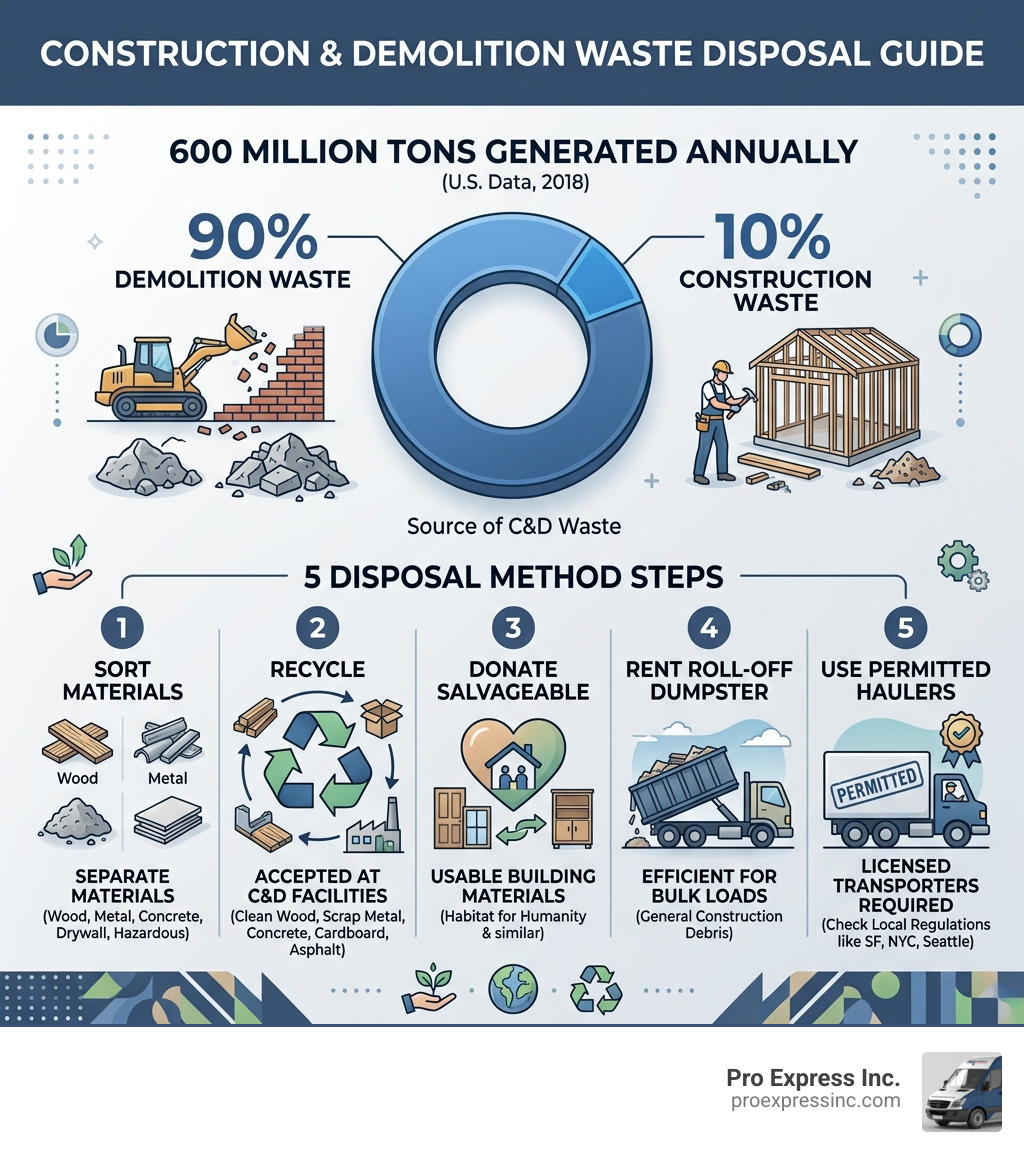
How to dispose of construction debris:
- Sort your materials — separate wood, metal, concrete, drywall, and hazardous items before anything leaves the site to ensure streamlined logistics.
- Recycle what you can — clean wood, scrap metal, concrete, cardboard, and asphalt are accepted at most C&D recycling facilities.
- Donate salvageable items — organizations like Habitat for Humanity accept usable building materials for community reuse.
- Rent a roll-off dumpster — for bulk mixed waste, a roll-off container is the most reliable option for high-volume loads.
- Use permitted haulers — many cities (San Francisco, NYC, Seattle) require licensed transporters for C&D waste to maintain compliance.
- Handle hazardous materials separately — asbestos, lead paint, mercury, and solvents require specialized disposal protocols, never standard trash.
Construction waste management is a critical logistical challenge. In 2018 alone, C&D jobsites across the United States generated over 600 million tons of waste. Notably, 90% of that waste came from demolition projects, requiring expert coordination to maintain site uptime.
Whether you’re managing a full gut renovation or clearing debris from a smaller remodel, the rules around disposal are strict and vary significantly by jurisdiction.
Maintaining a reliable disposal strategy is essential for three reasons: regulatory compliance, project efficiency, and operational responsibility.
This guide provides the technical framework for managing C&D debris in major markets like Florida, Seattle, King County, and New York City.
Understanding the Scope of Construction and Demolition (C&D) Materials
To dispose of construction debris effectively, we first need to define exactly what falls under the “C&D” umbrella. In the logistics and waste management world, C&D materials are typically characterized as discarded items that are not water-soluble and are non-hazardous. These are the physical remnants of building, remodeling, repairing, or tearing down structures.
Common Construction and demolition materials include:
- Structural Components: Steel, glass, brick, and concrete.
- Infrastructure Materials: Asphalt, pipes, and gypsum wallboard (drywall).
- Natural Elements: Rocks, soils, and tree remains from land clearing.
- Finishing Materials: Lumber, insulation, roofing shingles, and scrap metal.
It is important to note that while clean cardboard, paper, and plastic generated at a jobsite can often be included in C&D loads, mixing these with standard municipal solid waste (MSW) can change their legal classification. In Florida, for instance, C&D debris accounts for nearly 25 percent of the total MSW stream, making proper identification vital for state-level recycling goals.
Legal Framework and Regional Regulations to Dispose of Construction Debris
Navigating the legalities of waste disposal is a core component of project management. Different regions have established strict mandates to ensure that materials are diverted from landfills. We view these regulations as essential benchmarks for project success and professional stewardship.
Florida and the East Coast
In Florida, C&D management is governed by the Florida Administrative Code (FAC 62-701.200). Facilities are required to submit annual reports via the DEP Business Portal, detailing the tonnage of debris by its county of origin. This data allows the state to track progress toward recycling targets.
The Pacific Northwest
King County and Seattle are leaders in waste diversion. King County Ordinance 18166 mandates that large C&D loads must be sent to designated facilities. Furthermore, in Seattle, any project involving demolition or alterations over 750 square feet (or a specific valuation threshold) requires a Salvage Assessment before work begins. After the project, a Waste Diversion Report must be filed within 60 days of the final inspection to avoid regulatory penalties.
Major Metro Hubs: NYC and San Francisco
In New York City, professional jobs must utilize private haulers certified by the NYC Business Integrity Commission (BIC). Similarly, San Francisco’s debris recovery law requires the use of registered facilities or permitted transporters to ensure that “junk, scrap, and rubble” are handled according to local environmental standards.

Strategic Methods for Waste Diversion and Management
In high-stakes logistics, planning is the foundation of reliability. A “dump everything in one bin” approach is often the least efficient and most disruptive way to operate. Instead, we recommend a hierarchy of disposal: sell, donate, reuse, recycle, and—only as a last resort—landfill.
- Source Separation: This involves sorting materials like clean wood, metal, and concrete into different containers right at the jobsite. While it requires more space, it typically yields a 90% recycling rate and optimizes site logistics.
- Deconstruction vs. Demolition: Deconstruction is the manual “un-building” of a structure to salvage materials. It is a key strategy for those seeking LEED certification or looking to maximize the Organizations Working to Reduce the Disposal of Construction and Demolition (C&D) Materials through sustainable practices.
- Donation: Organizations like Habitat for Humanity often accept surplus building materials, such as cabinetry, sinks, and unused tile. This not only supports the community but also strengthens the project’s sustainability profile.
How to Dispose of Construction Debris via Recycling and Reuse
Recycling is the backbone of modern C&D management. Many materials that seem like waste are actually valuable commodities for reuse:
- Concrete and Asphalt: These are often crushed and reused as base material for new infrastructure.
- Scrap Metal: Steel, copper, and aluminum have high recovery potential and are almost 100% recyclable.
- Clean Wood: Untreated lumber and pallets can be turned into mulch or biomass fuel. Painted or treated wood is generally not recyclable.
- Gypsum/Drywall: New gypsum scrap can be recycled into new wallboard, though many regions require it to be separated from demolition drywall which may contain lead or asbestos.
Prohibited Materials and Hazardous Waste Protocols
Not everything can go in a standard dumpster. Attempting to dispose of construction debris that contains hazardous substances can lead to immediate jobsite shutdowns.
Prohibited items usually include:
- Asbestos: Found in older insulation, floor tiles, and roofing. It requires a licensed abatement professional.
- Lead-Based Paint: Common in pre-1978 structures.
- Mercury: Often found in thermostats and older fluorescent light bulbs.
- Chemicals: Solvents, adhesives, aerosol cans, and un-dried paint.
- Contaminated Soil: Any soil containing fuel or chemical spills.
Logistics and Equipment for Large-Scale Projects
For large-scale renovations, the logistics of moving debris are just as critical as the construction itself. Choosing the right equipment ensures the site stays clean, safe, and operational.
Roll-Off Dumpster Capacities
Selecting the right size is essential to ensure maximum site efficiency and avoid the need for multiple, unnecessary trips.
| Dumpster Size | Pickup Load Equivalent | Best For… |
|---|---|---|
| 10-15 Yard | 4-6 Loads | Small bathroom remodels or heavy debris like concrete. |
| 20 Yard | 8 Loads | Medium kitchen renovations or deck removals. |
| 30 Yard | 14 Loads | Major home additions or commercial office gutting. |
| 40 Yard | 16 Loads | Large-scale demolition or new residential construction. |
Streamlining the Timeline to Dispose of Construction Debris
In expedited logistics, time is the critical factor. A cluttered jobsite is a dangerous and inefficient one. Coordinating hauling schedules with project milestones is vital. For example, ensuring a dumpster is swapped out immediately following a demolition phase prevents the “bottleneck” effect where workers are hindered by debris while trying to install new materials.
Safety is also a logistical concern. In many jurisdictions, such as Vancouver, drivers hauling C&D waste are required to have mandatory fall protection training and specific equipment for tarp removal and safe dumping.
Frequently Asked Questions about C&D Disposal
What items are strictly prohibited from standard C&D recycling?
Items like asbestos, lead-based paint, mercury-containing devices, and “treated” wood (lumber treated with CCA or creosote) are strictly prohibited. Additionally, household garbage—like food waste or liquids—should never be mixed with construction loads, as this can cause the entire load to be rejected by the recycling facility.
How do reporting requirements differ between residential and commercial projects?
Generally, small-scale residential projects have fewer reporting hurdles, though they must still follow local disposal rules. Commercial projects, however, often face mandatory Waste Diversion Reports, tonnage tracking, and the requirement to use BIC-certified or permitted haulers. In cities like Seattle, the threshold for mandatory reporting is often based on the project valuation or square footage.
What are the benefits of source separation over commingled debris?
Source separation (sorting onsite) typically results in much higher recycling rates—often exceeding 90%. It also allows for the direct recovery of valuable scrap metal. Commingled debris (everything in one bin) is more convenient for tight jobsites but often leads to lower diversion rates and extended processing times at the facility because the facility has to do the sorting for you.
Conclusion: Partnering for Project Success
Managing a construction project is a complex feat of engineering and timing. Successfully deciding how to dispose of construction debris is a major part of that puzzle. By understanding your local regulations, prioritizing waste diversion, and maintaining a clean jobsite, you ensure your project stays on schedule and in compliance.
At Pro Express Inc., we know that reliability and speed are the cornerstones of any successful operation. With over 17 years of experience in the logistics industry, we’ve built our reputation on 24/7 customer support and a 99% client satisfaction rate. While we specialize in US-wide expedited shipping—including same-day, next-day, and white-glove services—we understand the urgency that drives the construction industry.
When your project demands time-sensitive deliveries or your regular carrier fails to meet a critical deadline, you need a partner who operates with the same sense of urgency you do. From Alaska to Hawaii and across North America, we are ready to handle your most critical freight needs with 6,000+ shipments delivered.
Don’t let logistics delays stall your progress.
Request a Quote for Expedited Logistics Services or contact us today to see how our 17+ years of expertise can support your next big build.