
What is Ecommerce Last Mile Delivery and Why is it Critical?
Ecommerce last mile delivery is the final leg of the shipping journey — moving a product from a regional distribution hub to the customer’s door. It is the most expensive, most visible, and most operationally complex part of the entire supply chain.
What is ecommerce last mile delivery?
- Definition: The movement of goods from a local fulfillment hub or distribution center to the end customer’s location
- Cost impact: Accounts for 41%–53% of total fulfillment spend
- Why it’s hard: Requires many individual stops, unpredictable traffic, and high labor involvement — with no bulk freight efficiency
- Why it matters: It’s the final brand touchpoint — a failed or late delivery is what customers remember
- Top risks: Lack of visibility, failed delivery attempts, low efficiency, and unpredictable delays
- Key solutions: Route optimization, distributed inventory, real-time tracking, and multi-carrier strategies
Every year, logistics providers move 25 billion packages around the world. The long-haul portion of that journey runs on well-coordinated networks of air, rail, and road freight. But the last mile? That’s where things get complicated — and costly.
For B2B operations and logistics managers, the stakes are even higher. A missed delivery window doesn’t just mean an unhappy customer. It can mean a halted production line, a failed medical supply handoff, or a client relationship at risk.
The last mile is where reputations are made or broken.
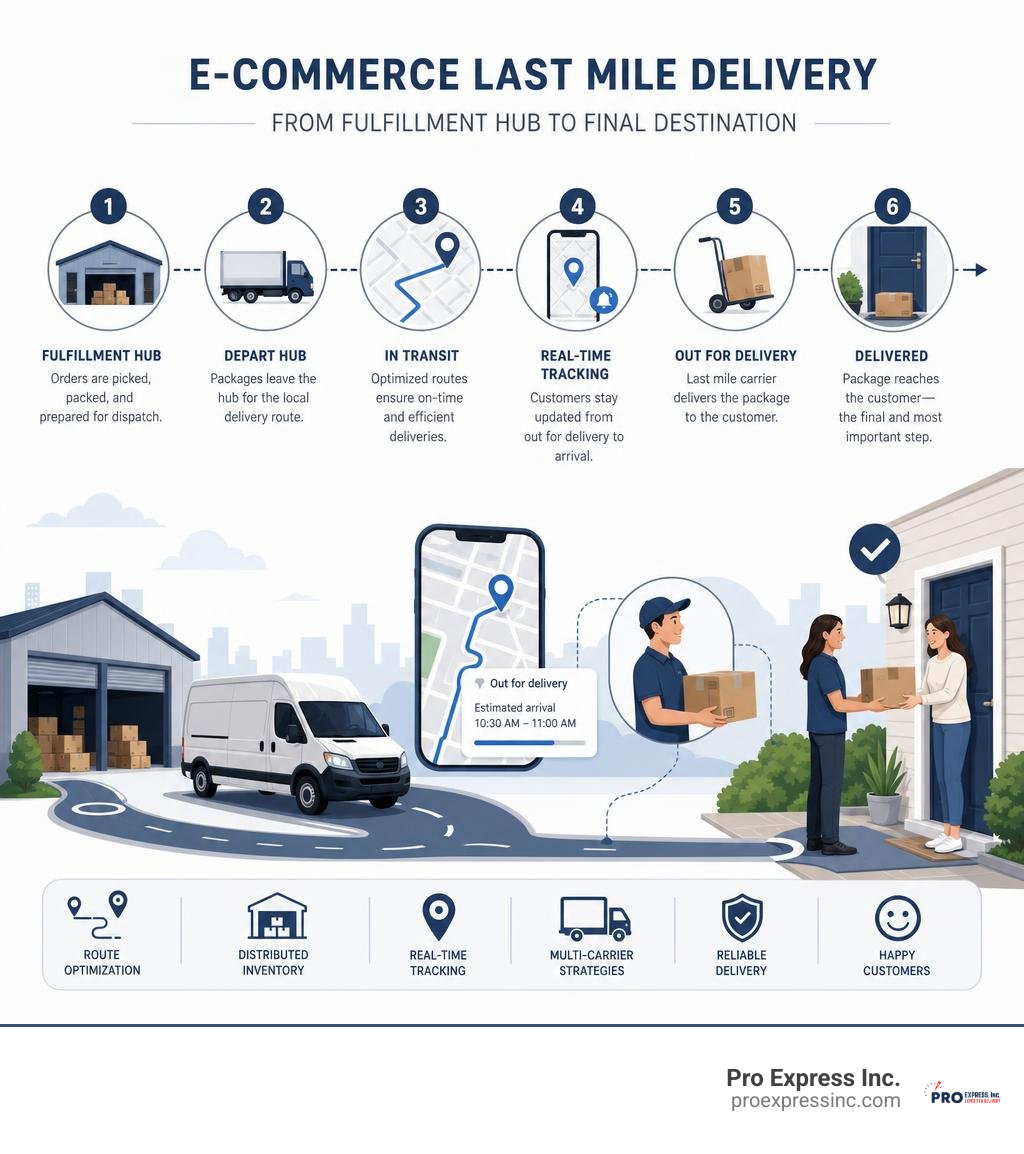
Quick ecommerce last mile delivery terms:
To truly master the final leg of the supply chain, we must understand its functional role. As outlined in the comprehensive guide on What Is Last Mile Delivery? A Guide for Ecommerce Brands, this process is not merely a transaction. It is a vital touchpoint that shapes brand identity, customer retention, and long-term loyalty. When a business arranges a shipment, the delivery partner acts as a physical extension of that brand.
For modern B2B enterprises, final-mile execution is the ultimate differentiator. When we look at critical sectors—such as automotive assembly plants requiring just-in-time components, or healthcare facilities waiting on sensitive medical devices—the last mile is a high-stakes operation. A single delay can disrupt downstream schedules, resulting in severe operational bottlenecks.
This is why we emphasize Going the Extra Mile in E-commerce Logistics. In the B2B landscape, logistics managers demand absolute precision. They are not merely looking for standard postal drops; they require dedicated support, specialized equipment, and highly coordinated handoffs. When high-value, heavy, or sensitive cargo reaches its final destination, standard curbside delivery is rarely sufficient. Instead, operations require tailored solutions such as inside placement, liftgate assistance, and precise white-glove handling.

Furthermore, geographic challenges across North America add layers of complexity. Fulfilling orders within the contiguous United States is one thing, but coordinating deliveries to remote regions like Alaska or non-contiguous states like Hawaii introduces unique hurdles. According to regional insights from the Alaska E-commerce Logistics Guide and resources on Shipping to Alaska, businesses must navigate extreme weather, limited road infrastructure, and specialized maritime or air handoffs.
Whether coordinating a final-mile delivery in dense metropolitan centers or arranging transport to remote hubs, having a reliable freight broker to navigate these regional complexities is essential for maintaining a seamless supply chain.
Overcoming the Risk Hurdles in Last-Mile Logistics
The final leg of delivery is notoriously unpredictable. Academic research analyzing final-mile logistics risks shows that operational hurdles can quietly disrupt supply chain reliability. In fact, a recent multi-criteria decision-making study ranked the top risk hurdles in final-mile logistics as follows:
- Lack of Visibility (LV)
- Low Efficiency Levels (LEL)
- Unpredictable Elements (UE) (such as weather and sudden traffic gridlocks)
- Late Deliveries (LD)
When these risks manifest, they don’t just delay a single shipment; they compromise business relationships. For a deeper look at how these dynamics impact modern operations, explore our guide on E-commerce Fulfillment Last Mile Shipping.

To mitigate these risks, logistics managers must move away from rigid, single-carrier frameworks. Relying on a single provider leaves your supply chain vulnerable to capacity crunches, labor disputes, or sudden operational shifts. For example, recent industry developments discussed in Maersk’s Rumored Last-Mile Exit Is Quietly Rattling 3PL Networks and Maersk’s Rumored Last-Mile Exit Is Rattling 3PL Partners highlight how quickly large-scale corporate restructurings can disrupt established final-mile networks.
When global maritime giants scale back their domestic final-mile connector layers to refocus on core operations, mid-market shippers are often left scrambling. This underscores the critical importance of building redundancy into your logistics strategy by working with an adaptable freight broker who can dynamically route cargo through a diverse, vetted carrier network.
Managing Visibility Gaps in Ecommerce Last Mile Delivery
The academic consensus is clear: Lack of Visibility is the single greatest risk hurdle in modern final-mile logistics. In B2B operations, “where is my order” (WISMO) is not just an annoying question—it is a critical operational blind spot. If a manufacturing plant does not know exactly when a crucial component will arrive, they cannot schedule their workforce or plan production runs effectively.
To close these visibility gaps, we leverage advanced tracking technologies and proactive communication channels. Real-time GPS monitoring allows logistics managers to see the exact location of their cargo at any given moment. Rather than relying on static, end-of-day status updates, modern systems provide dynamic ETA calculations that adjust automatically based on live traffic and weather conditions.
By integrating robust tracking APIs into your supply chain, you gain the transparency needed to predict and prevent disruptions. To learn more about how we arrange highly visible, time-sensitive transportation solutions, check out our dedicated Logistics Service page.
Mitigating Failed Delivery Attempts
A failed delivery attempt is a major operational setback. In the B2B space, a failed delivery doesn’t just mean a package goes back to a local post office—it means expensive freight must be rescheduled, re-routed, and re-handled. This double-handling increases the risk of cargo damage and adds administrative friction.
To minimize failed attempts, logistics managers must focus on three core areas:
- Address Validation: Implementing automated address verification at the point of order entry prevents simple clerical errors from causing major transit delays.
- Time-Definite Delivery Windows: Providing precise, narrow delivery windows ensures that the receiving facility has the dock space, equipment, and personnel ready to accept the cargo.
- Dynamic Communication: Establishing direct communication channels between the coordinating broker, the carrier, and the receiving manager allows for real-time adjustments if access codes change or unexpected delays occur.
For highly sensitive, urgent, or complex deliveries, standard courier networks often fall short. That is why we coordinate specialized support. Discover how tailored courier solutions can streamline your final-mile handoffs in The Ultimate Guide to Courier Delivery Services.
Streamlining Operations and Improving Efficiency
To optimize ecommerce last mile delivery, businesses must transition from reactive troubleshooting to proactive operational design. This involves restructuring how and where inventory is held, as well as how delivery routes are planned.
Historically, logistics models relied on a single, centralized distribution center. While this model simplifies inventory management, it increases the physical distance cargo must travel during the final leg. In 2026, forward-thinking enterprises are adopting a distributed inventory model, splitting high-velocity SKUs across strategically located regional nodes.
By positioning inventory closer to major metropolitan areas, you drastically reduce transit times. As detailed in Regional 3PL Networks Are Winning the Same-Day Delivery War in 2026, localized fulfillment nodes bypass the bottlenecks of traditional national hub-and-spoke networks. This allows for rapid, same-day dispatch to meet urgent commercial demands.
| Operational Element | Centralized Fulfillment Model | Distributed Regional Node Model |
|---|---|---|
| Average Transit Distance | Long (often crossing multiple transit zones) | Short (typically within a 15-to-50-mile radius) |
| Risk of Transit Delay | High (susceptible to interstate weather and rail delays) | Low (localized routing avoids major long-haul disruptions) |
| Fulfillment Flexibility | Rigid (fixed daily carrier pickup cutoffs) | Highly dynamic (supports on-demand, hot-shot dispatch) |
| Handling Requirements | Standardized (optimized for bulk palletized freight) | Specialized (supports custom white-glove and liftgate services) |
To explore how the global logistics landscape is evolving to support these localized, high-efficiency models, refer to the industry insights in DHL’s Last mile delivery (r)evolution.
Leveraging Technology and Automation
Technology is the engine that drives final-mile efficiency. Manual route planning is a major bottleneck; couriers and dispatch staff can easily spend three to four hours a day manually mapping out stops. Automated route optimization software eliminates this friction instantly.
By utilizing AI-driven routing algorithms, dispatchers can account for real-time variables—such as vehicle capacity, delivery windows, traffic patterns, and even localized low-emission zones. This significantly reduces out-of-route miles, which typically account for 3% to 10% of a driver’s total mileage.
Furthermore, API integrations allow for seamless, automated data exchange between your warehouse management system (WMS) and your freight brokerage partner. When an urgent order is placed, the system can automatically trigger a dispatch request to a vetted carrier network, ensuring that time-critical cargo is on the road without delay.
Balancing Speed and Sustainability in Ecommerce Last Mile Delivery
In 2026, environmental sustainability is no longer an afterthought—it is a core operational requirement for B2B enterprises. However, logistics managers often face the challenge of balancing rapid delivery speeds with carbon reduction goals.
Fortunately, efficiency and sustainability go hand in hand. By utilizing route optimization AI, logistics planners can reduce carbon emissions from a final-mile road fleet by up to 25%. Fewer out-of-route miles mean reduced fuel consumption and less wear-and-tear on delivery vehicles.
Additionally, integrating alternative fuel vehicles, electric delivery vans, and consolidated urban delivery points (such as smart parcel lockers) helps minimize the environmental footprint of dense metropolitan operations. For a comprehensive look at how modern logistics managers are balancing these priorities, read our Same Day Delivery Service the 2026 Guide for Logistics Managers.
Key Performance Indicators for Last-Mile Success
To continuously improve your final-mile operations, you must measure what matters. Tracking the right key performance indicators (KPIs) allows you to identify bottlenecks, evaluate carrier performance, and protect your brand’s reputation.
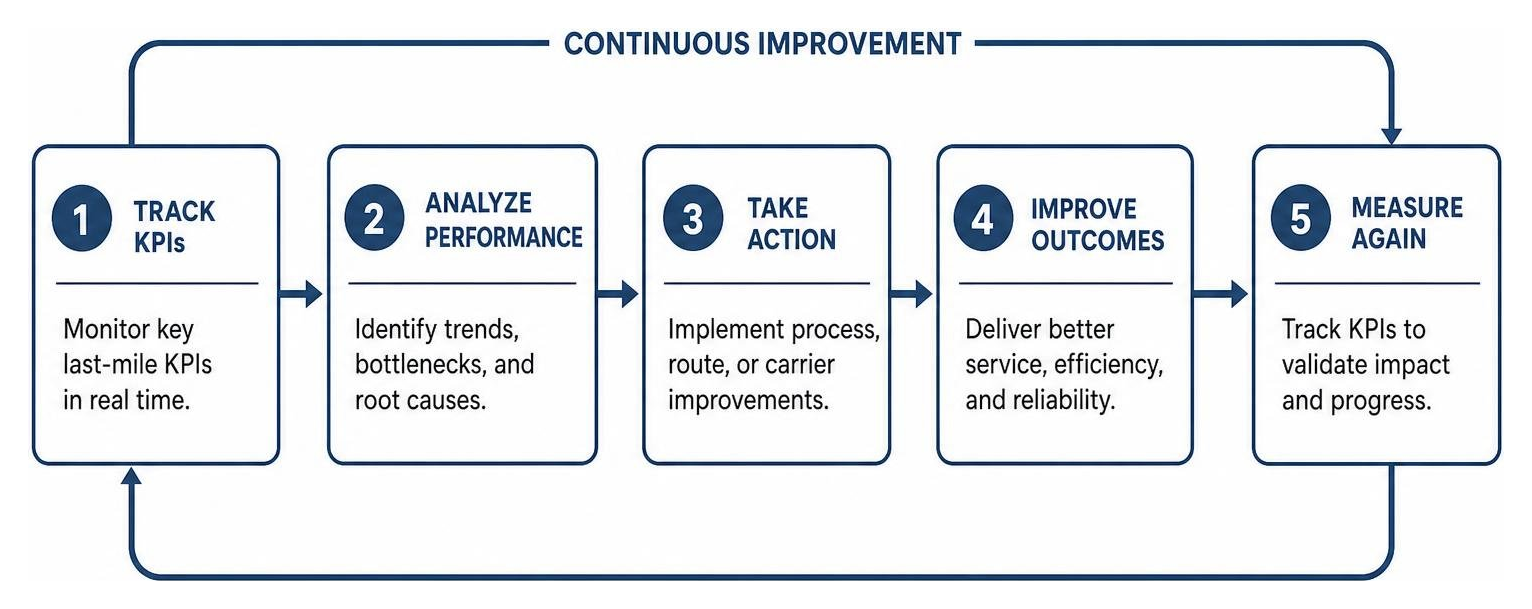
When auditing your logistics partners, pay close attention to the following metrics:
- On-Time Delivery (OTD) Rate: The percentage of shipments delivered within the agreed-upon time window. Best-in-class B2B operations target an OTD rate above 96%.
- First-Attempt Success Rate: The percentage of deliveries completed successfully on the first try. A low rate indicates issues with address validation or delivery scheduling.
- Where Is My Order (WISMO) Ticket Rate: The volume of customer support inquiries regarding shipment status. Ideally, this should remain below 3.5% of total shipments.
- Carrier SLA Compliance: How consistently your logistics providers meet specific handling requirements, such as temperature control, liftgate usage, or white-glove placement.
By monitoring these metrics weekly, you can make data-driven decisions to optimize your supply chain. For more on how localized support can elevate your delivery metrics, explore our insights on Local Courier Services Your Shortcut to Fast Deliveries.
Frequently Asked Questions about Last-Mile Logistics
Why is the last mile the most challenging part of the supply chain?
The final mile lacks the predictable, consolidated scale of long-haul transportation. While an interstate truckload moves smoothly over hundreds of miles without stopping, final-mile delivery involves navigating congested urban centers, managing tight delivery windows, dealing with physical access restrictions, and making multiple individual stops. This lack of density makes the final leg highly susceptible to delays and operational friction.
How do customer expectations shape last-mile strategies?
Modern business clients expect the same level of speed, visibility, and convenience they experience as retail consumers. They demand real-time tracking, precise ETAs, and flexible delivery options. To meet these expectations, B2B shippers must offer tiered delivery solutions, ranging from standard next-day services to highly urgent, on-demand hot-shot dispatches.
What is the difference between standard and expedited last-mile delivery?
Standard last-mile delivery operates on consolidated, pre-scheduled routes, which may take several days and offers limited flexibility. Expedited last-mile delivery, on the other hand, focuses entirely on speed, urgency, and time-definite precision.
Whether it is a same-day courier run or an exclusive hot-shot transport, expedited shipping bypasses traditional sorting hubs to move your urgent cargo directly from the pickup point to its final destination. To learn more about how expedited logistics can safeguard your critical timelines, consult our Expedited Shipping Your Complete 2026 Guide.
Conclusion
Mastering the final leg of your supply chain requires a strategic blend of advanced technology, localized positioning, and reliable partners. When your regular carrier fails, or a critical deadline is on the line, you need a trusted partner who can arrange rapid, worry-free transportation solutions.
At Pro Express, Inc., we have spent 19 years building a reputation as a premier freight brokerage specializing in expedited ground shipping nationwide. Founded in 2007 by Peter Jałowiec, we connect operations managers with a highly vetted, fully insured carrier network to move urgent, time-sensitive cargo safely and swiftly.
With a track record of 10,000+ successfully coordinated shipments and a 99% client satisfaction rate, we understand what it takes to protect your operational timelines. We specialize in arranging:
- Exclusive Hot Shots: Direct, dedicated transport for your most urgent cargo.
- White Glove & Inside Delivery: Careful, professional handling and precise placement.
- Two-Man & Liftgate Services: The right equipment and personnel for heavy, oversized, or fragile freight.
We proudly serve critical industries nationwide—including automotive, medical/pharma, manufacturing, and lighting fixtures—across the United States, North America, Alaska, and Hawaii.
Let us handle the complexity of your urgent logistics. Contact Us Today to discuss your expedited shipping needs, and let our team coordinate the perfect final-mile solution for your business.