
What Is LTL Residential Delivery — and Why It’s More Complex Than You Think
LTL residential delivery is the process of shipping palletized freight — typically over 150 lbs — directly to a home or non-commercial address using a less-than-truckload carrier. Unlike standard commercial freight, this type of shipment involves a set of unique logistical challenges that catch many shippers off guard.
Here’s what you need to know at a glance:
- What it is: Freight too large for parcel services (UPS, FedEx Ground), shipped via truck and delivered to a home address
- Who it’s for: Businesses shipping furniture, appliances, fitness equipment, or bulk goods directly to end customers
- Key difference from commercial LTL: Homes have no loading docks, no forklifts, and often no street access for large trucks
- Common add-on services required: Liftgate, residential surcharge, appointment scheduling, and sometimes inside delivery
- Typical weight range: 150 lbs to several thousand lbs, palletized and occupying partial trailer space
- Delivery scope: Usually curbside or driveway — not inside the home — unless a premium service level is selected
For logistics managers shipping high-value or oversized goods to end consumers, understanding this service is critical. A missed accessorial, a wrong address classification, or an unbooked liftgate can stop a shipment cold — creating delays, re-delivery fees, and frustrated customers.
Residential freight isn’t just commercial LTL with a different drop point. It’s an entirely different operational challenge. The last mile to a home requires specialized equipment, experienced drivers, and precise coordination that most standard carrier networks weren’t originally built to handle.
With e-commerce continuing to reshape buyer expectations — and consumers now expecting big, heavy items delivered straight to their doors — demand for reliable residential LTL service has never been higher.
This guide walks you through everything: how the process works, what fees to expect, how to prepare your shipment, and how to avoid the most common (and costly) mistakes.
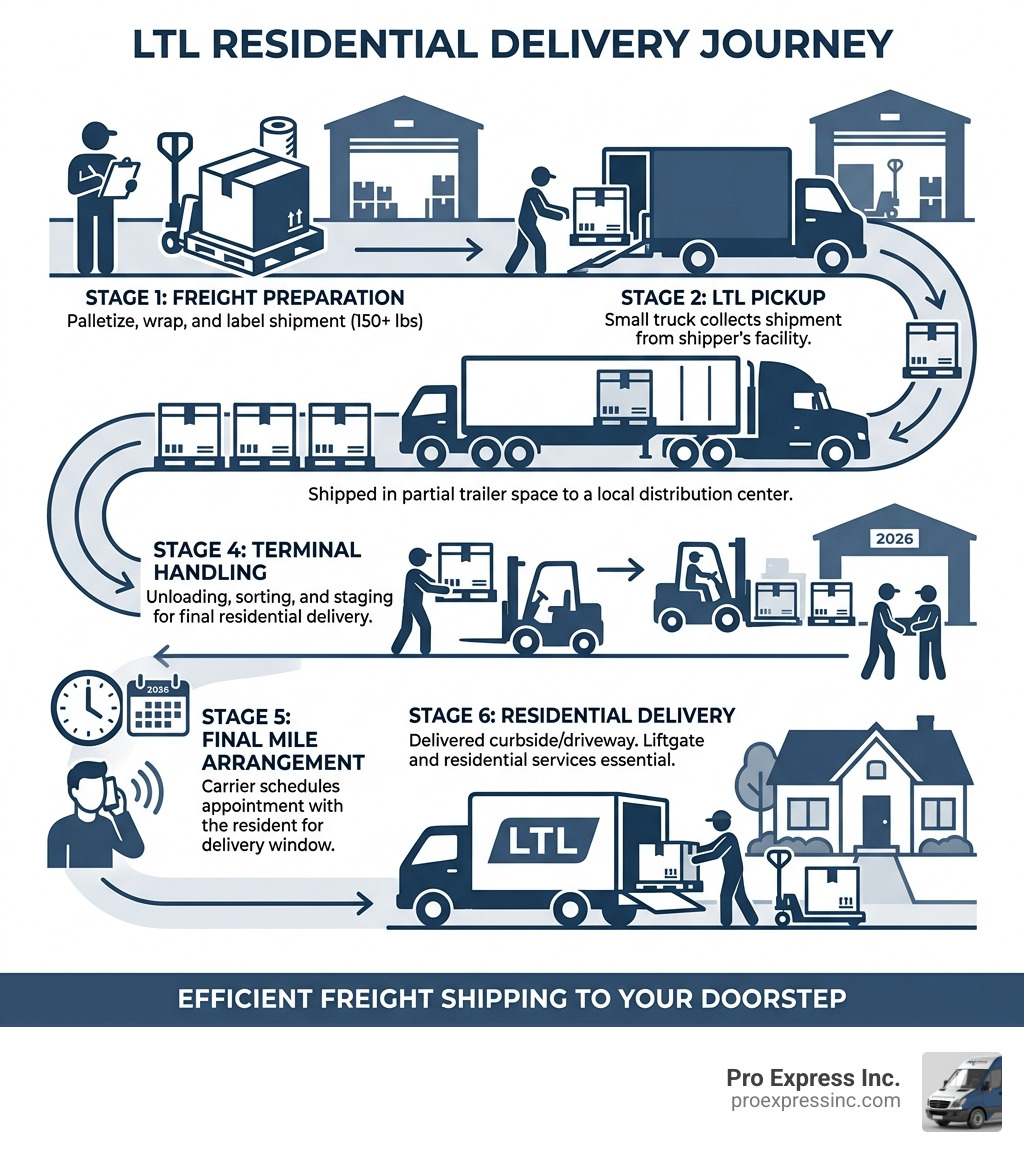
Understanding LTL Residential Delivery Logistics
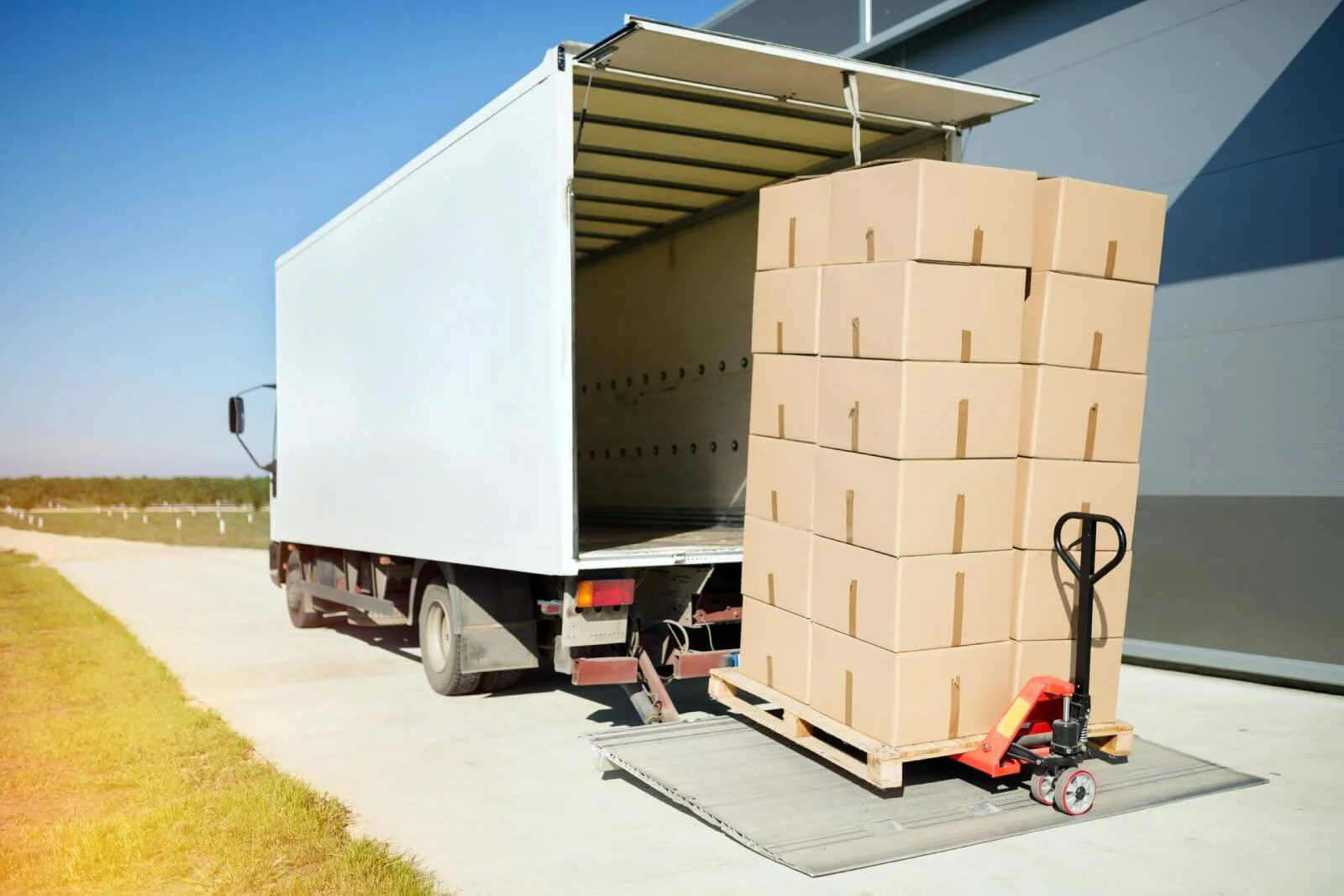
When we talk about ltl residential delivery, we are moving through a world of logistics that exists between small parcel shipping and full truckload (FTL) transport. In April 2026, the landscape of home freight is more active than ever, driven by a global e-commerce market that has surged past $6.3 trillion.
LTL, or “Less-Than-Truckload,” means your shipment doesn’t require an entire 53-foot trailer. Instead, your palletized goods share space with freight from other shippers. This consolidation is handled through a hub-and-spoke network. Your freight moves from a local terminal to a regional hub, where it is sorted and sent to the terminal closest to the final destination.
Weight is a major factor here. While parcel carriers handle boxes up to 150 lbs, LTL is the standard for anything over that threshold. Because these shipments are heavy and bulky—think industrial kitchen ranges, gun safes, or crates of flooring—they must be palletized so they can be moved by forklifts and pallet jacks. To get a deeper look at how these movements are categorized, you can explore More info about freight services.
Managing these logistics requires a firm grasp of Everything You Need to Know about Residential Shipping – LTL Edition. Unlike a warehouse-to-warehouse move, a home delivery involves navigating residential zones that weren’t built for industrial commerce.
How LTL Residential Delivery Differs from Commercial Freight
The most glaring difference between a business delivery and a residential one is infrastructure. Commercial locations are designed for freight; they feature loading docks that are the same height as the truck bed, allowing a forklift to drive right in. They also usually have plenty of room for a 53-foot semi-truck to turn around.
In contrast, residential areas are “limited access” zones. A standard home has no dock and no forklift. Furthermore, many neighborhoods have strict zoning laws or physical barriers—like low-hanging power lines or narrow cul-de-sacs—that prevent large trucks from entering. This necessitates specialized equipment and often a different class of driver. To understand how these logistical hurdles affect your shipment’s status, see our guide on Inside Delivery And Other Tracking Status Mysteries Solved.
Essential Accessorial Services for Home Freight
In ltl residential delivery, “accessorials” are the extra services required to complete the job. Because a home lacks a loading dock, a liftgate is almost always mandatory. A liftgate is a hydraulic platform on the back of the truck that lowers the pallet from the trailer bed to the ground. Without one, there is no way to get a 500-lb pallet off the truck safely.
Other essential services include:
- Residential Surcharge: A fee applied because the carrier has to navigate non-commercial streets and spend more time on the “last mile.”
- Appointment Scheduling: Unlike B2B freight, where a dock is open from 9 to 5, residential carriers must call the homeowner to set a specific delivery window. This often adds a day to the total transit time.
- Limited Access Fees: Applied to locations like gated communities, farms, or even some schools and churches that are difficult for large trucks to navigate.
For a comprehensive checklist of these requirements, refer to The Guide to Residential LTL Shipping – NTG, Formerly FreightPros.
Navigating the Challenges of the Last Mile
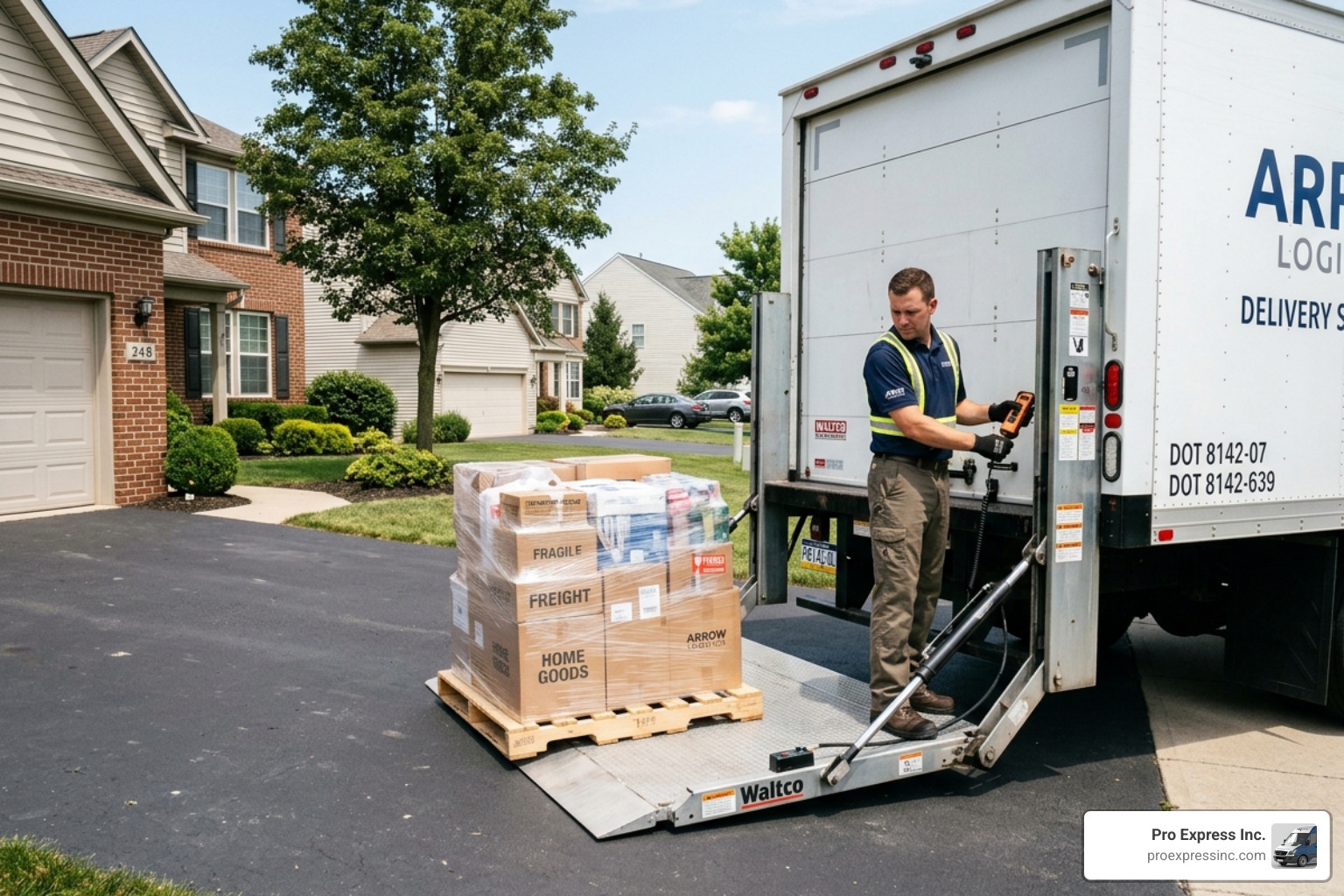
The “last mile” is often the most expensive and complex part of the journey. When a carrier reaches the final terminal, they have to decide if the standard truck can make it to the customer’s door. If the street is too narrow or has weight limits, we may need to employ a shuttle service. This involves transferring the freight from a large semi-truck to a smaller box truck or “sprinter” that can navigate residential roads.
Traffic restrictions, low-hanging trees, and tight corners are constant obstacles. Experienced drivers can navigate these environments, but it requires careful planning and clear communication from the shipper. You can Explore our delivery categories to see how we handle these varied environments across North America.
Why White Glove is the Standard for LTL Residential Delivery
Standard ltl residential delivery is typically “curbside.” This means the driver drops the pallet at the end of the driveway or on the curb. They are legally and contractually prohibited from entering the home due to liability concerns.
However, for high-value items or heavy furniture, curbside isn’t enough. This is where White Glove Service becomes the gold standard. White glove delivery involves:
- Two-man teams: Essential for safely moving heavy items.
- Room-of-choice placement: We bring the item inside, navigate stairs, and place it exactly where the customer wants it.
- Debris removal: We take the pallet, shrink wrap, and cardboard with us, leaving the home clean.
- Light assembly: Putting together the dining table or fitness equipment so it’s ready to use.
This level of service eliminates the stress of the “last mile” for the consumer. Learn more by reading Everything You Need To Know About White Glove Home Delivery.
Managing Home-Based Business Shipments
A common point of confusion is how carriers treat home-based businesses. Even if you have a registered LLC and a professional office in your home, LTL carriers classify the address based on its physical location. If it’s in a residential neighborhood, it incurs residential fees.
Zoning restrictions apply here too. If your neighborhood doesn’t allow commercial vehicle parking, we have to coordinate a quick “hot-shot” style drop-off or use a smaller vehicle. For businesses operating from home, coordination is key to avoiding re-delivery charges. You can Learn more about our professional services to see how we bridge the gap between residential locations and professional logistics needs.
Preparing Your Shipment for Successful Home Arrival
Preparation is the best defense against damage and delays. Because LTL freight is handled multiple times as it moves through the hub-and-spoke system, your packaging must be robust.
- Palletization: Always secure your goods to a sturdy wooden or plastic pallet. This allows forklifts to move the item without touching the product itself.
- Shrink Wrap: Use high-quality shrink wrap to “unitize” the load. Wrap it tight enough that the product cannot shift on the pallet.
- Labeling: Every side of the pallet should have clear labeling, including the Bill of Lading (BOL) number and contact information.
- BOL Accuracy: Ensure the BOL explicitly states “Residential Delivery” and “Liftgate Required.” If these aren’t noted, the driver may arrive in a truck without a liftgate, leading to a failed delivery and extra fees.
Proper preparation ensures that when we provide expedited or same-day service, the freight is ready for the rigors of the road. This is why many logistics professionals consider Why White Glove Delivery Is The Gold Standard For Shipping.
Frequently Asked Questions about LTL Residential Delivery
Do LTL carriers bring freight inside the home?
Standard LTL carriers do not. Their insurance typically only covers them to the “tailgate” of the truck or the curb. If you need the item moved inside, you must specifically request “Inside Delivery” (which usually means just inside the garage or front door) or a full White Glove service for room-of-choice placement.
What is a liftgate and when is it required?
A liftgate is a mechanical platform on the back of a freight truck. It is required for any location that does not have a loading dock or a forklift on-site. Since almost all residential addresses lack these, a liftgate is a standard requirement for ltl residential delivery.
How does LTL differ from standard parcel shipping?
Parcel shipping (like standard UPS or FedEx Ground) is for individual boxes under 150 lbs that can be carried by one person. LTL is for heavy, palletized freight that requires mechanical equipment to move. LTL involves more complex pricing based on freight class and requires more coordination for the final delivery.
Conclusion
Navigating ltl residential delivery doesn’t have to be a source of stress. With nearly two decades of experience, Pro Express Inc. has mastered the art of the last mile. Whether you are shipping time-sensitive medical equipment or high-end furniture, our US-wide operations and 24/7 customer support ensure your freight arrives safely and on time.
We specialize in the “impossible” deliveries—the ones that require same-day urgency, hot-shot speed, or the meticulous care of a two-man white glove team. With a 99% client satisfaction rate and nearly 20 years in the industry, we understand that in logistics, reliability is the only currency that matters.
Don’t let a residential address slow your business down. From Alaska to Hawaii and across all of North America, we provide the ground-expedited solutions you need to keep your promises to your customers.
Contact Us Today for White Glove Services and experience freight shipping without the friction.