
Find Reliable Same Day Delivery Freight Carriers When Time Is Critical
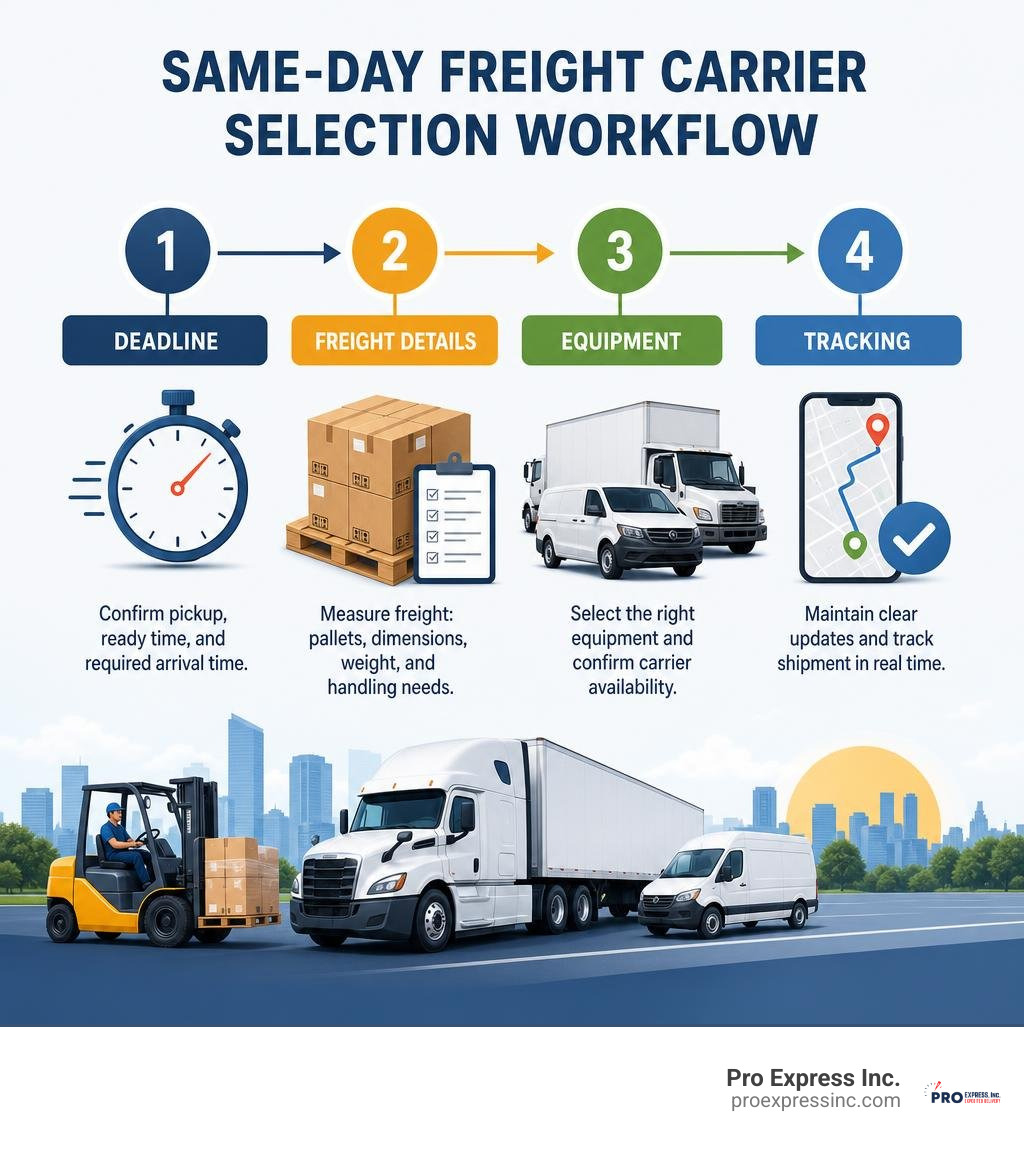
To find the right same day delivery freight carriers, start with the shipment and deadline:
- Confirm the pickup and delivery locations, ready time, and required arrival time.
- Measure the freight, including pallet count, dimensions, weight, and handling needs.
- Identify whether the deadline is a true emergency, such as a line-down part or critical medical shipment.
- Choose a provider that can arrange dedicated equipment, verify carrier availability, and maintain clear shipment updates.
Same-day freight is often the right fit for palletized cargo, machinery, multi-piece shipments, and loads above typical courier limits. Couriers commonly handle packages under 150 pounds and work within a local or regional radius. Freight carriers can move shipments from roughly 150 pounds to 45,000 pounds or more across regional, national, and cross-border lanes.
Speed matters when a production line is stopped or a customer deadline is at risk. But reliable execution matters just as much. Research consistently shows that buyers prefer a delivery that arrives when promised over one that is fast but late.
When regular transportation fails, Pro Express Inc. coordinates urgent delivery through a vetted carrier network. With more than 17 years as a freight broker, the team helps operations managers source the equipment, handling, and communication needed for time-critical freight.
Same day delivery freight carriers vocabulary:
Courier vs. Freight: Determining the Right Transit Method
Navigating high-stakes logistics requires a clear understanding of cargo profiles. While standard couriers excel at transporting envelopes and loose boxed items across a metro area, industrial supply chains demand heavy-duty transit methods. When goods are secured on standard 48×48 pallets, crated, or bound in custom skids, traditional parcel handling networks quickly reach their operational boundaries.
Courier networks typically operate within a tight geographic radius—often under 200 miles. When operations managers must coordinate shipments that span longer distances or require regional connectivity, standard courier handling becomes insufficient. For expanded reach, businesses often look into national same day courier services to bridge local pickup points with regional networks. However, when cargo exceeds parcel size, dedicated freight transport becomes necessary to protect heavy shipments from multiple handling transfers.
How Same Day Delivery Freight Carriers Compare to Standard Couriers
The dividing line between local couriers and freight carriers rests on weight capacity, physical dimensions, and handling safety. Parcels under the 150-pound mark fit into standard parcel vehicles. In contrast, palletized freight, bulk manufacturing supplies, and industrial components ranging from 150 pounds up to 45,000 pounds or more require commercial equipment with commercial securement capabilities.
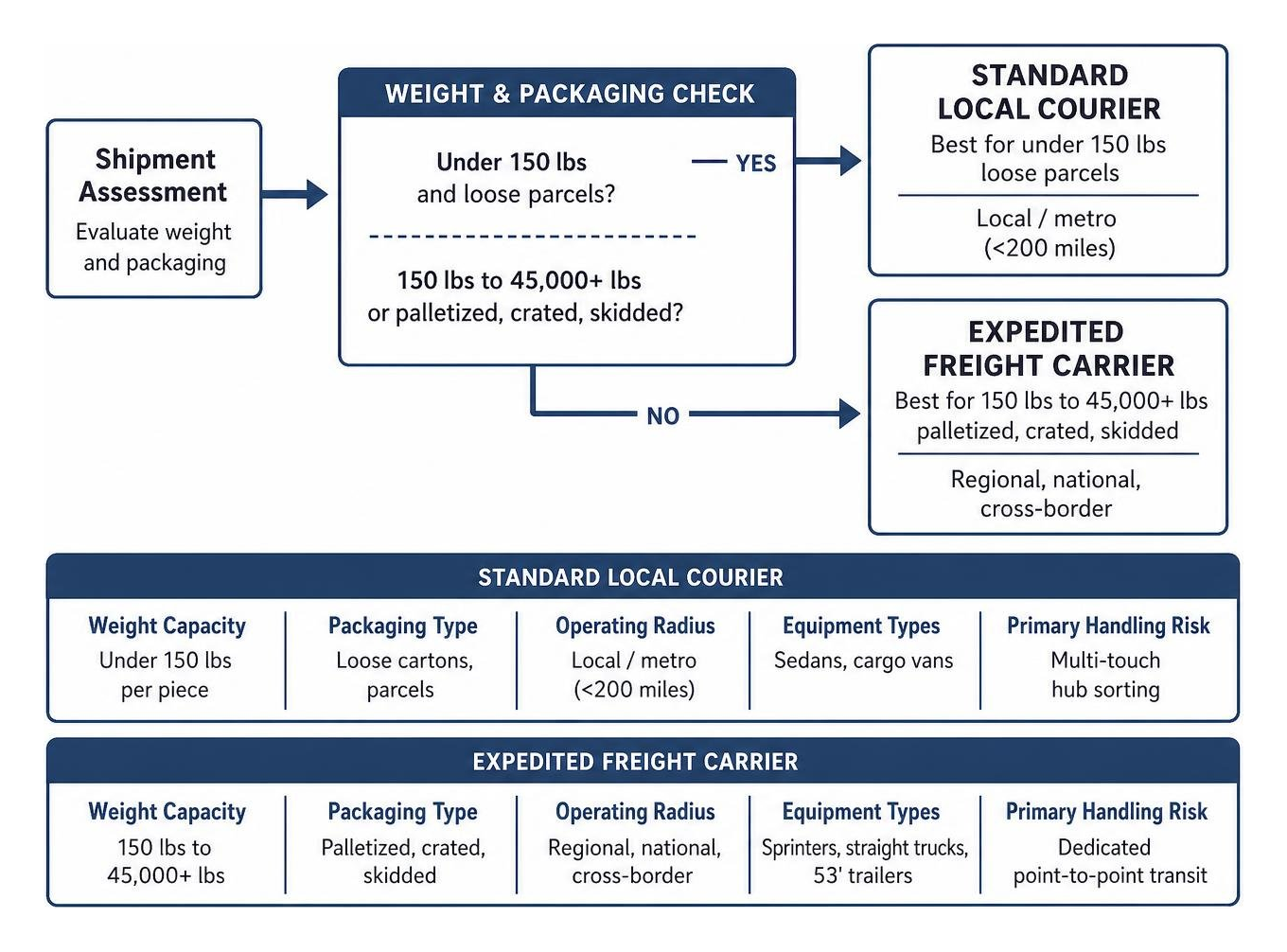
When an operation requires high-capacity transit along bustling regional corridors, dedicated freight carriers prevent the delays inherent in hub-and-spoke sorting facilities. Rather than commingling freight with hundreds of unrelated packages, coordinating dedicated straight trucks, dry vans, or flatbeds ensures your goods move directly from dock to dock without intermediate offloading. This direct routing eliminates terminal dwell times, reduces the risk of transit damage, and guarantees that freight remains under continuous supervision from initial departure to final arrival.
Urgency Classification: True Operational Need vs Preferred Timing
In B2B operations, not every urgent request represents a true operational crisis. Misjudging the nature of urgency can lead to misallocated logistics resources. True operational urgency includes scenarios like:
- An automotive assembly plant facing an imminent line shutdown due to a missing component.
- A hospital or lab waiting on critical medical devices or temperature-sensitive pharmaceutical materials.
- Heavy construction machinery disabled on-site, waiting for a specialized replacement hydraulic assembly.
- Urgent architectural lighting fixtures required immediately to prevent project handover penalties on a commercial build.
Preferred timing, by contrast, involves situations where moving cargo quickly is desirable for scheduling convenience but does not halt revenue-generating operations if delayed by a few hours.
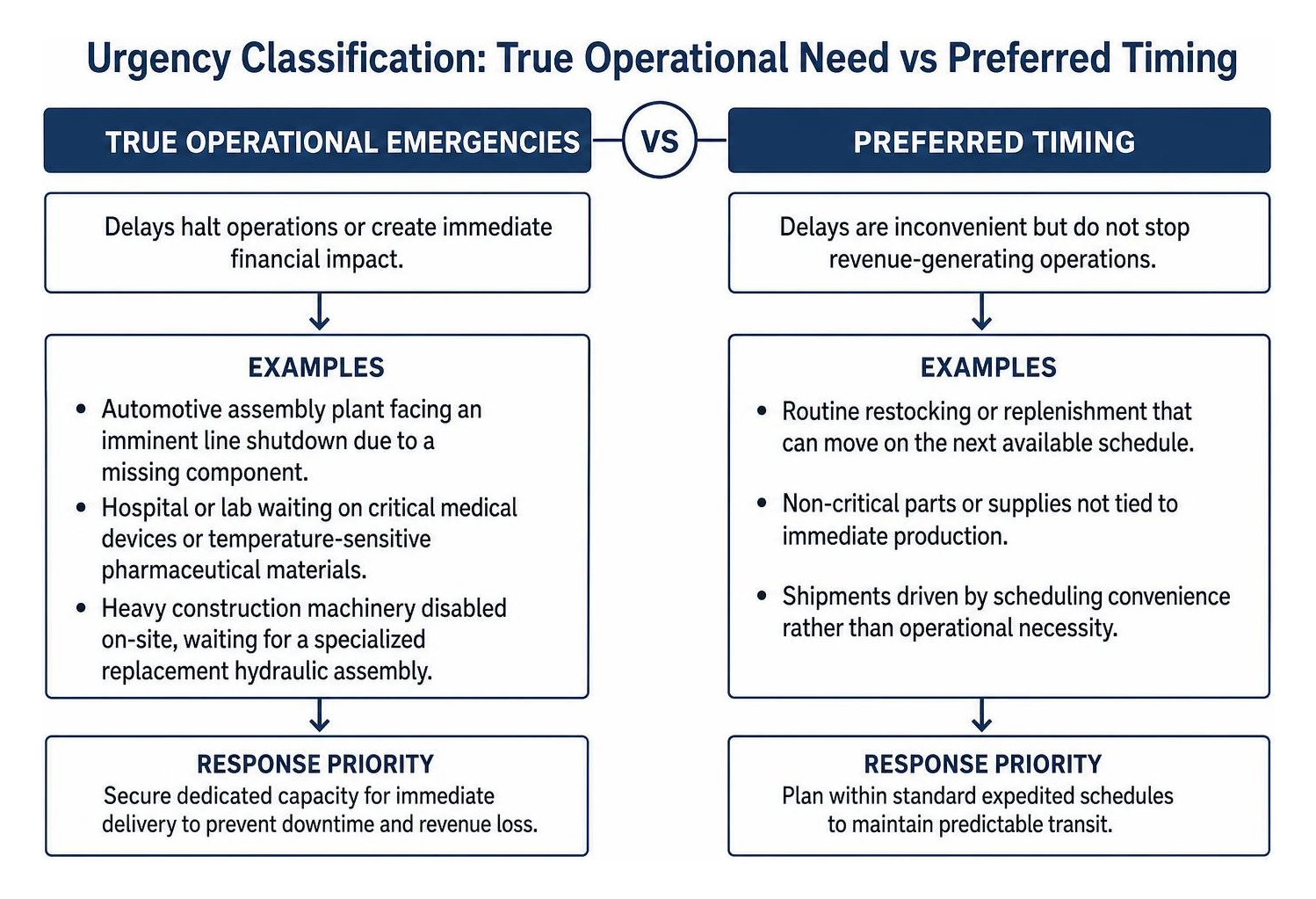
Understanding this distinction allows supply chain managers to implement reliable expedited ground freight strategies that secure dedicated capacity when line-down emergencies occur, while maintaining predictable transit schedules for routine replenishment.
How to Select the Right Same Day Delivery Freight Carriers
Finding dependable transportation partners requires a structured evaluation process. When standard carriers fall short or production schedules change unexpectedly, working with a reputable freight broker ensures your freight is assigned to professional, vetted carriers equipped to handle rigorous transit windows.

When sourcing expedited capacity, operations managers should verify:
- Safety and Compliance Verification: Confirmation that every dispatched motor carrier holds active operating authority, proper cargo insurance coverage, and strong safety records verified through the Federal Motor Carrier Safety Administration.
- Nationwide Equipment Sourcing: Rapid access to diverse commercial vehicle classes, from cargo vans and sprinter vans to 24-foot straight trucks with liftgates and 53-foot dry vans.
- Proactive Status Communication: Dispatch teams that provide milestones, verified pickup alerts, and continuous transit updates from departure to final delivery.
Logistics professionals regularly rely on specialized same day freight services to arrange dedicated capacity quickly across North American shipping corridors. By establishing rigorous partner screening criteria, transportation coordinators eliminate unreliable operators and safeguard critical shipments against unexpected transit bottlenecks.
Essential Capabilities of Same Day Delivery Freight Carriers
High-performance freight brokerage centers on speed of coordination, precision dispatching, and cargo security. When securing urgent freight transport, key operational capabilities include:
- Exclusive Hot-Shot Dispatch: Arranging dedicated vehicles solely for your shipment, ensuring cargo is loaded and driven straight to the destination facility without intermediate stops or cross-dock transfers.
- Real-Time GPS Tracking: Maintaining visibility over transit corridors, allowing logistics coordinators to monitor vehicle movement and provide arrival estimates.
- Strict Chain of Custody Protocols: Enforcing dock-to-dock signature tracking and detailed bills of lading, which is vital for high-value industrial machinery, automotive electronics, and delicate medical shipments.
Specialized Accessorial Support for Complex Cargo
Not every delivery site features a raised commercial loading dock or a functioning forklift. Complex freight often requires specialized accessorial equipment and trained handling personnel to navigate tight job sites, healthcare facilities, and commercial storefronts. Key accessorial services include:
- Hydraulic Liftgate Deployment: Enabling smooth ground-level loading and unloading when receiving facilities lack raised loading bays or material handling machinery.
- Inside Delivery Protocols: Moving palletized or heavy freight past the initial threshold directly into cleanrooms, staging areas, or production zones.
- Two-Man Handling and White-Glove Staging: Coordinating multi-person handling teams to unpack, position, and secure sensitive equipment with absolute care.
When transporting fragile items—such as precision medical monitors, custom architectural lighting fixtures, or calibrated automotive assemblies—customized same day cargo solutions ensure the appropriate equipment is dispatched right from the start.
Key Operational Criteria for Time-Critical Freight Sourcing
Building a resilient supply chain requires balancing transit speed with consistent execution. Data shows that nearly 90% of buyers are willing to wait up to three days for an order, provided the delivery date is dependable—demonstrating that missed delivery windows cause far more disruption than slightly longer, predictable lead times.
To maintain dependable delivery schedules, logistics teams should establish a dynamic operational framework:
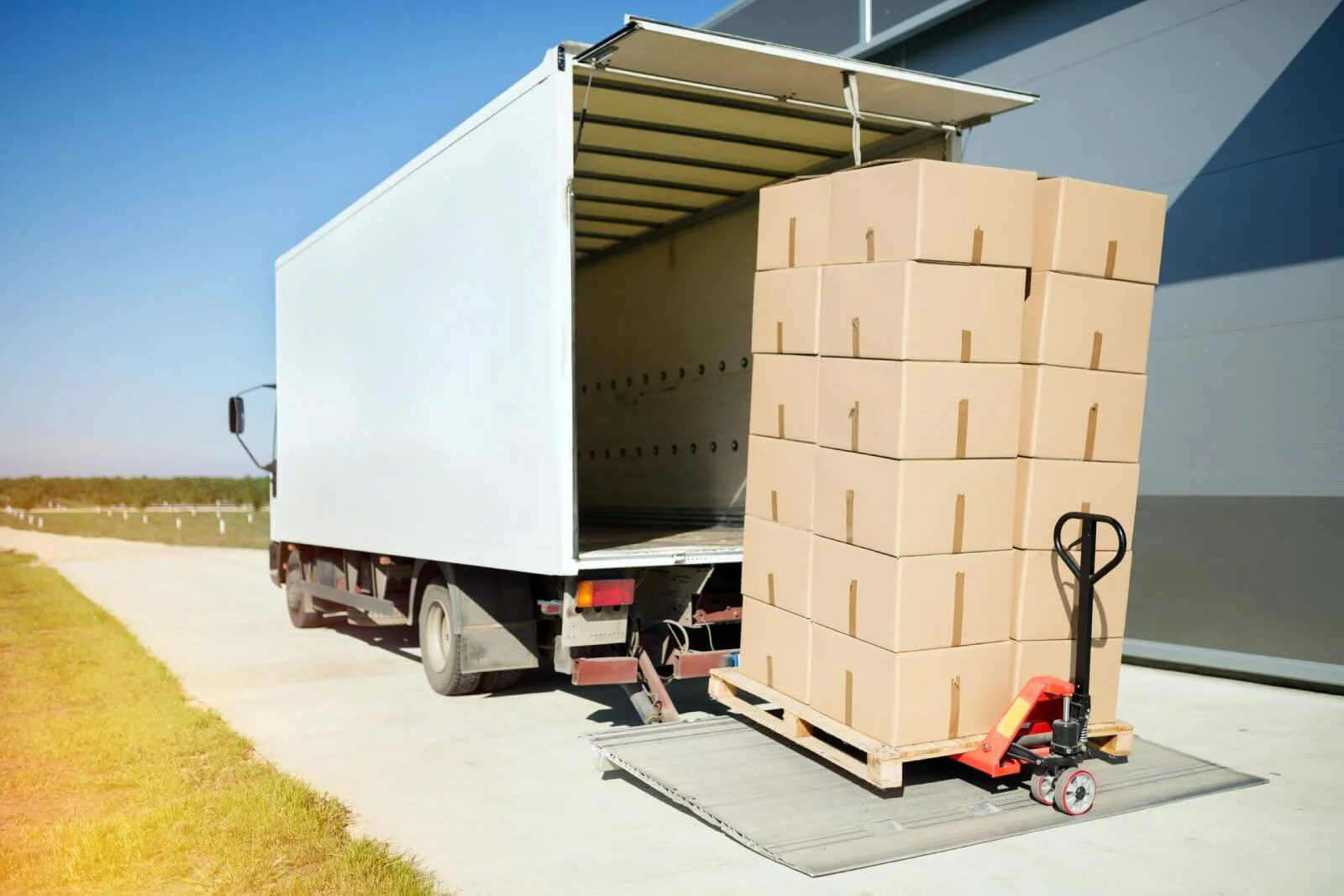
- Assess Packaging and Securement: Confirm whether cargo is securely banded, stretch-wrapped to unbroken wooden pallets, or crated to withstand transit forces.
- Verify Lane Density and Transit Corridors: Map out direct point-to-point routes to minimize transit delays caused by metropolitan congestion or weather disruptions.
- Integrate Multi-Stop Efficiency: When multiple facilities require critical components simultaneously, coordinate dedicated routing that hits sequential drop-offs without unloading the primary cargo.
By coordinating reliable expedited freight services, operations leaders maintain full control over urgent shipments, protect sensitive cargo, and meet strict production deadlines.
Frequently Asked Questions About Same-Day Freight Sourcing
What weight capacity distinguishes freight carriers from local couriers?
Local parcel couriers generally handle individual cartons and parcels under 150 pounds using standard passenger vehicles or cargo vans. Expedited freight carriers transport heavier, consolidated shipments ranging from 150 pounds up to 45,000 pounds or more, utilizing commercial vehicles such as straight trucks, flatbeds, and 53-foot tractor-trailers.
When should logistics managers choose freight transport over courier delivery?
Freight transport is the right choice whenever shipments are palletized, crated, or exceed 150 pounds. It is also required when moving industrial machinery, oversized materials, or multi-pallet shipments over regional and national distances requiring commercial loading docks and liftgate trailers.
Why is delivery reliability prioritized over sheer transit speed?
In manufacturing and commercial supply chains, downstream operations depend on synchronized schedules. An unannounced or late delivery disrupts assembly shifts, staging crews, and customer production runs. A dependable, guaranteed delivery timeline allows managers to coordinate labor and equipment effectively.
Conclusion
Managing critical supply chain deadlines requires rapid coordination, dependable carrier capacity, and proactive communication. Pro Express Inc. brings more than 17 years of freight brokerage experience to every urgent load, having successfully coordinated over 6,000 time-sensitive shipments with a 99% client satisfaction rating.
When traditional transit networks stall, our dedicated team connects you with an extensive, vetted nationwide carrier network to keep your automotive, manufacturing, medical, and commercial freight moving safely and without delay. Learn more about how our team coordinates time-critical transport by exploring our dedicated freight brokerage services.