
When a Failed Delivery Puts Your Operation at Risk
A parcel delivery service failure isn’t just an inconvenience — for a manufacturer, distributor, or medical supplier, it can mean a halted production line, a broken client commitment, or a critical device that never arrives on time.
The core types of delivery service, at a glance:
| Service Type | Typical Speed | Best For |
|---|---|---|
| Same-day / Hot-shot | Within hours | Critical, time-sensitive B2B shipments |
| Next-day expedited | 1 business day | Urgent but scheduled freight |
| Standard ground | 1–5 business days | Routine, non-urgent shipments |
| Specialized courier | Varies | Medical, high-value, or oversized cargo |
Major national carriers move tens of millions of packages daily across vast hub-and-spoke networks. But when your regular carrier fails — a missed pickup, a delayed scan, a package stuck at a sorting hub — that scale works against you. You become a number in a queue.
That’s the gap Pro Express Inc. was built to fill.
With nearly 20 years coordinating expedited freight through a vetted carrier network, Pro Express arranges same-day, next-day, and hot-shot deliveries for operations and logistics managers who cannot afford to wait. Over 10,000 shipments coordinated. A 99% client satisfaction record. And someone who picks up the phone when it matters most.
This guide breaks down every major parcel delivery option — from national carriers to dedicated couriers — so you can make the right call the next time a critical shipment is on the line.
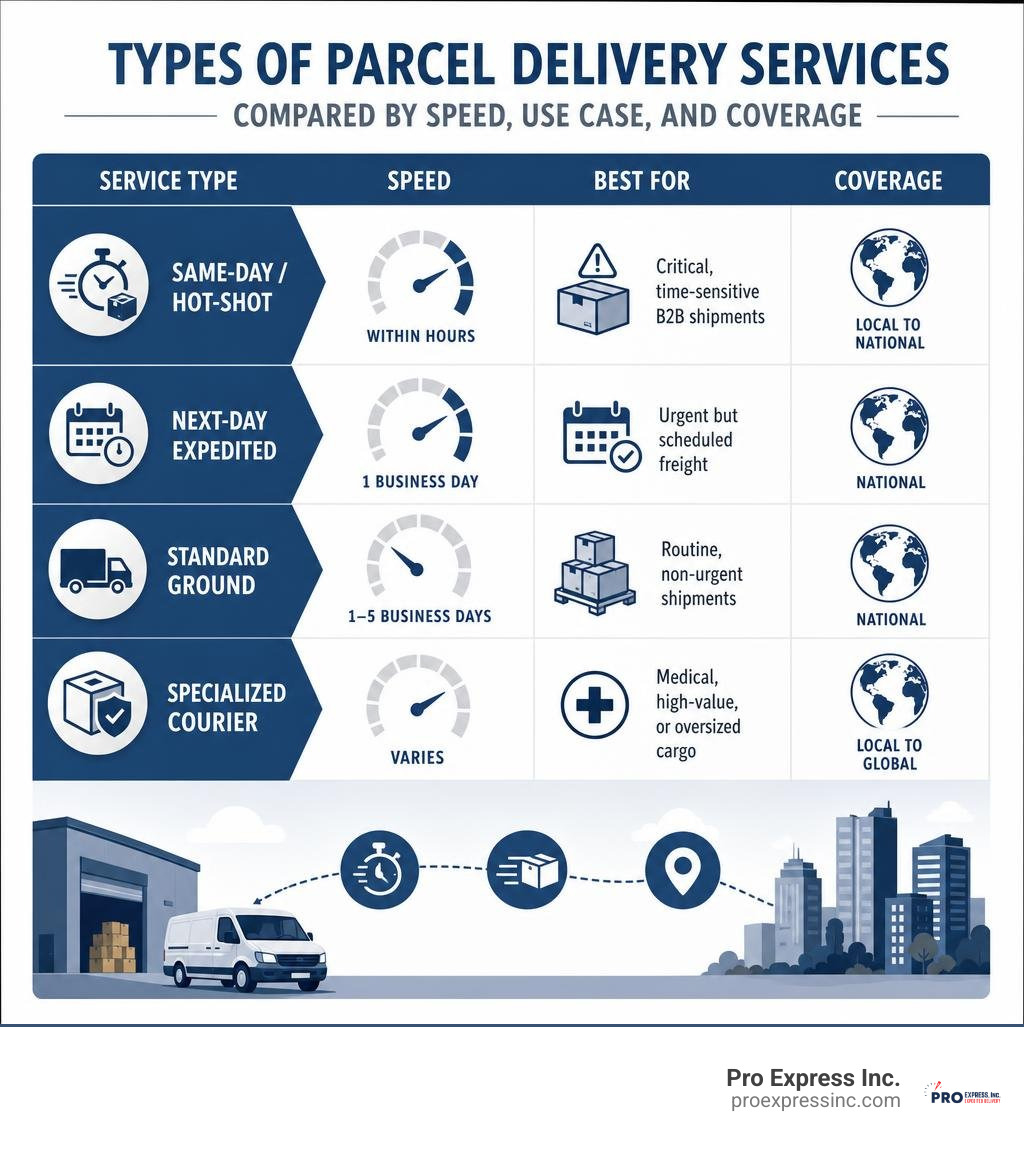
Parcel delivery service terms to remember:
Evaluating the Core Types of Parcel Delivery Service Options
Choosing the right transport method requires understanding the operational differences between standard postal runs and dedicated logistics. When a critical component must reach its destination, selecting the incorrect tier can result in supply chain gridlock.
To make an informed decision, let us examine the core tiers of a parcel delivery service:
- Same-Day Courier & Hot-Shot Delivery: This is the most urgent tier available. When a manufacturing facility experiences an unplanned shutdown due to a broken part, or a hospital requires immediate delivery of specialized equipment, same-day routing is the only viable option. These services bypass sorting hubs entirely. A dedicated carrier retrieves the cargo and drives it directly to the receiver.
- Next-Day Express: Ideal for scheduled, high-priority shipments that must arrive by the next business morning. National networks offer time-definite morning options (such as 8:30 AM, 9:00 AM, or 11:00 AM) to ensure your business operations can resume without delay.
- Expedited Ground: Faster than standard transit, this service prioritizes your cargo within a carrier’s ground network. It utilizes optimized highway routing and team drivers to minimize idle time at regional hubs.
- Standard Ground: The baseline option for routine, non-urgent shipments. While highly reliable for day-to-day operations, standard ground is highly susceptible to seasonal delays, weather disruptions, and sorting facility bottlenecks.
For a deeper dive into how these options function under real-world pressure, consult The Ultimate Guide to Courier Delivery Services.
Standard vs. Expedited Parcel Delivery Service for Critical Shipments
The fundamental difference between standard and expedited transit lies in the handling of your cargo. Standard parcel delivery relies on consolidation. Your package is loaded onto a truck with thousands of others, transported to a regional hub, unloaded, sorted, and loaded onto another vehicle. Every touchpoint represents a potential point of failure.
Expedited services, particularly those arranged through a specialized freight broker, minimize or eliminate these touchpoints. When we coordinate an expedited shipment, the cargo often remains on a single dedicated vehicle from pickup to drop-off. This direct routing preserves supply chain continuity and drastically reduces the risk of damage or loss.
For operations managers, the choice is clear: standard ground is suitable for inventory replenishment, but expedited transport is mandatory when downtime is looming. You can learn more about securing these rapid pathways in our guide on Local Courier Services Your Shortcut to Fast Deliveries.
Specialized Courier Solutions for High-Value Industries
Certain sectors require more than just speed; they demand specialized handling protocols and regulatory compliance.
- Medical and Pharmaceutical Logistics: Transporting medical devices, pharmaceutical supplies, and fragile diagnostic equipment requires strict adherence to safety standards. Carriers must be vetted to handle sensitive cargo without compromising its integrity.
- Automotive and Manufacturing Parts: Just-in-time (JIT) manufacturing relies on perfect timing. A single missing assembly component can cost a facility thousands of dollars per minute in lost productivity. Dedicated hot-shot delivery ensures these parts arrive precisely when needed.
- High-Value Industrial Fixtures: Sensitive components, such as commercial lighting fixtures or advanced electronics, require secure transport, specialized packaging, and gentle handling to prevent micro-fractures or structural damage during transit.
To understand how high-value logistics are managed under strict timelines, refer to our Same Day Courier Service Your 2026 Guide.
Key Differences Between National Hub-and-Spoke Networks and Dedicated Courier Services
To build a resilient logistics strategy, you must understand the structural differences between national networks and dedicated couriers.
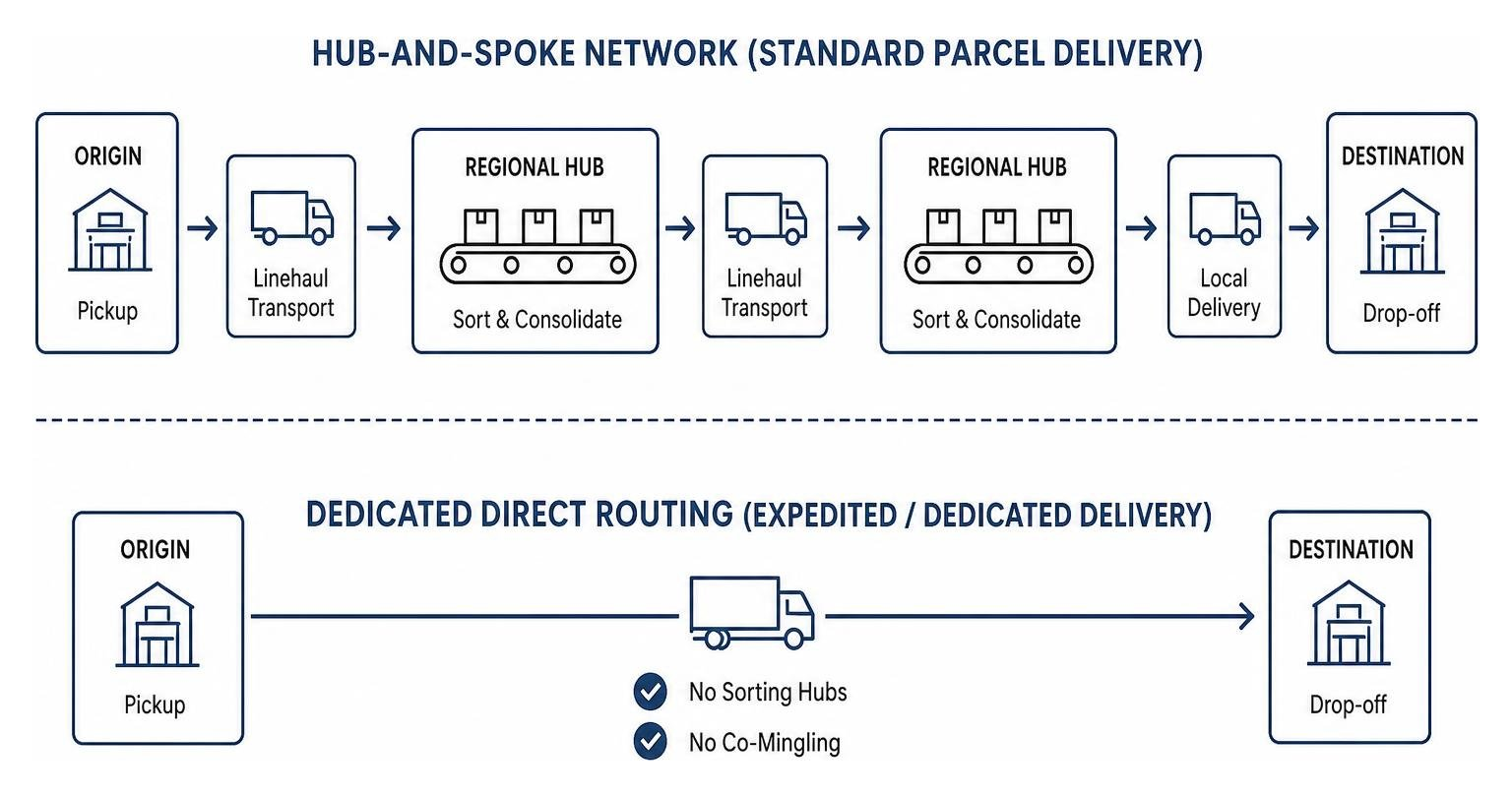
National carriers operate on a hub-and-spoke model. This system is highly efficient for moving massive volumes of standard packages across the United States. However, because packages are co-mingled and processed through automated sorting machinery, any disruption at a major hub can cause a cascading delay across the entire network.
Dedicated courier and hot-shot services, by contrast, operate on a point-to-point model. When you arrange a dedicated shipment, the vehicle is committed solely to your cargo. There are no intermediate hubs, no sorting belts, and no co-mingling with other shippers’ goods.
| Operational Feature | National Hub-and-Spoke Networks | Dedicated Courier / Hot-Shot Services |
|---|---|---|
| Routing Structure | Multi-stop transit via regional sorting hubs | Direct, point-to-point transit |
| Cargo Handling | High (multiple loading/unloading cycles) | Minimal (loaded at origin, unloaded at destination) |
| Risk of Loss/Damage | Moderate (due to automated sorting and co-mingling) | Extremely low (dedicated cargo space) |
| Flexibility | Rigid schedules and strict packaging guidelines | Highly adaptable to urgent operational changes |
| Geographic Reach | Nationwide via fixed, pre-determined lanes | Nationwide, including remote and hard-to-reach job sites |
In remote rural areas of the contiguous United States, standard networks face even greater challenges. Shippers in these regions often require specialized local networks and dedicated forwarding options to bridge the gap and ensure seamless last-mile delivery.
For a comprehensive analysis of how these models impact your operational bottom line, read The Ultimate Guide to Courier Delivery Services.
Weight and Size Limitations Across Delivery Networks
Standard parcel networks enforce rigid physical limitations on the cargo they will accept. Generally, national carriers restrict standard parcel shipments to:
- A maximum weight of 150 pounds per individual package.
- A maximum length of 108 inches.
- A maximum combined length and girth of 165 inches.
If your shipment exceeds these dimensions, it is classified as freight. Attempting to force oversized cargo through a standard parcel network results in severe penalties, operational delays, or outright rejection at the terminal.
While gig-economy platforms can sometimes handle larger items up to 300 pounds and 144 inches for local deliveries, they are limited by the passenger vehicles their independent drivers operate. For industrial, heavy, or oddly shaped cargo, coordinating an expedited hot-shot vehicle—such as a sprinter van, straight truck, or flatbed—through a broker is the most reliable way to help ensure safe and compliant transport.
Learn more about preparing your shipments for transit in our guide, Sending a Parcel 101.
Tracking, Visibility, and Chain of Custody Features
In high-stakes B2B logistics, basic tracking is insufficient. Knowing that your critical manufacturing component was “scanned in Chicago” twelve hours ago does not help you manage an idle assembly team.
Modern logistics demand real-time visibility and a verified chain of custody. Advanced tracking features include:
- Real-Time GPS Monitoring: Continuous, active tracking of the transport vehicle’s location, providing precise arrival estimates.
- Geofencing Alerts: Automated notifications triggered when the carrier enters or exits designated geographic boundaries, such as the pickup facility or delivery site.
- Barcode Scanning & Digital Signatures: Immediate electronic confirmation at every transition point, ensuring a documented chain of custody.
- Photo Proof of Delivery: Visual verification of the cargo at the exact drop-off location, eliminating disputes and confirming successful delivery.
These high-touch tracking measures provide the operational certainty required to manage complex supply chains under tight deadlines.
Navigating Specialized Delivery Requirements and Regulatory Compliance in 2026
As we navigate the logistics landscape of July 2026, regulatory compliance and specialized handling have become more complex than ever. Standard delivery networks are increasingly rigid, implementing strict penalties for non-standard labeling and non-compliant cargo. For logistics managers, this means that ensuring your shipments meet all regulatory benchmarks is critical to avoiding delays.
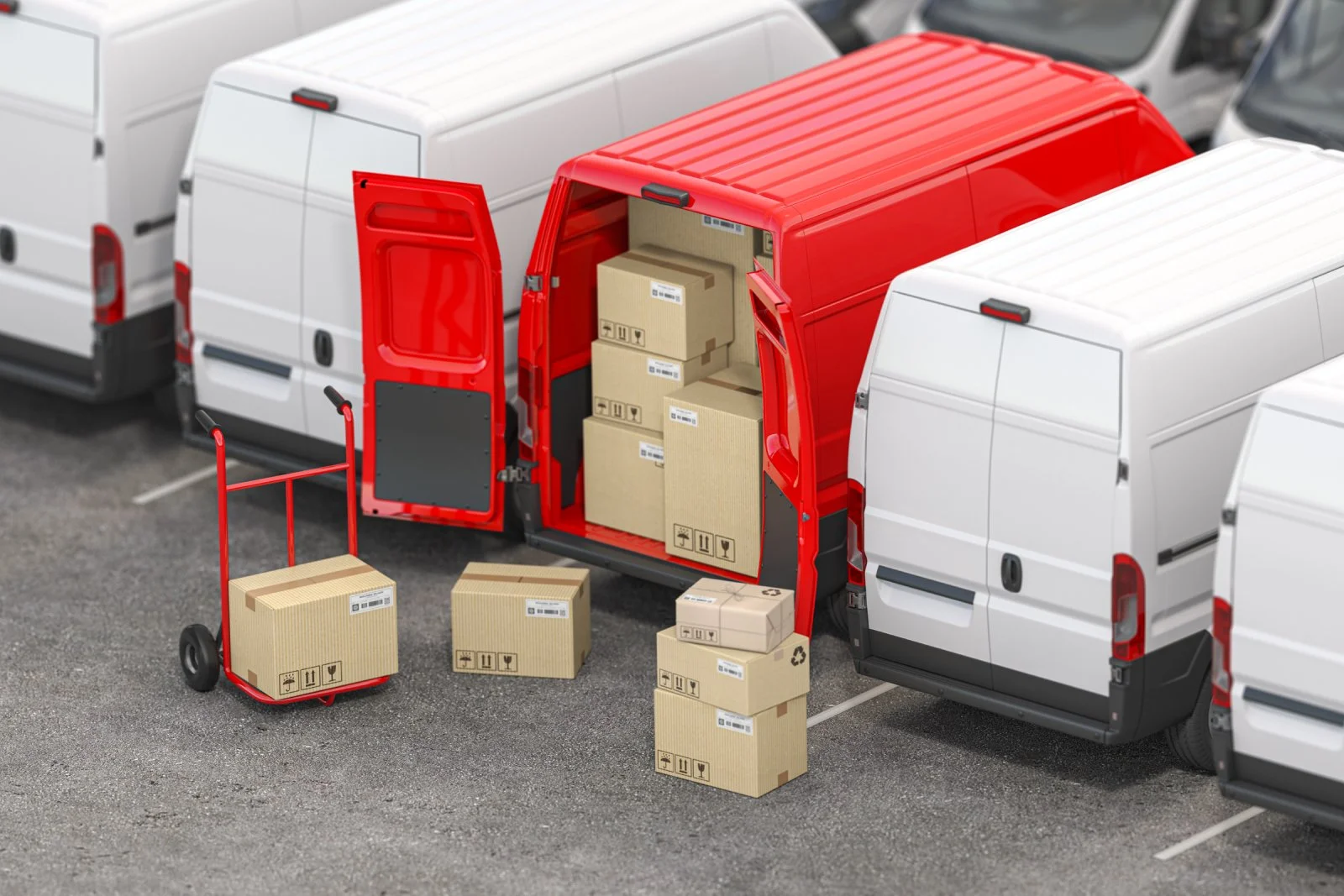
Specialized delivery requirements often demand more than just standard curb-side drop-off. When transporting fragile medical devices, high-value industrial machinery, or sophisticated lighting fixtures, businesses require tailored on-site services:
- White Glove Service: This involves careful unloading, unpacking, and placing the cargo exactly where it needs to go within the receiving facility, rather than leaving it on a loading dock.
- Two-Man Delivery: Essential for heavy, bulky, or highly sensitive equipment that cannot be safely managed by a single carrier representative.
- Liftgate & Inside Delivery: Crucial for facilities that lack a dedicated loading dock, ensuring cargo is lowered safely to ground level and transported securely inside the building.
To select the appropriate level of service for your operational needs, consult The Ultimate Guide to Choosing the Right Courier Service for Your Business Needs.
Domestic Regulatory Compliance and Secure Cargo Handling
In July 2026, regulatory oversight governing domestic transport has intensified. Shippers must navigate strict Department of Transportation (DOT) regulations alongside evolving safety standards. For instance, the Consumer Product Safety Commission (CPSC) now mandates electronic filing of Certificate of Compliance data for specific goods entering or moving through commercial channels.
Additionally, major commercial carriers have tightened their labeling and packaging guidelines. Failing to utilize approved, standardized labeling software can result in non-compliant label penalties and manual-handling delays at sorting terminals.
When you partner with a professional freight broker, we ensure that the carriers assigned to your cargo are fully vetted, compliant with applicable DOT safety regulations, and equipped with the proper securement tools to support safe transport. For detailed insights on packaging and compliance preparation, read Sending a Parcel 101.
Managing Urgent Demands in a High-Urgency B2B Environment
Peak shipping seasons, severe weather disruptions, and sudden regional capacity shortages frequently cripple standard hub-and-spoke networks. During these high-demand periods, national carriers often impose volume caps, limiting the number of packages they will accept from a single business.
To maintain operational continuity under these high-pressure conditions, businesses must secure dedicated capacity. By bypassing consolidated networks and utilizing a vetted carrier network, you can help ensure that your cargo is prioritized. Dedicated transit ensures your shipments move on a direct route, insulated from terminal backlogs and network-wide bottlenecks.
Explore strategies for securing dedicated capacity in The Ultimate Guide to Choosing the Right Courier Service for Your Business Needs.
Frequently Asked Questions About Reliable Parcel Delivery
What is the difference between standard parcel delivery and expedited freight?
Standard parcel delivery is designed for consolidated, non-urgent packages weighing under 150 pounds. These items move through national hub-and-spoke networks, where they are sorted and handled multiple times. Expedited freight, coordinated by a freight broker, is designed for urgent, time-sensitive, or oversized cargo. It utilizes dedicated vehicles, direct routing, and specialized handling (such as liftgates or white-glove service) to bypass sorting hubs entirely, supporting fast and safe arrival.
How do businesses ensure chain of custody for sensitive medical or high-value shipments?
To help ensure a secure chain of custody, businesses should utilize dedicated point-to-point transit rather than consolidated networks. This ensures that the cargo remains on a single vehicle with a single carrier from pickup to delivery. Additionally, implementing real-time GPS tracking, geofencing, digital barcode scanning, and photo proof of delivery provides a transparent, unbroken record of the shipment’s journey.
What happens if a critical package is lost or damaged during transit?
When shipping through standard parcel networks, basic carrier liability is typically limited and may not cover the full value of critical industrial or medical cargo. To mitigate this risk, businesses should work with a freight broker who can coordinate comprehensive cargo insurance. Furthermore, choosing dedicated transport drastically reduces the physical handling of the cargo, minimizing the risk of damage or loss from the outset.
Conclusion: Partnering for Flawless Expedited Logistics
In a high-urgency business environment, relying on standard networks for critical shipments is a risk your operation cannot afford. When a regular carrier fails, or an urgent deadline is placed on the line, you need a logistics partner who can arrange immediate, reliable solutions.
At Pro Express Inc., founded in 2007 by Peter Jałowiec, we have spent nearly 20 years specializing in expedited ground shipping. We connect businesses across the contiguous United States with a highly vetted carrier network to move urgent, time-sensitive cargo safely and efficiently.
Whether your shipment requires:
- Exclusive Hot Shots for direct, uninterrupted transit.
- White Glove & Two-Man Delivery for high-value or delicate handling.
- Liftgate & Inside Delivery for facilities without loading docks.
With over 10,000 shipments coordinated and a 99% client satisfaction rate, we are the trusted freight broker that logistics decision-makers rely on to keep their supply chains moving.
Don’t let a failed delivery halt your operations. For reliable coordination of your next urgent shipment, explore our Courier Delivery Services page, or Contact Us Today to Request a Quote.