
Urgent Ground Freight for Energy Field Sites
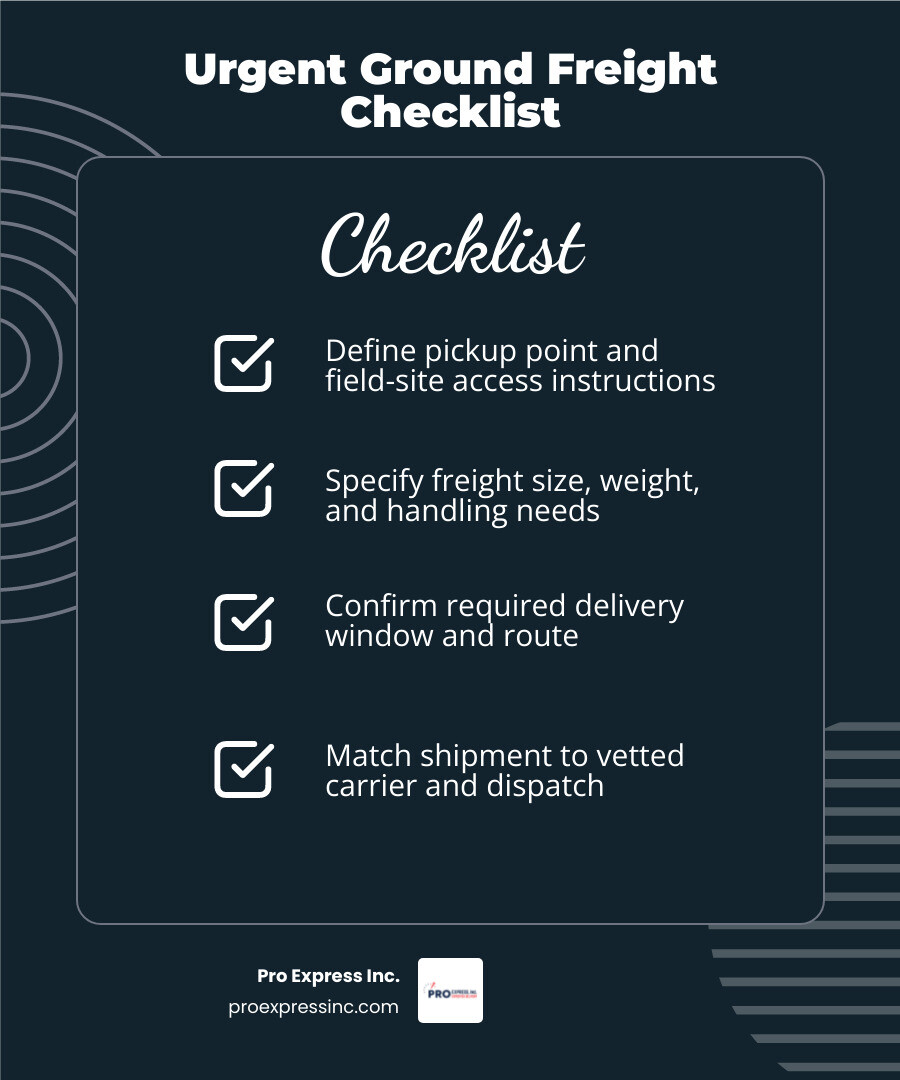
When a failed part puts a well, pipeline, or power site at risk of downtime, dispatch starts with clear shipment details: the pickup point, field-site access instructions, freight size and weight, handling needs, and required delivery window. A hot-shot or same-day ground shipment can then be matched to the cargo and routed directly to the site.
Pro Express Inc. coordinates urgent ground freight through vetted carrier partners across the contiguous United States. The goal is simple: get critical components moving before a missed delivery window slows the work.
Field operations rarely stop for freight. A drilling crew waiting on a replacement valve, a pipeline team holding a compressor repair, or a wind farm crew needing a control module all face the same pressure: every idle hour drains revenue and extends the outage. That is why energy logistics teams prioritize direct ground routing, clear site access instructions, and carrier partners that can handle open-deck or enclosed freight without intermediate terminal handling.
Easy hot shot energy sector glossary:
The Evolution and Role of the Hot Shot Energy Sector
In field operations, every minute of unexpected downtime drains capital. Whether maintaining upstream production wells or managing power distribution infrastructure, operations managers require reliable, responsive transportation partners. Understanding how ground transport evolved alongside modern energy demands helps logistics professionals make better dispatch decisions during high-stakes outages.
Origins of Hotshot Trucking in Oil and Gas Fields
The concept of hotshot transportation emerged in the 1970s oil fields. When a drilling rig experienced mechanical failure, operators could not wait for standard freight delivery schedules. Independent owner-operators using heavy-duty pickup trucks and open trailers began taking high-priority replacement parts—such as drill bits, mud pumps, and valves—directly from fabrication shops to remote wellheads.
Modern energy logistics builds directly on this heritage. The modern hot shot trucking services industry utilizes medium-duty Class 3, 4, and 5 vehicles paired with gooseneck flatbeds to access rugged lease roads where standard 53-foot dry vans cannot safely navigate. These vehicles handle the irregular dimensions and concentrated weight of drilling hardware while keeping transit direct and predictable.
Specialized Field Support and Regulatory Compliance
Energy logistics demands rigorous compliance. Operating in energy hubs like Texas—home to over 30,000 registered oil and gas operators overseen by the Texas Railroad Commission—requires strict adherence to state and federal safety frameworks.
Field operators must coordinate with carriers holding active US DOT operating authority, proper insurance profiles, and full compliance with Federal Motor Carrier Safety Administration (FMCSA) safety standards. When coordinating time-critical shipments, working with a freight broker that vets every carrier partner ensures freight arrives safely while meeting all industrial safety and regulatory requirements.
For energy shippers, compliance is not a back-office detail. A carrier without current authority or adequate liability coverage can delay a critical delivery at the worst possible moment. Vetting carrier partners before dispatch reduces that risk and keeps urgent ground freight moving through the proper channels.
5 Critical Ground Transport Solutions Powering the Energy Industry

The modern energy landscape spans hydrocarbon extraction, refining, diagnostic maintenance, advanced reservoir analytics, and utility-scale renewables. Each operational area depends on specialized, rapid ground transport solutions.
| Transport Type | Vehicle Configuration | Typical Cargo | Primary Advantage |
|---|---|---|---|
| Hotshot Trucking | Class 3-5 cab with open gooseneck/flatbed | Drill collars, valves, pumps, blowout preventers | Direct access to unpaved, tight field sites |
| Expedited Ground Freight | Cargo vans, straight trucks, dedicated dry vans | Electrical panels, control skids, diagnostic tools | Enclosed protection, secure direct-drive routing |
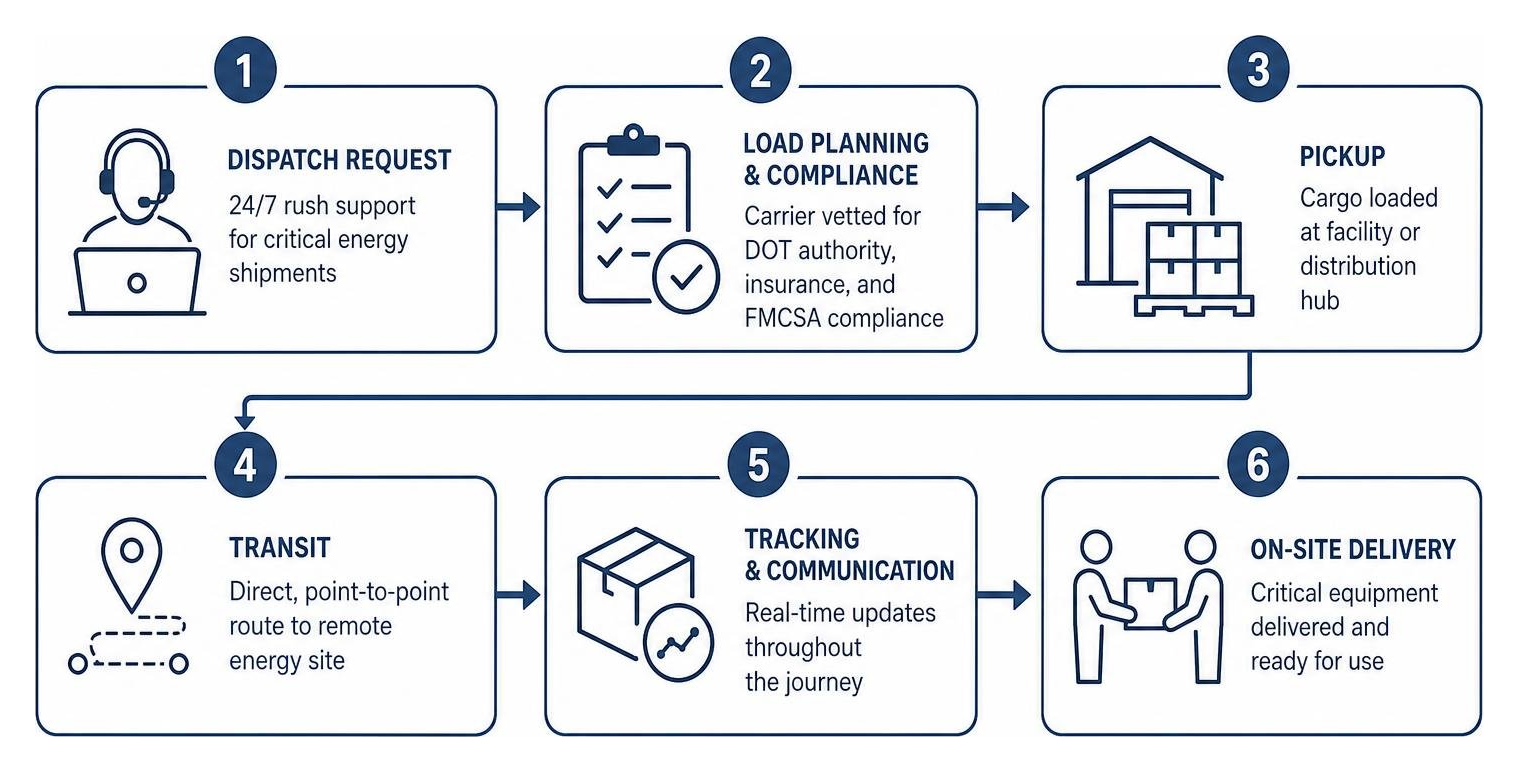
Selecting the right transport mode depends on the cargo, the site, and the delivery window. Open-deck hotshot units work well for heavy, oddly shaped components that do not require enclosed protection and must reach unpaved field roads. Enclosed expedited freight suits sensitive electronics, control systems, and diagnostic instruments that need protection from weather and road debris. In both cases, direct routing avoids terminal delays and keeps the shipment moving toward the field site without unnecessary handling.
1. Dedicated Hot Shot Energy Sector Dispatch for Critical Drilling Hardware
Upstream extraction sites operate continuously. A failure in downhole hardware, such as a top-drive assembly or blowout preventer valve, halts production instantly. In these emergency situations, waiting for standard consolidated freight is not an option.
Coordinating exclusive hot shots ensures dedicated, point-to-point ground transport. By securing open-deck Class 3 to 5 flatbed equipment, shipments bypass regional sorting terminals and travel directly from manufacturing facilities or distribution hubs to remote drilling locations.
This direct routing matters because drilling hardware often carries concentrated weight and irregular dimensions. A blowout preventer component or downhole pump cannot simply be palletized and routed through a standard hub-and-spoke network. The shipment needs a carrier partner with the right trailer configuration, securement equipment, and experience navigating lease roads and field entrances. Dedicated hot shot dispatch provides that focus from pickup to final placement.
2. Time-Critical Ground Expedited Freight for Refinery and Pipeline Maintenance
Midstream and downstream infrastructure demands absolute operational integrity. Planned refinery turnarounds and unexpected pipeline compressor failures require swift delivery of heavy-duty replacement components.
When moving heavy valve assemblies, pipe sections, or emergency repair sleeves, industrial operations utilize expedited ground freight solutions with specialized equipment. Utilizing liftgate-equipped straight trucks and dedicated dry vans allows large, heavy industrial hardware to be delivered directly to processing facilities without transit delays.
Refinery and pipeline maintenance often operates on compressed schedules. A turnaround may have a fixed window, and a compressor failure can reduce throughput until the replacement part arrives. Ground expedited freight supports these operations by providing enclosed protection for precision-machined components and liftgate service for heavy items that cannot be loaded by hand. Direct routing keeps the shipment on schedule and reduces the handling that can damage critical parts.
3. Rapid Transport for Subsurface Laboratory Samples and Microfluidics
Modern energy production and decarbonization initiatives rely on specialized laboratory analysis. Specialized institutions perform core sample analysis, high-pressure high-temperature (HPHT) testing, and microfluidic flow studies to optimize hydrocarbon recovery, evaluate underground gas storage, and assess hydrogen sequestration sites.
Advanced exploration concepts, including tapping the vast superhot rock energy potential across geological formations, require precise transportation of geological samples, specialized core holders, and fragile testing instruments between field extraction points and analytical labs across the country.
These shipments demand more than speed. Core samples must retain their physical integrity, microfluidic instruments require careful handling, and test results depend on samples arriving in the same condition they left the field. Ground expedited freight with enclosed vehicles and trained handling teams helps preserve sample quality while keeping transit direct. For energy research teams, that combination of speed and care supports reliable data collection and faster project decisions.
4. Emergency Diagnostic and Infrared Inspection Logistics in the Hot Shot Energy Sector
Maintaining high-voltage transmission lines, electrical substations, and solar arrays requires specialized non-destructive testing equipment. Level II certified thermographers and electrical engineering teams deploy thermal imaging cameras and diagnostic tools to detect hot spots, prevent transformer blowouts, and avoid widespread grid outages.
Because sensitive diagnostic devices and replacement electrical switchgear must travel under controlled conditions, dispatching dedicated time-sensitive shipments ensures non-destructive testing equipment arrives intact and ready for immediate deployment.
Diagnostic teams often work against a narrow window. A suspected transformer hot spot may require immediate infrared inspection before a scheduled outage, or a solar array may need inverter diagnostics before generation losses compound. In these situations, the diagnostic equipment itself becomes the critical shipment. Enclosed ground transport protects thermal cameras, calibration tools, and replacement switchgear from vibration and weather, while direct routing gets the equipment to the inspection site without terminal delays.
5. High-Urgency Parts Delivery for Renewable Energy Installations
Utility-scale wind farms and solar installations are frequently situated in remote geographical corridors. When a wind turbine gearbox requires emergency maintenance or an inverter fails at a multi-megawatt solar installation, missing components stall generation capacity.
Using dedicated same day freight services enables energy managers to route replacement power modules, controllers, and specialized hardware directly to remote access points without intermediate freight handling.
Renewable energy sites present unique logistics challenges. Access roads may be unpaved, site entrances may require coordination with security or operations staff, and replacement components may be heavy or sensitive to handling. Ground transport partners with experience in remote site deliveries understand these constraints and can plan routes that avoid unnecessary delays. For energy managers, that means fewer hours of lost generation and faster restoration of full output.
Operational Best Practices: Telematics, Compliance, and Network Coordination
Executing time-critical ground transportation requires modern logistics technology, clear communication, and strict safety management:
- Real-Time GPS and Telematics: Utilizing Electronic Logging Devices (ELD) and integrated GPS tracking provides operations teams with transparent load location updates from pickup to final drop-off.
- Hours of Service (HOS) Management: Professional freight brokers verify carrier driving hours before dispatch to ensure transit proceeds smoothly and legally.
- Rigorous Insurance Standards: Interstate commercial transport partners must maintain active operating authorities and appropriate primary liability coverage.
- Vetted Carrier Networks: Working with pre-screened carrier partners ensures vehicles and operators possess the correct equipment, securing straps, and tarping materials for field deliveries.
These practices work together to reduce risk on urgent shipments. Telematics gives shippers visibility into load location, HOS management keeps transit legal and predictable, insurance standards protect against liability gaps, and vetted carrier networks ensure the right equipment is available for the job. For energy logistics teams, this coordination is the difference between a controlled delivery and an unplanned delay.
Frequently Asked Questions About Energy Field Logistics
How does hotshot trucking differ from standard expedited freight?
Hotshot trucking primarily employs Class 3 to 5 medium-duty trucks paired with flatbed or gooseneck trailers, making it ideal for hauling odd-sized, heavy, or open-deck machinery into remote field environments. Standard expedited freight typically uses enclosed cargo vans, box trucks, or dry vans to deliver high-priority crated or palletized cargo point-to-point.
What compliance standards govern energy sector hotshot transport?
Carriers moving commercial freight across state lines must hold active US DOT authority and FMCSA safety approval. They must also comply with regional oversight rules, carry at least $750,000 in primary commercial liability insurance, and adhere to strict ELD logging requirements.
What types of energy field cargo require dedicated ground transport?
Drilling hardware such as blowout preventer components, downhole pumps, and drill collars often requires open-deck hotshot transport because of weight and dimensions. Enclosed expedited freight suits sensitive items such as electrical control panels, diagnostic instruments, and laboratory samples that need protection from weather and road debris. In both cases, dedicated direct routing reduces handling and keeps the shipment moving toward the field site without terminal delays.
Conclusion
Handling critical freight for the energy sector requires precision, urgency, and dependable coordination. At Pro Express Inc., we bring nearly 20 years of experience since our founding in 2007, having successfully arranged over 10,000 shipments with a 99% client satisfaction rate.
Our team coordinates dedicated, time-sensitive ground freight 24/7 across the contiguous United States through our vetted network of trusted carrier partners. When you need rapid, reliable courier delivery services or dedicated ground freight solutions to keep your operations running smoothly, Contact Us Today to speak with our dispatch team.