
Why Getting Fragile Shipments Right Is a Make-or-Break Decision
The best way to ship fragile items starts long before the carrier picks up your freight — it begins with understanding exactly where things go wrong in transit.
For logistics managers moving high-value, breakable cargo on tight deadlines, the stakes are high. A single damaged shipment can mean a missed installation window, a lost client, or a costly replacement cycle. Over 161 billion parcels moved globally in 2023, and nearly 11% of all damaged shipments were traced back to one cause: insufficient cushioning. That’s not a carrier problem — that’s a packing and handling problem.
And it gets more complex at the freight level. Carriers assume your package can survive a 1-meter drop. Sorting equipment at major hubs like UPS Worldport) in Louisville moves 416,000 packages per hour, with conveyor drops ranging from 12 to 36 inches. Last-mile delivery adds cumulative vibration across 50+ mile routes. Standard LTL shipping means multiple terminal transfers, each one a new risk point.
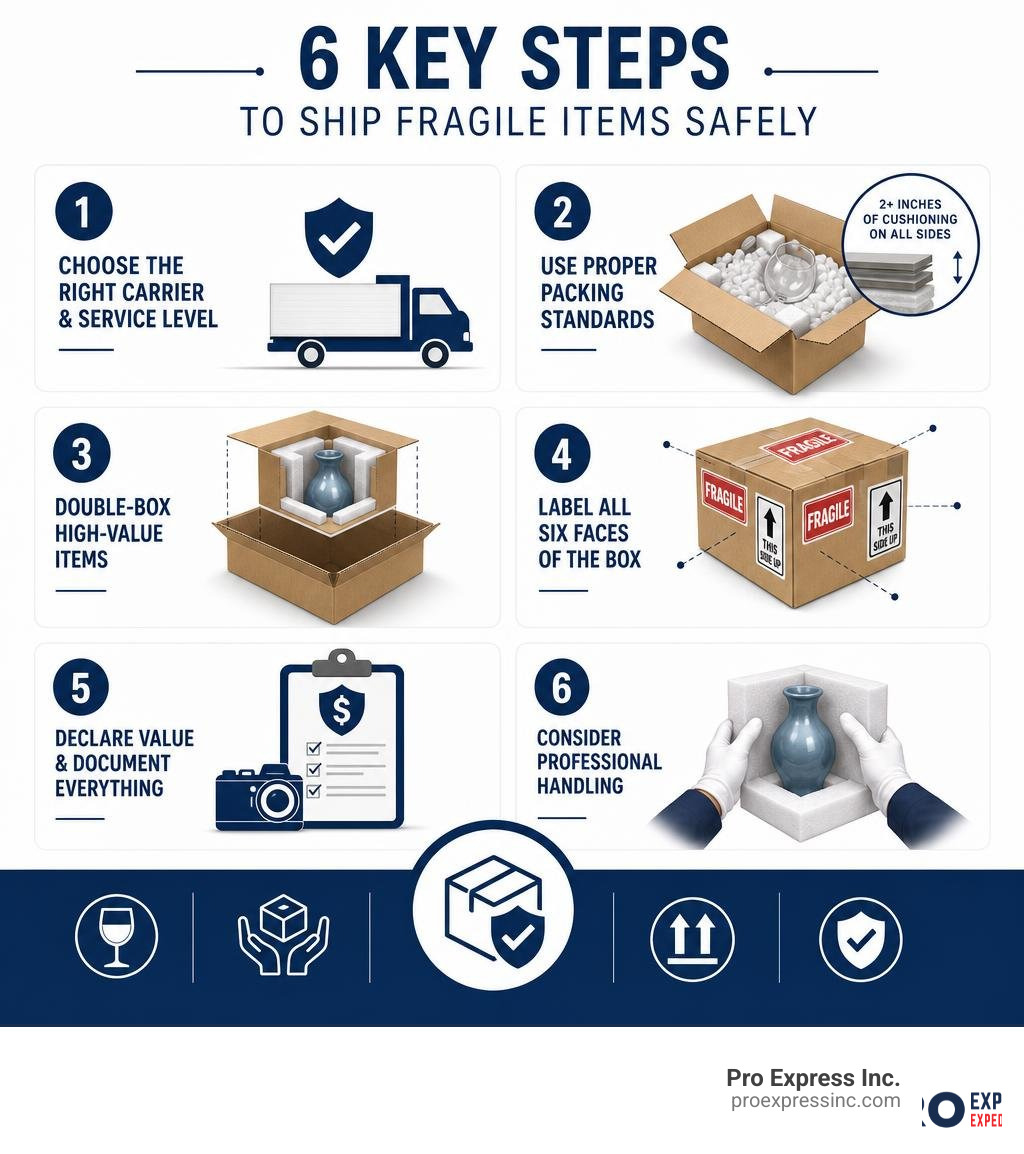
Here’s a quick summary of the best way to ship fragile items:
- Choose the right carrier and service level — white glove or dedicated expedited freight outperforms standard LTL for fragile cargo
- Use proper packing standards — double-wall boxes, 2+ inches of cushioning on all sides, zero internal movement
- Double-box high-value items — required by UPS for declared values over $100; best practice for anything breakable
- Label all six faces of the outer box — “Fragile” and “This Side Up” on every face
- Declare value and document everything — photograph before packing; add declared value insurance
- Consider professional packing or white glove handling — for items worth $250+, irreplaceable goods, or time-critical freight
The sections below go deep on each of these steps, with carrier-specific requirements, packing material standards, and guidance on when to bring in professional handling.
Quick best way to ship fragile items terms:
The Best Way to Ship Fragile Items: Carrier Reliability and Handling Realities
When shipping delicate, high-value, or irreplaceable equipment across North America, relying on standard postal or common carrier networks can feel like a gamble. The reality of modern logistics is that speed and automation rule the day. While automated sorting systems keep the supply chain moving, they are not designed to gently cradle your breakable cargo.
Traditional less-than-truckload (LTL) shipping exposes your freight to multiple touchpoints. Every time a pallet is unloaded, moved across a terminal dock, and reloaded onto another trailer, the risk of transit damage increases exponentially. Forklift tines, shifting loads, and dock vibrations are constant threats to fragile shipments.

To understand the difference between standard freight and specialized transport, consider how cargo is handled under different logistics models:
| Shipping Method | Handling Touchpoints | Sorting Automation | Risk of Transit Damage | Best Suited For |
|---|---|---|---|---|
| Standard LTL | Multiple terminal transfers (3-5+) | High-speed conveyor belts and sorting chutes | High | Durable, bulk commodities |
| Expedited Ground Freight | Minimal (Direct dock-to-dock) | None (Point-to-point transit) | Low | Time-sensitive, high-value cargo |
| Specialized White Glove | Zero (Direct, dedicated handling) | None (Two-man inside delivery) | Extremely Low | Fragile electronics, fine art, medical devices |
Evaluating Carrier Performance for High-Value Freight
When evaluating the best way to ship fragile items, logistics decision-makers must look beyond standard transit timetables and focus on the physical journey of the cargo. Standard carriers process shipments through high-volume hubs where speed is prioritized over specialized care. In these environments, packages are subjected to vertical drops, compression pressure from heavier items stacked on top, and relentless micro-vibrations from transport vehicles.
For high-value freight, such as industrial components, medical equipment, or sensitive electronics, standard handling is rarely sufficient. To safeguard these assets, logistics managers must implement a rigorous preparation strategy. Following the 7 Easy Steps to Ensure Your Fragile Parcel Arrives in One Piece helps mitigate these risks, but selecting a carrier that minimizes touchpoints remains the single most effective way to protect your investment.
Why White Glove Services Offer the Best Way to Ship Fragile Items Safely
For delicate cargo that cannot withstand the rigors of standard freight networks, specialized handling is the industry standard. White glove services provide an end-to-end logistics solution where trained professionals manage every phase of the delivery. This service level typically includes two-man delivery teams, liftgate-equipped vehicles, inside pickup and delivery, and on-site debris removal.
By utilizing specialized equipment and dedicated transport vehicles, white glove logistics removes the variables that lead to transit damage. There are no automated sorting belts, no terminal transfers, and no improper stacking by third-party loaders. Instead, your cargo remains secure in a climate-controlled, air-ride suspension vehicle from the moment it is loaded until it is placed at its final destination. For operations leaders, this level of care is why Why White Glove Delivery Is the Gold Standard for Shipping when dealing with mission-critical, fragile assets.
Professional Packing Standards for High-Value Shipments
No matter how reliable your carrier is, a shipment is only as secure as its packaging. Professional packing is an engineering discipline that requires selecting the right materials, understanding structural integrity, and eliminating internal movement.
Step-by-Step Guide to the Best Way to Ship Fragile Items
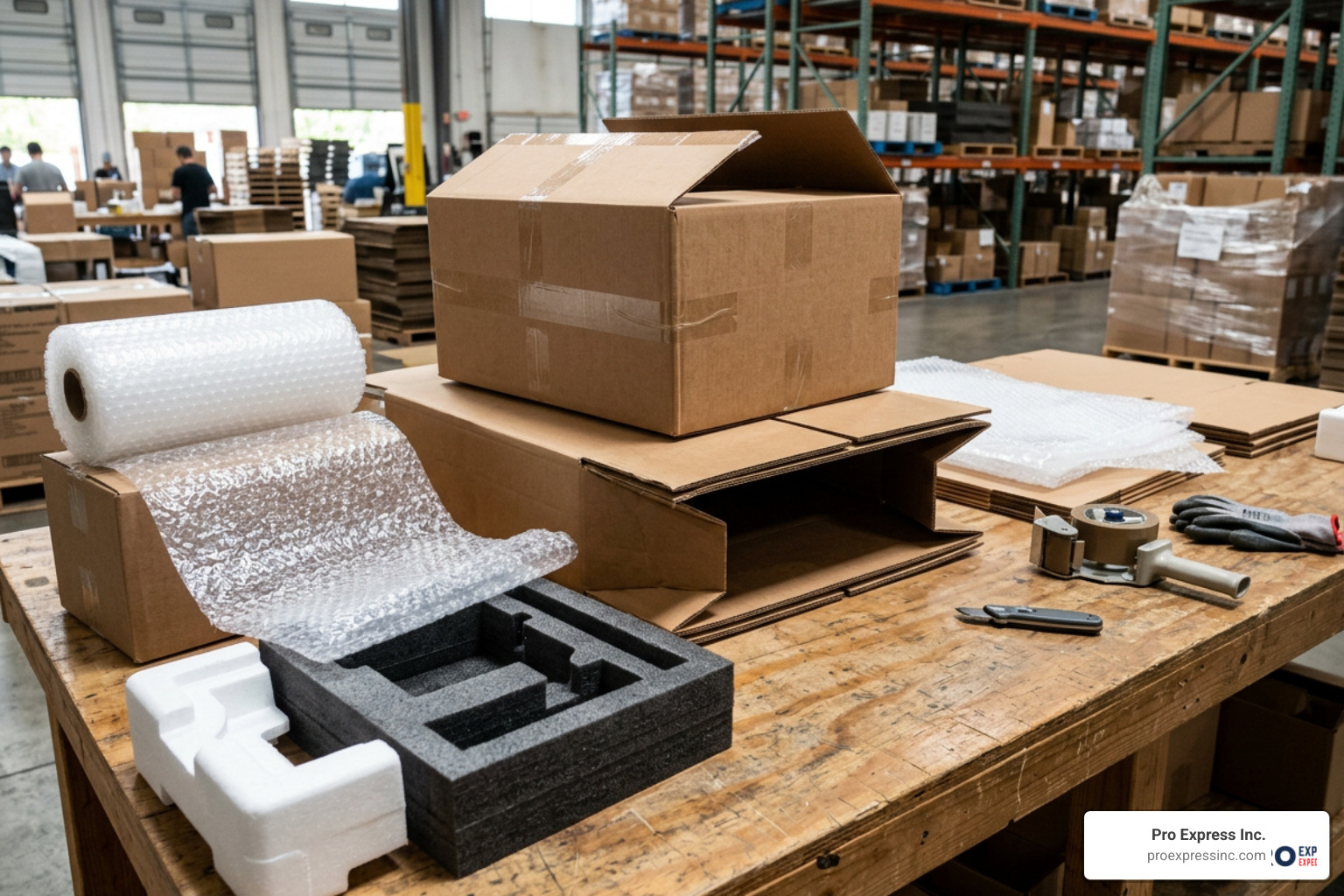
To achieve professional-grade protection for your breakable cargo, follow this systematic packing protocol:
- Pre-Shipment Documentation: Before any packing begins, perform a thorough inspection of the item. Photograph the asset from multiple angles to document its pre-transit condition. This step is critical for liability management and insurance verification.
- Primary Wrapping: Wrap the item in multiple layers of industrial-grade bubble wrap or foam sheets. For delicate surfaces, apply a soft, non-abrasive inner layer (such as tissue paper or anti-static foam) before wrapping it in shock-absorbing materials. Ensure you wrap the item until you can no longer feel any hard edges or sharp corners.
- Secure the Wrapping: Use high-quality, pressure-sensitive packing tape to secure the wrapping. Do not apply tape directly to the surface of the item, as this can leave adhesive residue or damage delicate finishes.
- Box Selection and Bottom Reinforcement: Select a sturdy, double-wall corrugated box. Before placing the item inside, reinforce the bottom seams of the box with at least three overlapping strips of heavy-duty packing tape using the H-taping method.
- Cushioning and Placement: Add a 2-to-3-inch layer of dense cushioning material (such as packing peanuts or engineered foam) at the bottom of the box. Place the wrapped item directly in the center of the box, ensuring it does not touch the outer walls.
- Void Filling: Fill all remaining empty space around the item with void fill. The goal is to achieve zero internal movement. Once filled, perform a gentle “shake test” — if you feel or hear any movement inside, add more cushioning.
- Palletization for Freight: For heavy or highly valuable shipments, place the boxed cargo on a sturdy wooden pallet. Secure the box to the pallet using heavy-duty strapping and multiple layers of industrial stretch wrap.
For a deeper dive into these professional packing techniques, consult our comprehensive guide on How to Pack a Fragile Item for Shipping Like a Pro.
If your internal teams lack the specialized equipment or time to execute this level of packaging, utilizing professional packaging and White Glove Services ensures your high-value cargo is prepared to withstand the most demanding shipping routes.
Essential Packing Materials and Void Fill Standards
Using the correct materials is non-negotiable when preparing fragile items for transport. Standard cardboard boxes and household packing supplies are insufficient for commercial freight.
- Double-Wall Corrugated Boxes: Standard boxes can compress under the weight of stacked cargo. Double-wall boxes feature two layers of fluted medium sandwiched between three flat linerboards, providing superior puncture resistance and stacking strength. Look for boxes rated under the Edge Crush Test (ECT) standards to ensure they can withstand vertical compression.
- Engineered Foam and Custom Inserts: For highly sensitive electronics or medical equipment, custom-molded foam inserts or floating decks provide the highest level of shock absorption. Unlike loose-fill materials, engineered foam does not settle during transit.
- Industrial Void Fill: When using loose-fill materials like packing peanuts, it is critical to overfill the container by 5% to 10% to account for settling caused by road vibrations. For heavy items, avoid loose-fill peanuts entirely, as the weight of the item will compress the peanuts, leaving the item unprotected at the bottom of the box. Instead, use dense foam blocks or crumpled heavy-duty kraft paper.
Understanding these material requirements is a key component of Everything You Need to Know About White Glove Home Delivery, where proper material selection prevents damage before the vehicle even leaves the dock.
Advanced Cushioning and Double-Boxing Techniques
For high-value fragile freight, standard single-box packaging is often not enough to satisfy carrier insurance requirements or survive the logistics chain. Advanced cushioning and double-boxing are the industry standards for maximum cargo protection.
When is Double-Boxing Necessary for Fragile Freight?
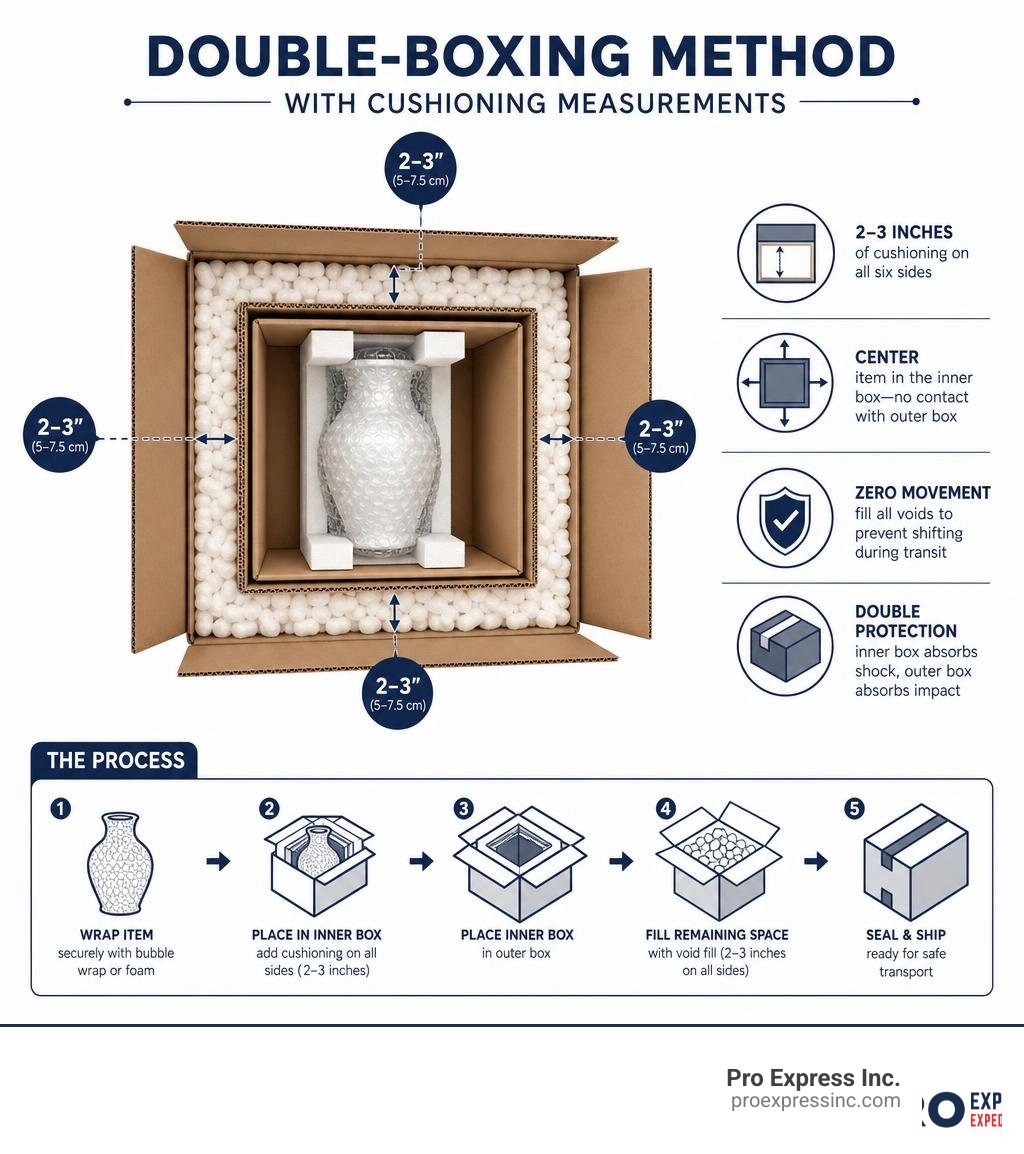
Double-boxing (or the box-in-box method) is highly recommended for items that are delicate, heavy, or have a high declared value. In fact, major carriers like UPS require double-boxing for items with a declared value over $100 to qualify for damage claims.
This method is necessary under the following conditions:
- High-Value Assets: Any shipment with a replacement value where damage would cause severe operational disruption.
- Heavy Fragile Items: Items over 10 pounds that require both structural containment and external impact protection.
- Delicate Instruments: Electronics, optical devices, or calibration equipment that are highly sensitive to shock and vibration.
To execute the double-boxing method correctly, place the wrapped item inside an inner box with adequate cushioning. Then, select an outer box that is at least 6 inches larger in all dimensions than the inner box. Fill the 3-inch gap on all six sides between the inner and outer boxes with dense cushioning material, such as expanded polystyrene foam or high-density air pillows. This creates a multi-layered barrier that absorbs external impacts and prevents the inner box from shifting.
Implementing these advanced techniques is detailed further in our In-Depth Guide to White Glove Delivery, which outlines how specialized carriers manage complex packaging requirements for sensitive commercial cargo. Protecting your assets through proper double-boxing is another reason Why White Glove Delivery Is the Gold Standard for Shipping in high-stakes logistics.
Proper Labeling and Orientation Indicators
While physical protection is paramount, clear labeling provides essential handling instructions for dock workers and drivers. Proper labeling acts as a secondary line of defense for your fragile cargo.
- Six-Face Labeling: Place “Fragile” stickers on all six sides of the outer shipping container. Placing a single label on the top of a box is insufficient, as boxes are frequently stacked or oriented in ways that hide the top surface.
- Orientation Indicators: If your cargo must remain upright during transit (such as liquid shipments, specialized electronics, or certain industrial components), apply “This Side Up” arrows on multiple sides. For highly sensitive shipments, use mechanical orientation indicators like Tip-N-Tell or Drop-N-Tell sensors. These devices permanently record if a package has been tilted or subjected to severe shocks, providing immediate visual proof of improper handling upon delivery.
- Pallet and Freight Labeling: For palletized freight, apply clear handling instructions to the stretch wrap. Use labels that read “Do Not Double Stack” or “Do Not Break Down Pallet” to prevent other carriers from placing heavy cargo on top of your fragile items.
For businesses utilizing specialized logistics, coordinating these labeling and handling protocols is a standard part of setting up White Glove Services to guarantee seamless execution from pickup to final placement.
Frequently Asked Questions About Fragile Freight
What are the weight and size limits for shipping fragile freight?
Weight and size limits depend entirely on the class of service and the transport vehicle. For standard parcel carriers, individual packages are typically capped at 150 pounds, but for fragile items, we recommend keeping individual boxes under 30 pounds to prevent structural box failure.
When shipping via ground expedited freight, there are virtually no size or weight limits, provided the cargo can be secured on a flatbed, in a dry van, or inside a specialized box truck. The primary concern is ensuring the packaging (such as custom wooden crates or heavy-duty pallets) is engineered to support the weight of the item without compressing or shifting during transit.
Does labeling a shipment as fragile guarantee safe handling by common carriers?
No. While labeling is an important best practice, it does not guarantee gentle handling within standard common carrier networks. Most parcel and LTL sorting is automated, meaning machines — not humans — are moving the cargo. Conveyor belts and sorting chutes cannot read “Fragile” labels.
Furthermore, dock workers in high-volume terminals operate under strict time constraints, making it difficult for them to give individualized attention to labeled packages. The only way to guarantee safe handling is through robust physical packaging and by utilizing dedicated, non-conveyorized transport services like expedited hot-shot or white glove delivery.
When should a business hire a professional packing service?
A business should hire a professional packing service under the following circumstances:
- The cargo is worth more than $250 or is completely irreplaceable.
- The item has an irregular shape, off-center weight distribution, or moving parts that must be immobilized.
- The shipment requires specialized custom crating or vapor-barrier packaging for long-distance transport.
- The business wants to transfer the liability of packing and transit preparation to a specialized logistics partner.
Conclusion
When standard shipping networks pose too much risk for your critical, breakable cargo, you need a logistics partner that treats your shipment with the urgency and care it deserves.
At Pro Express Inc., we provide fast, reliable ground-expedited shipping services — including same-day, next-day, hot-shot, and specialized white glove delivery — across the United States. With over 17 years of experience and a track record of delivering more than 6,000 successful shipments, we maintain a 99% client satisfaction rating by prioritizing supply chain integrity and 24/7 customer support.
Whether you are shipping delicate medical equipment, high-value electronics, or specialized industrial components, our dedicated transport solutions eliminate terminal transfers and automated sorting risks. Explore our specialized White Glove Services to see how we safeguard your most critical assets.
Contact Us Today to Request a Quote for your high-value, fragile shipments and experience the gold standard in expedited logistics.