
Get Hot Shot Film Equipment to Set on a Tight Deadline
To book urgent ground delivery for film equipment, gather the case count, packed dimensions and weight, pickup address, set access instructions, and the crew’s required arrival time. Flag fragile gear, such as lenses, motion-control heads, or stabilized camera systems, so the carrier can plan for secure handling.
Pro Express Inc. arranges same-day, next-day, and hot-shot ground transport through vetted carrier partners across the contiguous United States. Share the deadline early so the shipment can be matched to a suitable dedicated ground option before a missed call time puts the shoot at risk.
Hot shot film equipment terms explained:
When a production schedule tightens, every minute of idle crew time adds pressure. Dedicated ground transport keeps sensitive cinema packages moving point-to-point, avoiding the sorting hubs and cross-dock transfers that introduce delays and rough handling. Coordinating the pickup details early allows the carrier to plan the most direct route and meet the call time without unnecessary stops.
Critical Hot Shot Film Equipment Profiles and Transport Requirements

High-end film productions operate under intense time constraints. When a specialized camera rig, robotic motion head, or stabilized gimbal is required on set, standard freight shipping cannot deliver the speed or delicate handling required. Transporting hot shot film equipment demands an understanding of sensitive electronics, encoded DC servos, and delicate gearboxes.
Modern cinema gear is packed with intricate micro-mechanisms. If a motion head experiences severe vibration during transport, the optical alignment and servo calibration can drift, causing hours of troubleshooting on set. Whether deploying a CineShooter – kesslercrane head or a high-torque stabilized gimbal, dedicated ground transport eliminates the rough handling associated with sorting hubs and cross-dock transloading.
Motion Control Rigs and High-Torque Heads as Hot Shot Film Equipment
Robotic motion control rigs allow cinematographers to capture repeatable, pixel-perfect camera movements for visual effects, stop-motion, and live action. Systems like the Cineshooter+ Macro – kesslercrane provide up to 5 axes of on-board control, driven by encoded DC servos and modified helical planetary gearboxes.
These heads offer zero-backlash precision (less than .01 degree) and handle payloads up to 50 lbs with heavy-duty modules. They also integrate with real-time software such as Unreal Engine for virtual studio production and Dragonframe for stop-motion. Transporting these rigs requires protecting delicate motors from external physical torque. Sudden impacts can misalign encoded drives, jeopardizing live-action tracking and virtual production feeds.
Gyro-Stabilized Systems and Pan-Tilt Platforms
For high-speed automotive shoots, aerial sequences, and mobile broadcasting, production teams turn to advanced stabilized platforms:
- SHOTOVER G1: A 3-axis gyro-stabilized camera system weighing 8.8 kg (19.4 lbs) with a maximum slew rate of 100 deg/sec. Designed as an open platform, the G1 | SHOTOVER Systems delivers 4x the torque of older systems and operates in temperatures ranging from -20°C to +50°C, drawing up to 960W at peak loads.
- SHOTOVER F1: A 6-axis stabilized platform engineered with a lightweight carbon-fiber housing. The F1 | SHOTOVER Systems handles payloads under 59 kg (130 lbs) and features integrated augmented reality (AR) mapping for broadcast overlays.
- HotShot MKII: A remote pan-and-tilt head with a 25 kg load capacity and integrated 24-channel sliprings for continuous 360-degree rotation. The HotShot MKII executes full rotations in as fast as 2.5 seconds or as slow as 17 minutes.
- SOLOSHOT3+: An automated tracking camera base. The SOLOSHOT® Robot Cameraman uses one-spin calibration that sets up in 15 seconds, making it ideal for mobile, rapid-deployment filming.
Each of these systems contains sensitive optical sensors, sliprings, and stabilization gyros that require dedicated, non-stop ground logistics to arrive set-ready. Production coordinators who understand these transit sensitivities can specify the right vehicle and handling requirements before the shipment leaves the rental house.
How to Coordinate Dedicated Ground Expedited Transport for Production Gear
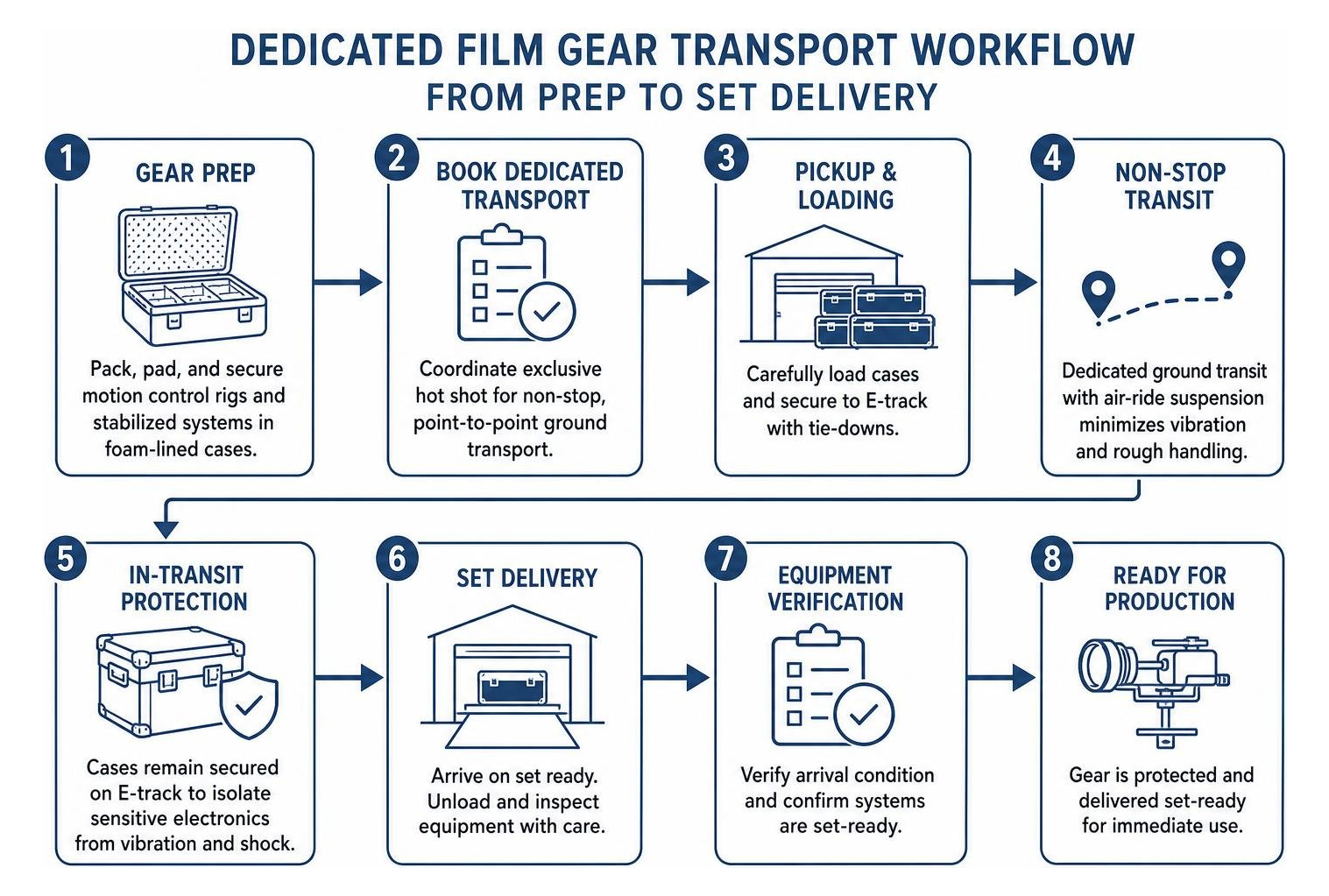
When an emergency gear call occurs, production coordinators must book non-stop point-to-point transit. Utilizing exclusive hot shots ensures that delicate camera cases remain on a single vehicle from the rental house directly to the soundstage.
Mitigating Vibration and Shock During Rapid Transit
Ground freight transport must insulate electronic camera gear from road vibration. High-end cinema packages travel in custom foam-lined hard cases. To further protect sensitive lens control motors and optical glass, we coordinate shipments with vetted carriers operating air-ride suspension vehicles equipped with E-track tie-down systems.
Reviewing how to pack a fragile item for shipping like a pro helps prep crews properly isolate payload joints and lock mechanical axes before loading. Proper case selection and internal bracing reduce the risk of calibration drift and optical misalignment during long highway runs.
Managing Time-Critical Pickups and Set Access Protocols
Studio facilities and remote filming locations have strict entry requirements. Dispatching urgent freight requires clear coordination with stage managers, gate security, and transport captains.
When moving heavy crane packages or modular camera carts, arranging freight transportation services for urgent business shipments with inside delivery or liftgate capabilities ensures cargo rolls directly to the staging bay without production crew delays. Confirming access protocols in advance prevents a dedicated vehicle from waiting at a gate while the call time approaches.
Comparing Advanced Camera Motion Control and Stabilization Platforms
Understanding the physical footprint, weight, and electrical demands of critical production gear ensures the right ground vehicle is selected:
| Equipment System | Primary Application | Payload Capacity | Stabilization / Control Axes | Power Requirements | Transit Sensitivity |
|---|---|---|---|---|---|
| CineShooter+ | Motion Control & VFX | Up to 50 lbs (HD Module) | 5-Axis (Up to 8-Axis expanded) | 12V DC LEMO / V-Mount | High (Encoded Servos) |
| SHOTOVER G1 | High-Speed Chase / Gimbal | Payload dependent | 3-Axis Gyro-Stabilized | 20–60V DC (Up to 960W) | Critical (Gyro Sensors) |
| SHOTOVER F1 | Aerial / Vehicle Mounts | < 59 kg (130 lbs) | 6-Axis Gyro-Stabilized | 19–32V DC (12A @ 28V) | Critical (Carbon Fiber / AR Module) |
| HotShot MKII | Remote Crane Pan/Tilt | 25 kg (55 lbs) | 2-Axis (Pan & Tilt) | 24V DC | Moderate (24-Ch Sliprings) |
| SOLOSHOT3+ | Automated Solo Tracking | Custom Camera Payload | 2-Axis Tracking | Internal Rechargeable / DC | Moderate (Optical Sensors) |
Selecting the correct vehicle and handling plan starts with this profile data. A compact motion-control head may fit in a dedicated cargo van, while a full stabilized platform package with counterweights and cabling may require a straight truck with liftgate service. Matching the equipment profile to the ground transport option reduces the chance of a last-minute equipment swap or a delayed set call.
Step-by-Step Protocol to Dispatch Hot Shot Film Equipment to Set
Executing an urgent ground dispatch requires a structured process to ensure nothing is left behind at the rental prep bay.
Preparing High-Value Hot Shot Film Equipment for Expedited Ground Transit
- Disengage Servos and Motors: Free-wheel or lock the pan and tilt drives according to manufacturer travel protocols.
- Cap and Secure Sliprings: Ensure electrical sliprings and connection ports have dust caps installed.
- Pack in Molded Cases: Seat all components into custom-cut foam inserts within weather-resistant hard cases.
- Remove Removable Batteries: Pack lithium-ion battery blocks into dedicated, compliant transport containers.
- Attach Shock Indicators: Place impact and tilt sensors on the exterior of primary flight cases for high-value optical packages.
Following structured expedited shipping workflows ensures that every piece of gear is accounted for and secured before the wheels begin turning. A final checklist review with the rental house technician prevents missing cables, plates, or lens adapters from delaying the shoot.
Executing Direct Route Monitoring and On-Time Set Delivery
Once loaded, the dedicated vehicle travels directly to the destination without mid-route transfers. Dedicated dispatchers track the shipment in real time, synchronizing delivery with the first assistant camera (1st AC) and the transportation department. Direct handoff at the soundstage eliminates lost transit days and ensures equipment is calibrated and ready when the director calls for rehearsal.
Throughout the run, the production coordinator receives status updates and can adjust the receiving crew if the vehicle encounters traffic or weather delays. This visibility keeps the set team informed and allows the camera department to prepare for immediate unboxing and setup.
Frequently Asked Questions About Expedited Film Gear Logistics
How are high-torque gyro-stabilized gimbals protected from calibration drift during transit?
Stabilized heads are transported with axis motor locks engaged inside custom foam flight cases. Point-to-point dedicated ground transport eliminates the shock and multi-hub handling of standard freight networks, preserving factory calibrations.
Can delicate motion control heads be transported assembled on sliders or dollies?
No. Motion control heads should be detached from sliders, dollies, and jibs during transit. Road vibrations on an extended lever arm can damage encoded DC gearboxes and introduce gear lash.
What vehicle type is best suited for same-day delivery of cinema production packages?
Dedicated cargo vans and sprinter vans provide the ideal balance of speed, air-ride stability, and secure cargo capacity for high-value camera packages moving directly between production hubs.
How far in advance should a production coordinator book a hot shot film equipment shipment?
The earlier the better. Same-day and next-day ground options are available, but providing pickup details, case dimensions, and set access instructions as soon as the need is identified allows the freight coordinator to match the shipment to the most suitable dedicated vehicle and route.
Conclusion
A delayed camera rig can stall an entire production, leading to hours of idle crew time and missed shooting windows. Ensuring smooth, reliable ground logistics keeps your call sheet on schedule and your equipment protected.
Pro Express Inc. brings nearly 20 years of experience as an expedited freight broker since 2007, coordinating over 10,000 shipments with a 99% client satisfaction rate. When you need rapid, point-to-point ground transport for sensitive broadcast and cinema rigs across the contiguous United States, turn to our courier delivery services for round-the-clock freight coordination.
Contact Us Today to schedule dedicated ground delivery for your next production.