
Why Choosing the Right Freight Brokerage Companies in USA Can Make or Break Your Supply Chain
When your regular carrier fails and a critical shipment is on the line, knowing which freight brokerage companies in USA to trust is not a nice-to-have — it is the difference between a production line running and a costly shutdown.
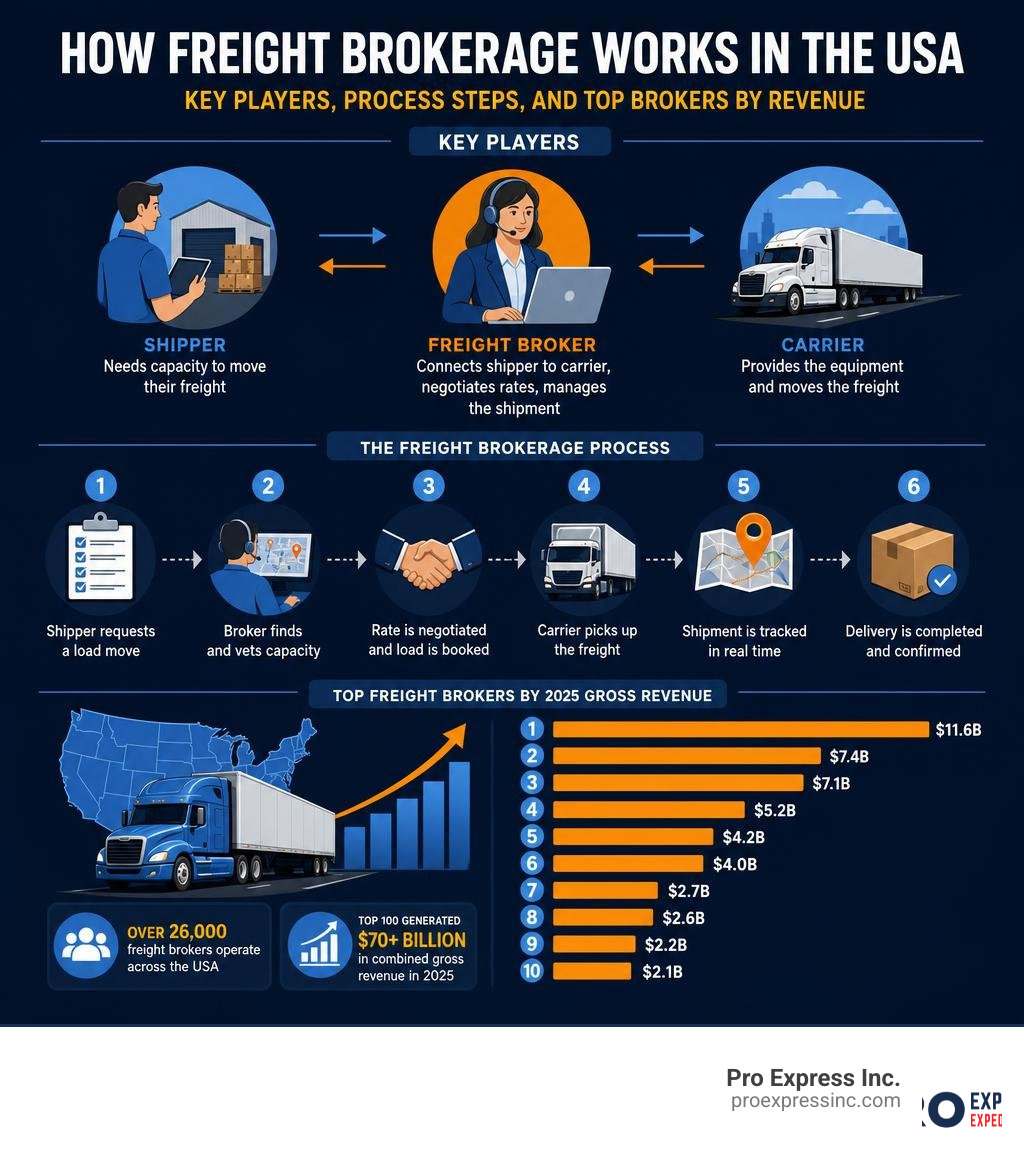
There are over 26,000 freight brokers operating across the United States right now. The top 100 alone generated more than $70 billion in combined gross revenue in 2025.
That scale tells you something important: this is not a niche industry. Freight brokerage is the backbone of US supply chains — connecting shippers like you to the carrier capacity you need, when you need it most.
But bigger does not always mean better. The broker that works for a Fortune 500 shipper moving thousands of loads a month may not be the right fit for a logistics manager who needs a critical shipment moved same-day with zero margin for error.
This guide breaks down what separates the best from the rest — so you can make a fast, confident decision the next time capacity is tight and the clock is running.
Understanding the Role of Modern Freight Brokers
To make an informed decision, it helps to understand how modern freight brokers function in today’s high-velocity B2B shipping landscape. They are far more than just “middlemen” with a phone list; they are strategic coordinators of shipping capacity and supply chain continuity.
What is a Freight Broker and How Do They Operate?
At its core, a freight broker is a licensed intermediary that connects shippers who have cargo to move with qualified, independent carriers who have the physical trucks to haul it.
The entire process is managed through a structured shipment lifecycle:
- Order Tender: The shipper provides specific load details, including weight, dimensions, pickup/delivery locations, and any specialized handling requirements (such as temperature control or white-glove service).
- Load Scheduling & Matching: The broker leverages its carrier network to find a qualified carrier with the right equipment and operating authority.
- Dispatch & Loading: The broker coordinates the pickup schedule, ensuring the driver is checked in and the cargo is loaded correctly.
- Transit & Tracking: Utilizing modern tracking tools, the broker monitors the shipment in real-time, providing proactive updates to the shipper.
- Unloading & Billing: Once delivery is confirmed, the broker handles the paperwork, carrier payment, and consolidated billing for the shipper.
For a deeper dive into the foundational elements of this profession, check out our comprehensive resource on What is a Freight Broker: The 2026 Guide.
Major enterprise brokers manage millions of shipments annually using these standardized workflows, but the basic operational steps remain the same whether you are shipping one critical pallet or managing a nationwide network.
Asset-Light Logistics vs. Asset-Based Carriers
When planning your logistics strategy, you will encounter two primary types of providers: asset-light brokers and asset-based carriers.
- Asset-Light Logistics Providers: These companies do not own physical trucks or trailers. Instead, they focus entirely on technology, carrier relationships, and logistical analysis. This model offers incredible flexibility, as they can source specialized equipment (such as flatbeds, reefers, or hot-shots) from thousands of different carriers without being limited by their own fleet size.
- Asset-Based Carriers: These companies own their trucks, trailers, and terminals. While they offer direct control over their drivers and equipment, their capacity is finite. If their trucks in your region are fully booked, they cannot easily help you.
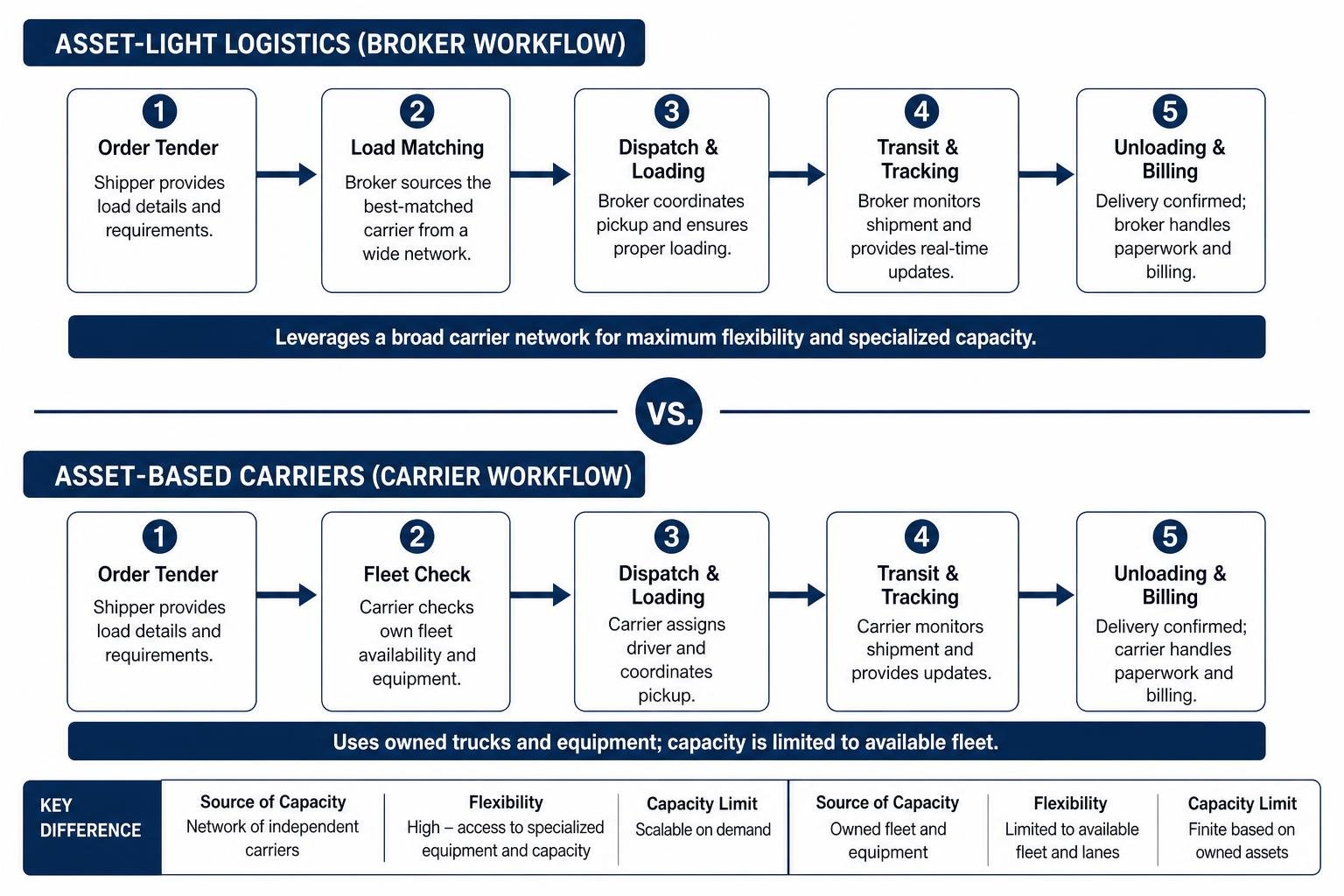
Many modern shippers choose a hybrid approach. They partner with asset-based carriers for consistent, high-volume lanes, but rely on reliable brokers to handle spot-freight moves, seasonal surges, and urgent, time-sensitive shipments. To see how top providers are evaluated on operational execution, read about the Largest US Freight Forwarders Ranked by Reliability.
Key Criteria for Evaluating Freight Brokerage Companies in USA
With tens of thousands of brokers active in the market, finding the right fit requires looking beyond gross revenue. You must evaluate how their operational scale and service models align with your specific shipping requirements.
How Mega-Brokers Compare to Mid-Market Freight Brokerage Companies in USA
The largest third-party logistics firms continue to face volatile business conditions, but they manage massive networks that offer undeniable scale.
According to the 2026 Top Freight Brokerage Firms – Transport Topics rankings, mega-brokers manage tens of billions of dollars in freight transactions. However, this volume-driven model has distinct pros and cons:
- Mega-Brokers (Gross Revenue > $1B): These giants offer vast carrier networks, deep multimodal capabilities (air, ocean, rail, and over-the-road), and highly standardized digital platforms. However, smaller or mid-market shippers can easily get lost in their systems. Customer service is often routed through automated call centers or junior account managers juggling hundreds of accounts, leading to slower response times during critical carrier failures.
- Mid-Market Brokers (Gross Revenue $50M – $500M): These providers occupy the industry sweet spot. They are large enough to offer advanced tracking systems and extensive carrier networks, yet small enough to maintain personal relationships and operational flexibility. They can tailor their services to your specific business rules, and you will have direct access to senior decision-makers when an emergency arises. For cross-border and mid-market shipping needs, specialized partners demonstrate how tailored service can outperform rigid, volume-first models.
Why Shippers Partner with Specialized Freight Brokerage Companies in USA
Sometimes, standard truckload or LTL shipping is not enough. When you are dealing with high-priority cargo, oversized equipment, or complex geographic routes, you need specialized expertise.
- Expedited and Hot-Shot Shipping: When a critical manufacturing part must reach its destination immediately to prevent a production line shutdown, standard ground shipping will not suffice. Specialized logistics providers offer dedicated hot-shot trucking and expedited ground services to bypass standard hub-and-spoke networks, delivering your freight directly to its destination. Understanding the Expedited Freight Meaning and Why Your Logistics Need a Turbo Boost can help you identify when to deploy these high-priority solutions.
- Heavy Haul and Oversized Cargo: Transporting over-dimensional loads requires specialized permits, pilot cars, and precise route planning. Specialized brokers focus on these complex, high-risk shipments.
- Geographically Challenged Regions: Shipping to non-contiguous states requires specialized multimodal coordination. If you are moving cargo to Alaska or Hawaii, working with a regional expert who understands ocean-to-island transit and remote lane logistics is essential.
Technology and Compliance Standards in 2026 Logistics
Digital Transformation: TMS, AI, and Real-Time Tracking
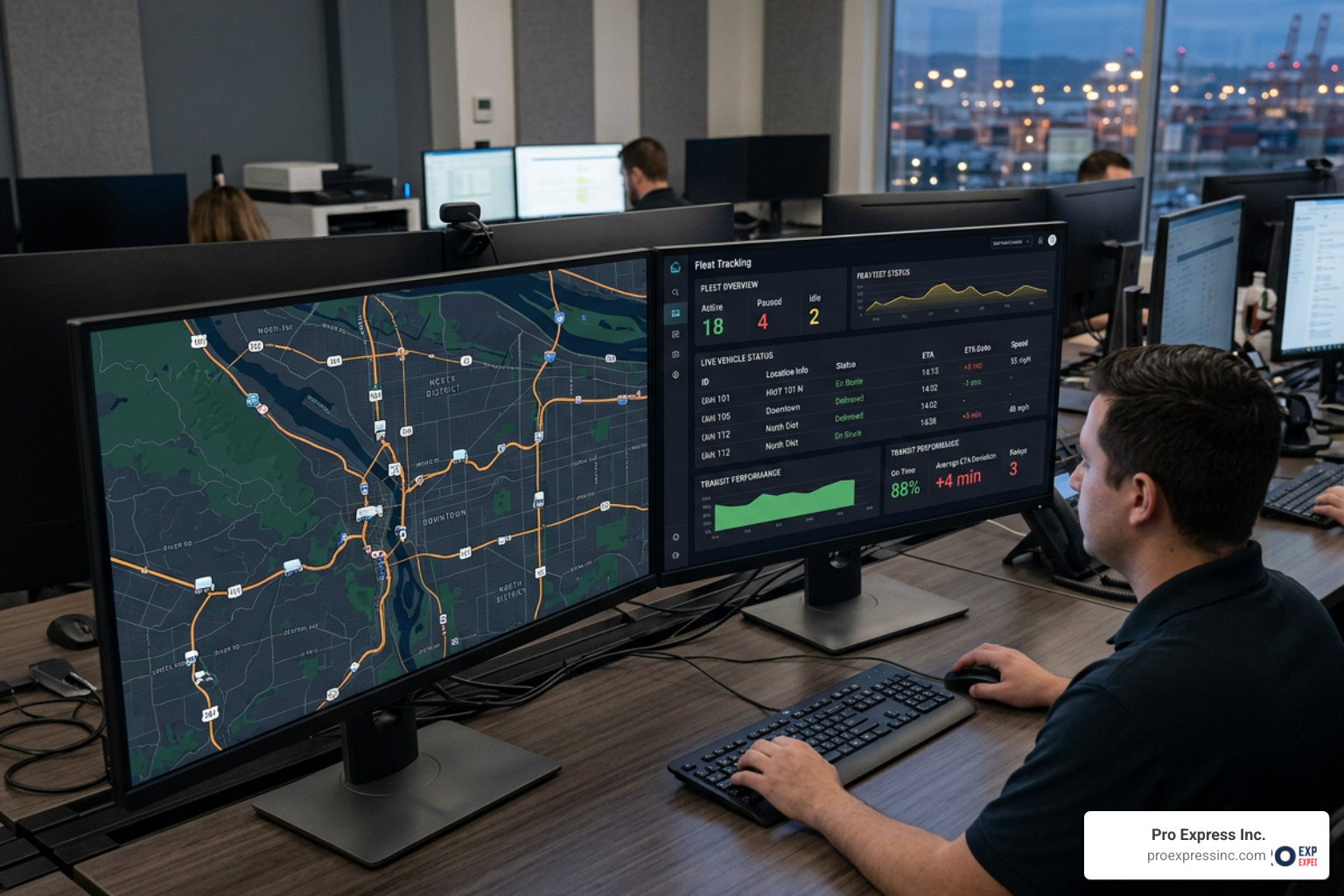
The days of calling a broker to ask, “Where is my truck?” are long gone. Modern logistics relies on robust Transportation Management Systems (TMS) and real-time tracking platforms to provide complete supply chain visibility.
- Real-Time GPS Tracking: Shippers expect continuous, automated updates. By integrating carrier mobile apps and ELD (Electronic Logging Device) data, brokers can provide dynamic ETAs and proactive alerts if a shipment is delayed by weather or traffic.
- AI-Driven Logistics: Artificial intelligence is transforming how brokers operate. AI is used for route optimization, predictive capacity matching, and automated freight auditing to recover billing errors before they affect your bottom line.
- Instant Digital Booking: Platforms that offer an Instant Freight Quote On Demand Shipping allow logistics managers to secure capacity instantly, reducing manual communication and accelerating response times.
- Customs and Compliance Integration: For international or highly regulated cargo, elegant technology integrations are critical. Combining expert customs compliance with advanced digital tracking keeps complex global supply chains moving without administrative delays.
Carrier Vetting, Insurance, and Risk Mitigation
With the rise of sophisticated cargo theft and “ghost carriers” in recent years, rigorous broker vetting systems are your primary line of defense. A single unvetted carrier can lead to stolen cargo, liability lawsuits, or double-brokering schemes.
To protect your business, always verify that your brokerage partners adhere to these strict standards:
- Active Operating Authority: The broker must verify the carrier’s active FMCSA (Federal Motor Carrier Safety Administration) authority and safety ratings.
- Financial Security: Under federal law, brokers must maintain a $75,000 surety bond (or trust fund) to guarantee payment to carriers and protect shippers from financial disputes.
- Comprehensive Liability Insurance: Brokers should mandate a minimum of $1 million in auto liability insurance and $100,000 to $250,000 in cargo insurance, with active monitoring to ensure policies do not lapse.
- Zero-Tolerance for Double-Brokering: Double-brokering occurs when a carrier accepts a load and then illegally re-brokers it to another carrier without the shipper’s knowledge. This invalidates insurance coverage and creates massive liability risks. Top brokers use advanced digital verification tools to ensure the truck picking up your load is the exact truck registered to haul it.
For a broader perspective on regulatory standards and regional compliance directories, you can consult resources like the 3PL and Freight Forwarding Companies – FTZ9 database.
Frequently Asked Questions About US Freight Brokerage
How do freight brokers vet their carrier networks?
Professional freight brokers use automated onboarding software integrated with the FMCSA database. They continuously monitor carrier safety ratings, crash histories, active operating authority, and insurance validity. They also check industry databases for fraud reports or double-brokering flags to ensure only highly rated, compliant carriers haul your freight.
What is the difference between a broker and an asset-based carrier?
An asset-based carrier owns the physical trucks, trailers, and terminals used to move cargo. A broker is an asset-light partner that matches shippers with a vast network of independent carriers. Brokers offer greater capacity flexibility and equipment options, while carriers offer direct, physical control over their specific fleet.
How has AI changed freight brokerage operations in 2026?
AI has automated manual, time-consuming processes. It is used to analyze historical transit data for route optimization, match loads with the most reliable carriers in seconds, and execute automated freight audits. This reduces human error, provides more accurate delivery windows, and ensures faster recovery when disruptions occur.
Conclusion: Securing Your Supply Chain with Reliable Partners
Choosing the right partner from the thousands of freight brokerage companies in USA is not about finding the largest name on a list. It is about finding a team that understands your operational urgency, possesses the technology to provide total visibility, and maintains the rigorous compliance standards needed to protect your cargo.
At Pro Express Inc., we bring nearly two decades of logistics experience to your most critical transport challenges. We specialize in fast, reliable ground-expedited shipping services — including same-day, next-day, hot-shot, and white-glove deliveries.
With US-wide operations (including North America, Alaska, and Hawaii), 24/7 customer support, and a record of over 10,000 successfully delivered shipments, we maintain a 99% client satisfaction rate. We don’t just match loads; we manage outcomes, ensuring your high-priority shipments arrive safely and on time, every single time.
When your regular carrier fails or an urgent shipment cannot wait, rely on the experts who show up for you. Request a Quote with Pro Express Inc. today, and let us optimize your expedited logistics.