
When Coast-to-Coast Freight Cannot Wait
For US coast to coast shipping, the right ground option depends on your deadline. Standard trucking works when the schedule has room. If a missed delivery window could stop production, ask for dedicated hot-shot transport or a team-driver option. Both can reduce stops and handoffs, while team drivers can keep a shipment moving during required driver rest periods. Same-day pickup may be possible, but cross-country delivery still takes time.
Pro Express Inc. coordinates urgent ground freight through vetted carrier partners across the contiguous United States. If your regular carrier falls through, the first step is to share the pickup location, delivery deadline, and any special handling needs. A dedicated ground shipment moves directly from your dock to the receiving facility, avoiding the terminal transfers and sorting delays that slow down standard freight. For operations teams managing line-down risks, that direct routing can be the difference between a controlled recovery and extended downtime.
Terms related to US coast to coast shipping:
For broader context on cross-country freight movement, the Federal Highway Administration publishes highway freight transportation data that logistics teams can use when evaluating major ground corridors.
Core Ground Freight Corridors for US Coast to Coast Shipping
The United States maintains over 4 million miles of public roads, forming the largest interconnected roadway network in the world. For logistics managers, plant supervisors, and supply chain directors, moving freight from the Pacific Coast to the Atlantic Seaboard requires a clear operational understanding of primary transcontinental arteries.
Primary Interstate Highways and Transit Corridors
Moving commercial cargo seamlessly across thousands of miles relies on three primary east-west arteries:
- The I-80 Corridor (Northern Route): Connecting northern California to the New York metropolitan area through the Midwest, this is a vital industrial conduit linking major manufacturing hubs.
- The I-40 Corridor (Central Artery): Running from Southern California through the heart of the Southwest, Texas panhandle, and Southeast, this lane serves as a primary link between West Coast logistics clusters and East Coast distribution networks.
- The I-10 Corridor (Southern Route): Spanning from Los Angeles through Phoenix, Houston, and across to Jacksonville, Florida, this route offers a path that avoids severe winter mountain passes.
Selecting the optimal highway corridor depends on origin-destination pairs, seasonal weather patterns, and specific delivery timelines. Experienced logistics coordinators evaluate real-time road conditions to dispatch loads along the most efficient routes, drawing from proven strategies in expedited ground freight options to protect delivery windows.
Overcoming Bottlenecks in US Coast to Coast Shipping
Cross-country ground transit presents numerous operational hurdles, from high-altitude mountain pass closures (such as Donner Pass on I-80) to major urban congestion around metropolitan hubs.
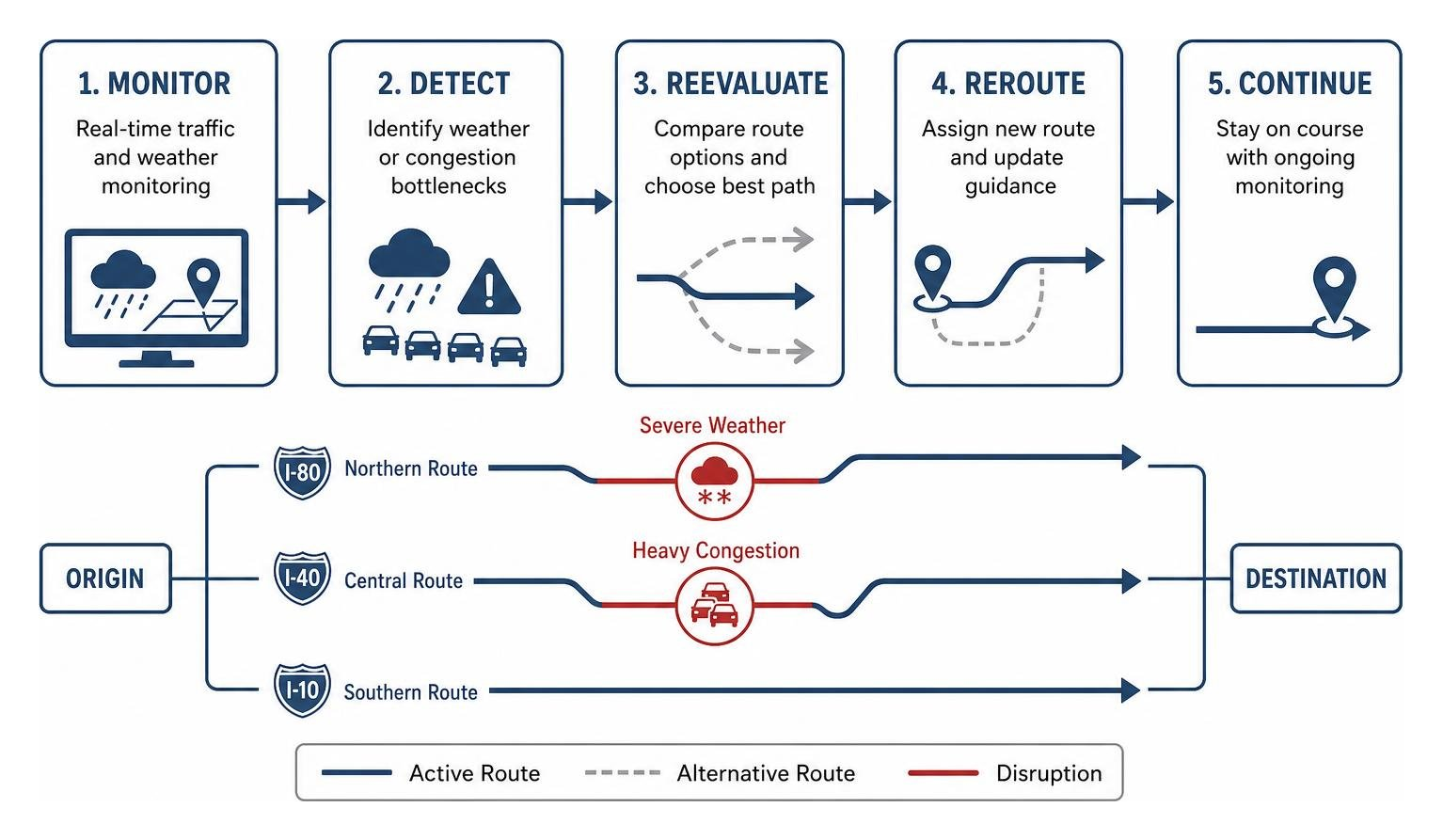
When an unplanned delay threatens a shipment, responsive freight brokers work with carriers to execute dynamic rerouting strategies. By leveraging real-time telematics and nationwide weather monitoring, shipments can be diverted to southern arteries or bypass routes before trucks get trapped in standstills. Constant milestone tracking ensures that operations managers receive immediate updates, allowing them to adjust manufacturing shifts or warehouse receiving schedules accordingly. For urgent freight, this level of visibility is not a convenience; it is an operational requirement that keeps production schedules and customer commitments intact.
Strategic Ground Transport Modes for Cross-Country Delivery
Selecting the right vehicle configuration and driver structure is the most critical operational decision for long-haul ground transport. For mission-critical shipments, relying on urgent expedited freight services eliminates unnecessary handling and terminal delays.
| Transit Feature | Standard Single-Driver Ground | Dedicated Team-Driver Expedited Ground |
|---|---|---|
| Driver Configuration | Single driver | Dual alternating drivers |
| Daily Rolling Hours | Up to 11 hours driving per 24-hour cycle | Up to 20+ hours continuous movement |
| Terminal Handling | Multiple cross-docks and hub transfers | Direct point-to-point (exclusive use) |
| Cargo Risk Profile | Higher handling and transfer exposure | Minimal handling, direct secure transit |
| Transit Focus | General non-urgent inventory | Emergency, line-down, and high-value cargo |
Dedicated Hot-Shot and Team Driver Operations
When an assembly line is stopped or a critical medical component is needed across the country, dedicated hot-shot and team-driver operations provide the necessary speed.
- Dedicated Hot-Shot Transport: Utilizes exclusive-use vehicles (such as cargo vans, sprinter vans, or straight trucks) that load directly at your facility and drive straight to the destination without stops for other shippers.
- Team-Driver Configurations: Pairs two professional drivers in a single cab. While one driver rests in the sleeper berth, the other drives, keeping the wheels rolling continuously while fully adhering to federal safety mandates.
By avoiding freight consolidation terminals and regional sorting centers, dedicated transport removes the primary source of cargo delays and damage. This direct point-to-point model is especially valuable when a shipment cannot afford the dwell time associated with hub-and-spoke networks.
Specialized Handling for Critical Industrial Cargo
Long-distance transit often involves sensitive, heavy, or high-value freight that requires more than basic curb-to-curb delivery. We coordinate specialized handling solutions across key industrial sectors:
- Automotive Manufacturing: Delivering time-critical production tooling and replacement components directly to factory docks to prevent costly line-down events.
- Medical and Pharmaceuticals: Arranging temperature-monitored, secure direct transport for specialized clinical devices and hospital equipment.
- Industrial and Fabrication Machinery: Coordinating heavy machinery replacement parts to plant maintenance teams.
- Commercial Lighting and Fixtures: Moving fragile, large-format architectural lighting directly to active construction sites.
These sensitive shipments often require specialized delivery equipment. Shippers can review methods for navigating domestic expedited shipping options to arrange tailored accessorials, including liftgate service, two-man crews, inside delivery, and white-glove uncrating protocols. Matching the right equipment and handling procedures to the cargo reduces the risk of damage and keeps urgent deliveries on schedule.
Navigating Regulatory Compliance and Interstate Road Logistics

Transporting freight across multiple state borders requires strict adherence to federal transportation regulations. Commercial motor vehicle safety is closely monitored by the Federal Motor Carrier Safety Administration (FMCSA) and the Department of Transportation (DOT).
Hours of Service and Driver Safety Protocols
Federal Hours of Service (HOS) rules dictate commercial driver schedules:
- Drivers are limited to a maximum of 11 hours of driving time after 10 consecutive hours off duty.
- Drivers may not drive beyond the 14th consecutive hour after coming on duty.
- Mandatory rest breaks and cumulative weekly duty limits are strictly enforced via Electronic Logging Devices (ELDs).
For coast-to-coast ground delivery, single-driver loads must pause for statutory rest periods every day. Team-driver operations provide the practical solution, allowing continuous legal transit as drivers alternate between driving duty and off-duty rest in the sleeper berth.
Technology and Telematics in Modern US Coast to Coast Shipping
Modern expedited ground transport relies on integrated telematics to maintain end-to-end visibility. GPS tracking units provide continuous location monitoring, while automated sensor alerts flag potential route exceptions or unauthorized route deviations.
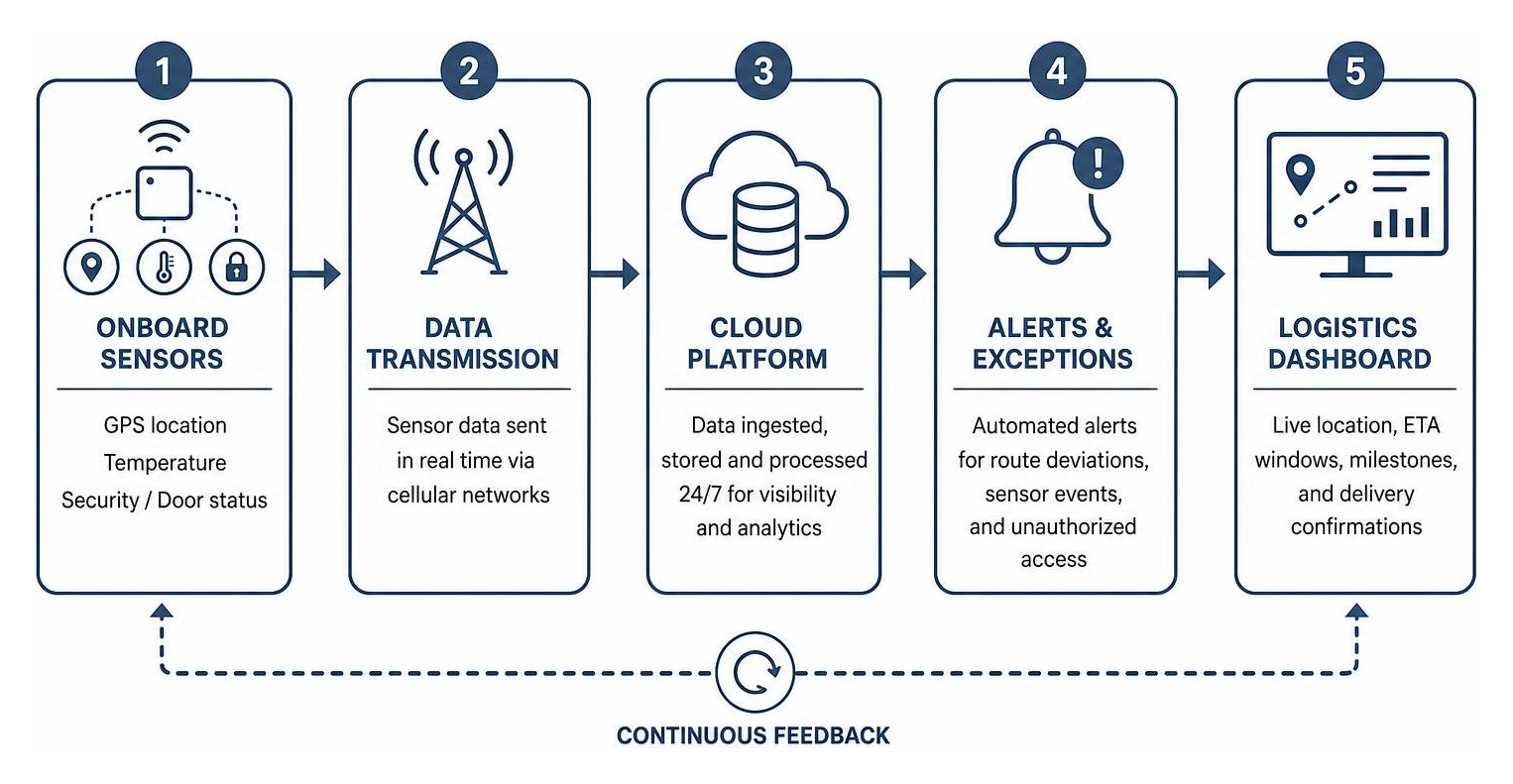
Implementing expedited shipping best practices ensures that operations teams have round-the-clock visibility into vehicle position, estimated arrival windows, and delivery confirmation timestamps. For shippers managing urgent cross-country freight, that visibility supports faster decisions when schedules shift or weather conditions force a route change.
Frequently Asked Questions
What is the fastest ground option for cross-country freight delivery?
The fastest ground method is a dedicated, exclusive-use vehicle staffed by a team of two drivers. This setup allows continuous, non-stop transit from loading dock to receiving bay, pausing only for brief fuel stops and driver handoffs.
How do dedicated team drivers expedite coast-to-coast delivery times?
Because federal safety regulations limit an individual driver to 11 hours of driving per shift, a solo driver must shut down the vehicle for extended rest periods each day. Team drivers rotate shifts between the steering wheel and the sleeper berth, allowing the vehicle to remain in motion up to 20 or more hours per day while remaining fully compliant with all safety regulations.
Which industries rely most heavily on time-critical cross-country ground shipping?
Industrial manufacturers (facing line-down emergencies), automotive assembly plants, medical device suppliers, aerospace contractors, and commercial lighting installers frequently rely on time-critical cross-country ground transport to keep operations on schedule.
What should shippers prepare before requesting an urgent coast-to-coast shipment?
Shippers should have the pickup location, delivery address, required delivery window, cargo dimensions, weight, and any special handling requirements ready. Clear shipment details help logistics coordinators match the load with the right vehicle configuration and routing strategy without delay.
Conclusion
When critical freight must move across the nation without delay, working with a reliable brokerage makes all the difference. Pro Express Inc. has been a trusted freight brokerage in business since 2007, bringing nearly 20 years of experience to urgent ground logistics. Having successfully coordinated over 10,000 shipments with a 99% client satisfaction rate, we have built partnerships with clients who have relied on our coordination for over 13 years.
Our team coordinates nationwide shipments across the contiguous United States 24/7 through a vetted network of trusted carrier partners. Whether you require dedicated hot-shot transport, team-driver overland transit, liftgate assistance, or inside white-glove handling, we match your shipment with the right equipment and routing strategy. Learn more about our specialized dedicated courier and ground delivery services to support your critical supply chain operations.
Contact Us Today to speak with our 24/7 logistics coordinators about your cross-country freight requirements.