
Meet Tight Deadlines With Domestic Expedited Shipping
Domestic expedited shipping moves time-critical freight faster than standard ground service, typically through next-day, 1-3 day, same-day, or dedicated point-to-point transportation. For an urgent shipment, start by confirming the required delivery time, freight size and handling needs, then choose the service level that can meet the deadline without unnecessary transfers.
For small and mid-size manufacturers, distributors, and medical suppliers, expedited service is often the recovery plan when a regular carrier misses a pickup, a production line needs a part, or a customer commitment is at risk.
Parcel services can provide scheduled express delivery with tracking and, in some cases, a delivery guarantee. But when freight cannot wait through hub sorting or multi-stop routing, dedicated ground expedited shipping assigns a vehicle to your load and drives directly from pickup to delivery.
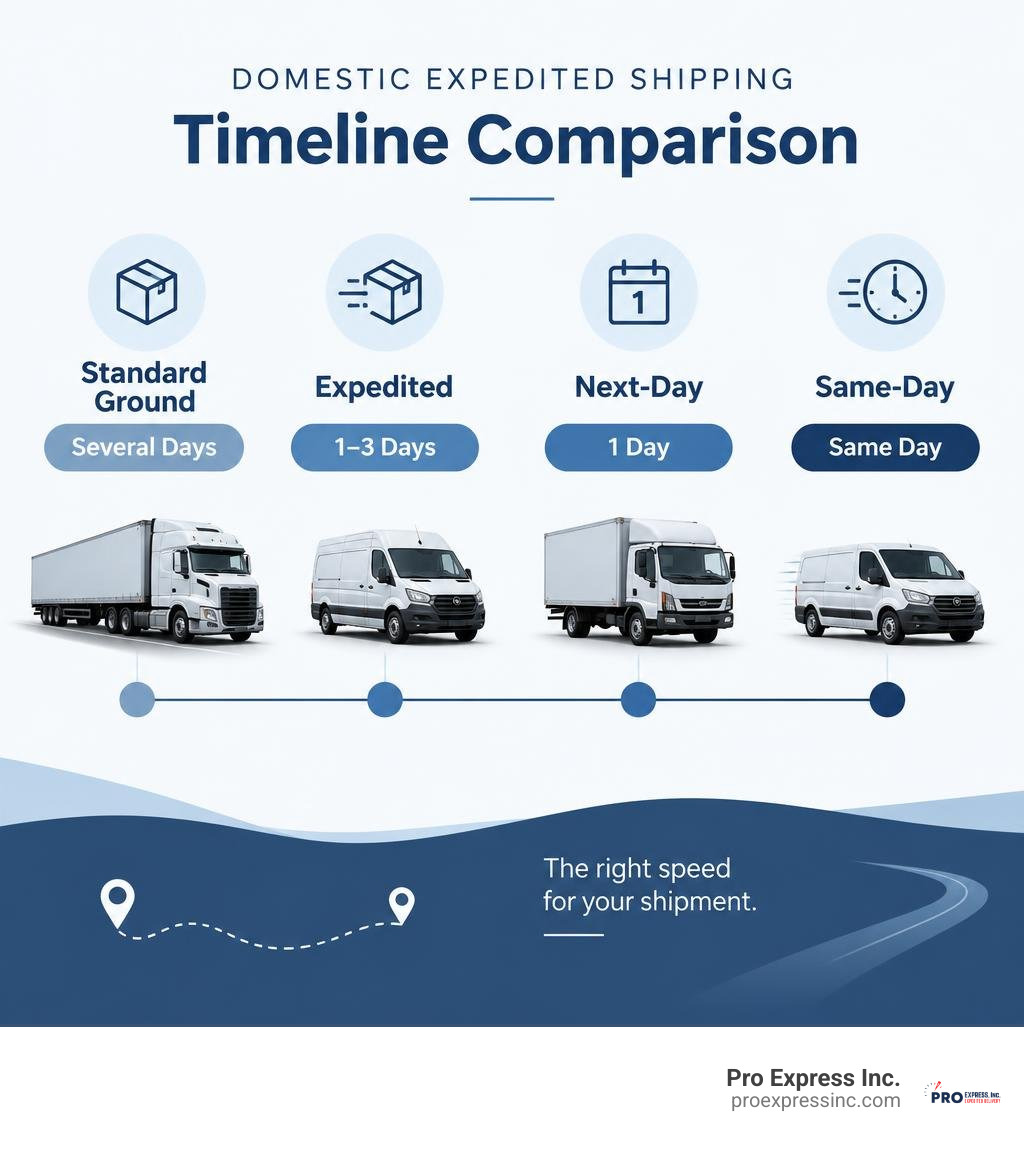
That distinction matters. Standard ground may take several business days. Expedited options can reduce transit to one to three days, while dedicated and hot-shot service can support same-day or next-day moves based on distance and equipment availability.
Pro Express Inc. brings nearly 20 years of freight-broker experience to time-sensitive moves, with 10,000+ shipments coordinated. The goal is straightforward: give operations teams a responsive transportation partner when the delivery window is too important to leave to chance.
Relevant articles related to domestic expedited shipping:
Understanding Domestic Expedited Shipping and How It Works
Supply chain velocity defines modern industrial performance. When production schedules depend on components arriving on a strict timeline, standard transportation networks often introduce unacceptable risk. Understanding what is expedited shipping begins with examining how freight bypasses standard consolidation networks to accelerate order fulfillment and protect delivery integrity.
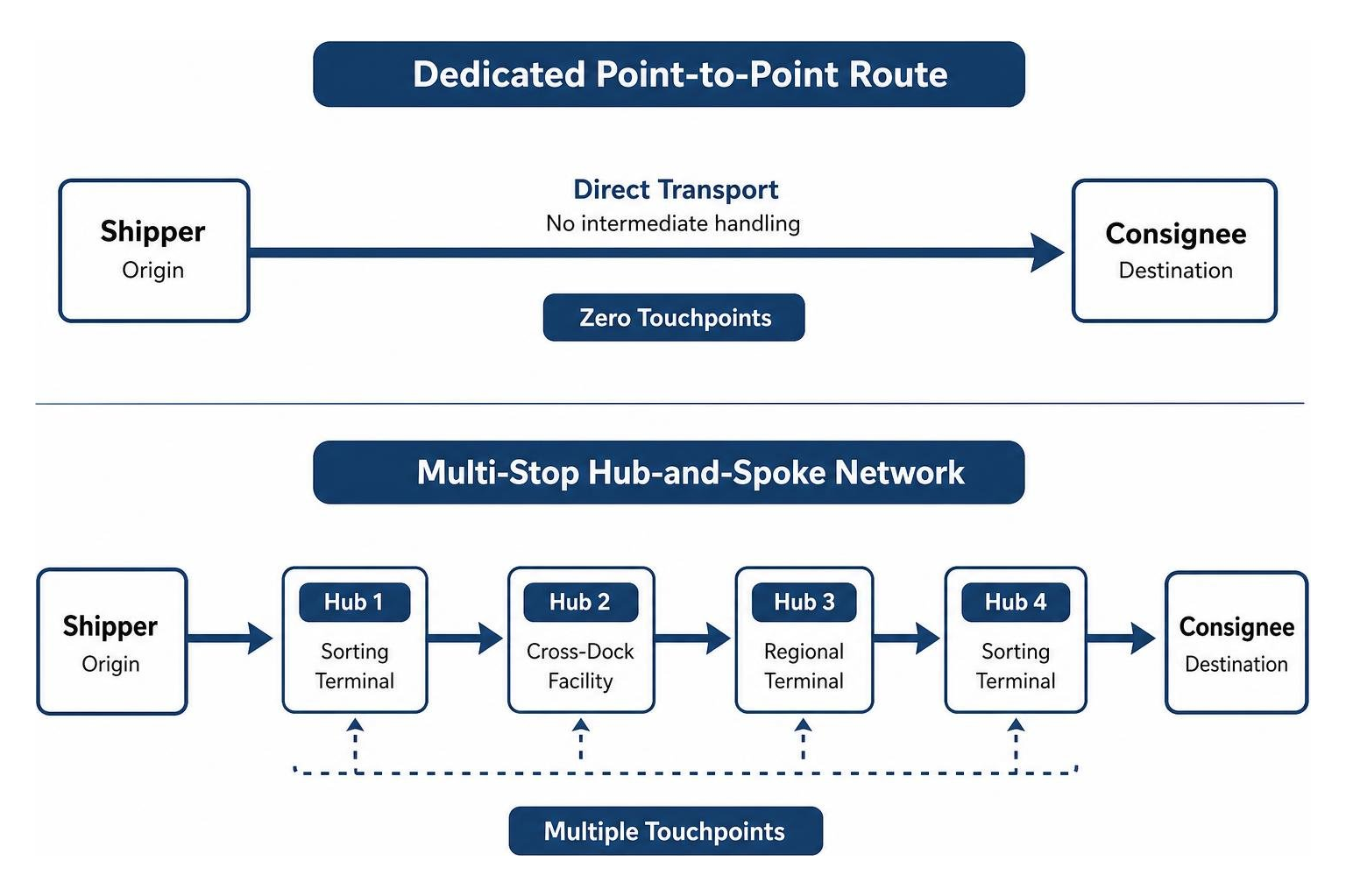
Standard logistics models operate on terminal-based consolidation. Shipments pass through regional distribution centers, cross-dock facilities, and sorting hubs. Each touchpoint introduces dwell time and handling exposure. In contrast, expedited freight solutions prioritize speed and single-chain custody.
By coordinating through specialized carrier partners, freight brokers eliminate intermediate sorting steps. Shipments move on accelerated schedules designed specifically around your operating deadlines.
Domestic Expedited Shipping vs Standard Delivery Timelines
Transit windows vary dramatically between standard transportation and dedicated expedited methods. Standard ground freight networks typically operate on transit windows of three to seven business days. While effective for replenishment cycles, these timelines fail when unexpected production halts or critical hospital orders occur.
Accelerated multi-day options shorten this window to one to three business days through priority lane routing. When timing is non-negotiable, dedicated ground transit provides direct point-to-point execution. This ensures delivery within same-day or next-day windows based entirely on mileage.
| Service Level | Typical Transit Window | Routing Model | Touchpoints | Primary Use Case |
|---|---|---|---|---|
| Standard Ground | 3–7 Business Days | Hub-and-Spoke Sorting | Multiple Terminals & Docks | Routine replenishment, non-urgent inventory |
| Expedited Ground | 1–3 Business Days | Priority Lane Logistics | Minimal Sorting Hubs | Time-sensitive inventory, planned launches |
| Dedicated Ground | Same-Day to Next-Day | Direct Point-to-Point | Zero Intermediate Handling | Critical shutdowns, emergency medical supply |
Transit Disruptions vs Dedicated Ground Solutions
Standard network carriers frequently struggle with cargo capacity crunches, strict dispatch cut-offs, and unexpected weather disruptions. If a linehaul truck encounters severe weather or a mechanical breakdown at a regional terminal, hundreds of consolidated shipments stall simultaneously.
Arranging dedicated expedited ground shipping provides an agile operational recovery plan. By securing dedicated hot-shot units through vetted carrier partners, logistics managers bypass rigid hub-and-spoke networks completely.
The vehicle is dispatched exclusively for your freight, moving directly from the shipper’s dock to the consignee. This eliminates cut-off constraints and provides resilient transit execution during regional network failures.
Carrier Service Levels, Operational Specifications, and Handling Factors
Navigating domestic expedited logistics requires understanding operational parameters, equipment capabilities, and service tiers. Shippers must evaluate carrier delivery commitments against freight dimensions and transit constraints. Knowing how to navigate US domestic expedited shipping options ensures that freight managers select suitable solutions for complex consignments.
Parcel and Courier Domestic Expedited Shipping Options
Time-definite delivery services cater to varied operational urgency. Major national networks utilize structured delivery commitments:
- 1-Day Delivery Tiers: Designated destination delivery by scheduled morning or afternoon commitments.
- 2-Day Delivery Tiers: Time-definite transport to secondary regional hubs within designated zones.
- Regional Courier Services: Accelerated local operations offering early morning arrivals (such as 8:30 AM or 10:30 AM commitments) for urgent industrial components.
For larger palletized cargo, automotive tooling, and high-value equipment, industrial shippers rely on non-stop expedited ground services rather than small-parcel conveyor belts.
Weight, Zone Classifications, and Dimensional Weight Calculations
Distance and density dictate freight carriage requirements across domestic zones (Zones 1 through 8). While standard parcel and small-courier networks maintain strict weight ceilings—often capping single handling units at 70 lbs or 150 lbs—industrial freight moves under different density metrics.
Carriers utilize dimensional weight (DIM) calculations to measure package density when cargo occupies significant cubic volume relative to its physical heft:
- Multiply package length, width, and height in inches to determine total cubic volume.
- Divide total cubic inches by the domestic industry standard divisor of 166.
- Compare the calculated dimensional weight against the actual physical scale weight.
- The higher value serves as the billable weight baseline.
Handling Factors: Nonstandard Lengths and Specialized Requirements
When organizing expedited movements through standard common carriers, accessorial handling requirements can quickly compound. Managing operational profiles requires recognizing standard handling triggers:
- Nonstandard Length Handling: Additional handling required on parcels between 22 and 30 inches, with more intensive procedures for units exceeding 30 inches in length.
- Cubic Volume Adjustments: Special handling applied to irregular packages exceeding two cubic feet.
- Specialized Handling: Added procedures for temperature-sensitive cargo, perishable items, and live-specimen preservation.
- Weekend Operations: Additional coordination required for Saturday dispatches, Sunday deliveries, or holiday transit.
- Dimension Non-Compliance: Operational corrections assessed when submitted dimensions do not align with physical freight scans.
Working with an experienced freight broker allows logistics managers to identify required specialized equipment—such as liftgates, two-man delivery teams, or white-glove transport—upfront, preventing operational delays at the consignee dock.
Strategic Benefits and Operational Best Practices for Shippers
Operational leaders leverage expedited transportation not merely as an emergency response, but as a proactive lever for supply chain optimization. Deploying strategic expedited ground freight enables operations to preserve customer trust, streamline assembly lines, and maintain critical fulfillment workflows.
Distributed Inventory and Regional Fulfillment Hubs
A distributed inventory strategy positions core components and high-turnover products across regional fulfillment hubs. By establishing multi-warehouse nodes across the United States, businesses compress transit zones.
This model allows standard ground networks to reach vast domestic zones within two days. When unanticipated stockouts occur at a regional hub, dedicated expedited hot shots bridge the gap, transferring critical stock directly from central manufacturing plants without interrupting local customer fulfillment.
Protecting Operational Continuity and Meeting Customer Expectations
Meeting tight delivery windows requires clear operational discipline. Logistics leaders manage freight performance by integrating proven operational best practices:
- Enforce Operational Thresholds: Prioritize expedited transit for high-impact freight, mission-critical machinery, and urgent medical equipment.
- Package Integrity: Right-size packaging and secure pallets properly to avoid transport damage and dimensional overages.
- Carrier Partner Diversification: Partner with an experienced broker to maintain access to multiple equipment classes, from cargo vans and sprinter vans to box trucks with liftgates.
- Streamlined Order Processing: Accelerate internal dock operations so freight is staged and ready before the arranged transport arrives.
Selecting specialized expedited freight solutions protects downstream operations against manufacturing downtime and missed client commitments.
Overcoming Last-Mile Inefficiencies and Address Exceptions
The final leg of transportation presents significant operational challenges. Dense urban centers, restricted industrial complexes, and secure facilities require accurate delivery information. Address verification, exact ZIP+4 validation, and advance consignee dock scheduling prevent failed attempts and disruptive detention.
Furthermore, sensitive cargo often demands specialized handling capabilities at delivery:
- Liftgate Requirements: Critical for destination facilities lacking standard loading docks.
- Inside Delivery and Two-Man Handling: Necessary for bulky industrial equipment and fragile lighting installations.
- White-Glove Service: Essential for sensitive medical and pharmaceutical instrumentation that must be unpacked and placed directly in operating suites.
Critical Safeguards: Tracking, Insurance, and Delivery Performance
When critical operations are on the line, logistics decision-makers require absolute accountability throughout the transit cycle. Managing high-value cargo demands real-time visibility, robust risk management, and formal delivery commitments.
Real-Time Milestone Visibility and Barcode Scanning
Modern freight management relies on continuous visibility. From automated barcode scans at origin to integrated telematics inside carrier vehicles, advanced monitoring keeps logistics teams informed of their cargo’s progress.
Utilizing advanced expedited freight tracking enables 24/7 shipment monitoring. Operations managers receive real-time notifications across critical transit milestones:
- Carrier Dispatch & Dock Arrival: Confirmation of vehicle staging at origin.
- Freight Loading & In-Transit Telematics: Live GPS tracking throughout the linehaul route.
- Approaching Destination: Advance alerts sent to consignee receiving docks.
- Electronic Proof of Delivery (e-POD): Immediate timestamped signature capture upon final delivery.
Cargo Insurance Coverage and Delivery Performance Standards
Risk mitigation requires adequate coverage for every shipment. Standard common carrier liability is often minimal, frequently limited to nominal amounts per pound or a baseline $100 coverage on small packages.
For high-value automotive components, medical machinery, and precision fixtures, logistics professionals secure declared-value insurance to protect against transit loss or physical damage.
Furthermore, shippers should review network terms regarding delivery performance standards. While standard carriers may waive delivery commitments during regional weather emergencies or peak holiday volumes, dedicated freight arrangements provide continuous point-to-point focus, ensuring that committed schedules are met without diversion.
Frequently Asked Questions About Expedited Shipping
How fast is domestic expedited shipping compared to standard ground?
Standard ground delivery typically requires three to seven business days depending on origin-to-destination mileage. Domestic expedited shipping reduces this transit window significantly:
- Accelerated ground: 1–3 business days
- Priority overnight: Next-day delivery by specified morning or afternoon commitments
- Dedicated ground hot shot: Immediate dispatch providing same-day or next-day direct delivery based entirely on physical driving distance
How does dimensional weight impact the handling of expedited freight?
Dimensional weight reflects package density by calculating the volume (Length × Width × Height in inches) and dividing it by a standard factor (typically 166 for domestic transit). If the resulting dimensional weight exceeds the actual scale weight, carriers assess handling requirements based on the larger dimensional figure. Optimizing carton dimensions and eliminating excess packaging prevents unexpected dimensional handling adjustments.
What happens if an expedited shipment misses its committed delivery window?
If a network carrier fails to meet a committed delivery window due to operational service delays, the shipper can typically submit a service failure claim under that carrier’s performance terms. However, common carriers often exclude weather events, regulatory holds, and acts of nature from these commitments.
Arranging dedicated, point-to-point ground transportation avoids sorting terminal bottlenecks and significantly minimizes transit delay risks.
Optimize Your Urgent Freight Deadlines Today
When critical operational schedules are on the line, relying on rigid consolidation hubs introduces unnecessary supply chain risk. Pro Express Inc. brings nearly 20 years of specialized freight brokerage experience to your most demanding transportation challenges.
Founded in 2007, we have coordinated more than 10,000 time-critical shipments nationwide, maintaining a 99% client satisfaction rating across the automotive, medical, pharmaceutical, manufacturing, and commercial lighting industries.
We arrange responsive, point-to-point ground logistics through our vetted carrier network. Whether your shipment requires dedicated hot shots, liftgate-equipped straight trucks, two-man teams, or white-glove inside delivery, we provide the visibility and execution your deadlines demand.
Do not let carrier delays halt your operations. Explore our dedicated expedited transportation services and streamline your time-sensitive supply chain today.