
How to Arrange Hot Shot Bulb Delivery
To arrange hot shot bulb delivery, gather the bulb specifications, quantity, pickup and delivery addresses, deadline, and packaging details. Share any site access rules when you book so the carrier can plan the trip. For fragile bulbs, ask how the shipment will be secured and handled.
Pro Express Inc. coordinates same-day, next-day, and hot-shot ground shipments through a vetted carrier network across the contiguous United States. Dedicated transport can reduce transfers for urgent commercial lighting replacements.
Hot shot bulb delivery terms to remember:
What Is Hot Shot Bulb Delivery and When Is It Needed?
In high-stakes industrial and commercial operations, lighting is rarely something you think about—until an entire manufacturing bay goes dark or an exterior perimeter loses visibility. When a critical bulb fails, standard supply chains moving through traditional freight hubs are often too slow and introduce unnecessary handling risks for glass elements.
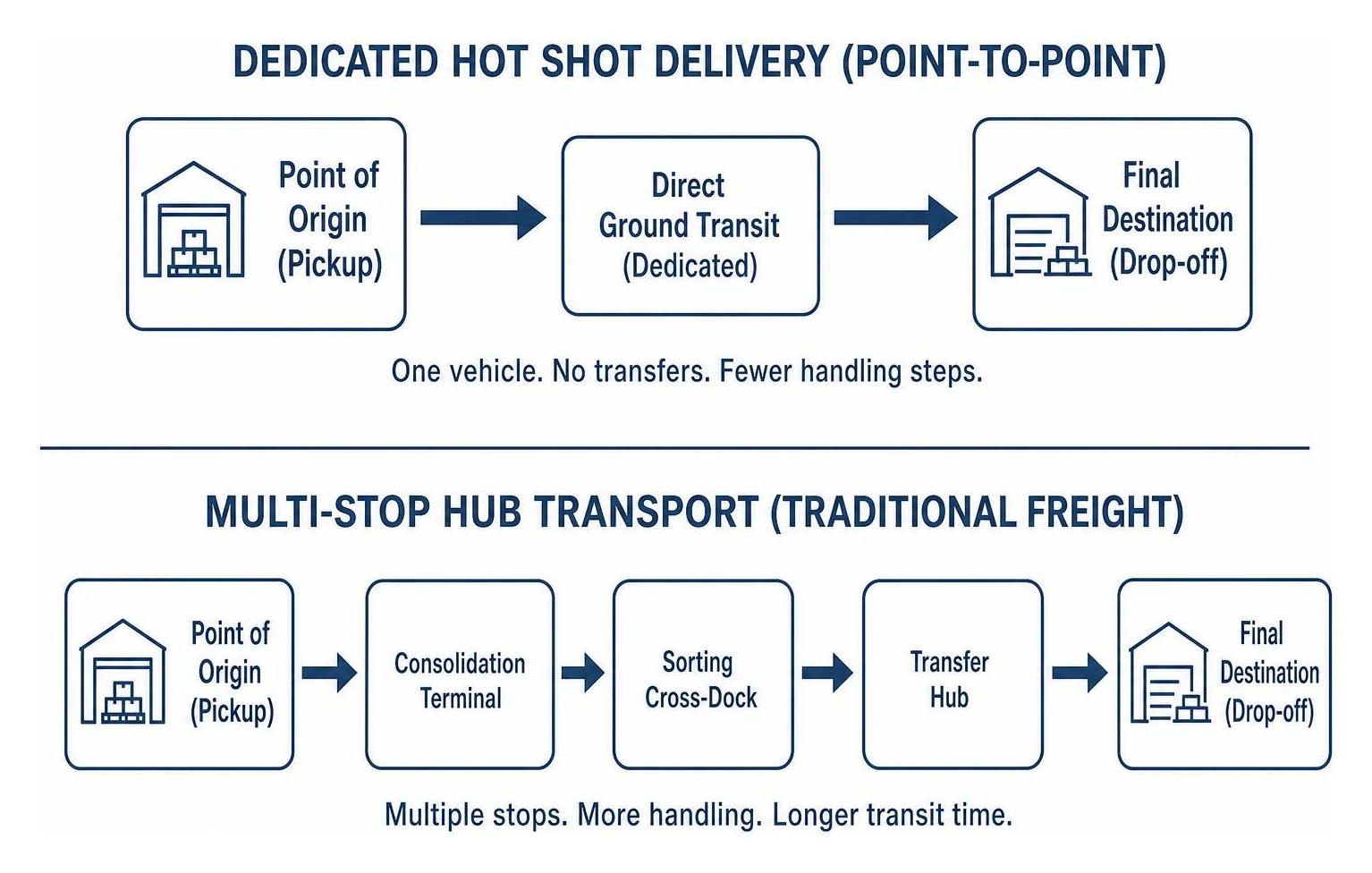
Hot shot delivery is an expedited, dedicated ground transportation service designed to move urgent freight directly from point of origin to final destination. Unlike general freight, which travels through multiple consolidation terminals, sorting cross-docks, and transfer hubs, dedicated ground freight stays in a single vehicle from pickup to drop-off. Arranging urgent freight hot shot delivery eliminates intermediate handling steps, significantly reducing transit time and the physical stress placed on sensitive goods.
When organizing emergency lighting logistics, choosing point-to-point ground transit ensures your shipments bypass standard freight bottlenecks. This setup keeps industrial facilities compliant, secure, and operational.
Urgent Commercial and Industrial Lighting Scenarios
Illumination is tied directly to workplace safety and regulatory compliance. Across manufacturing plants, logistics hubs, and commercial centers, a sudden outage can bring productivity to an immediate halt.
Common situations requiring rapid intervention include:
- Production Line Illumination: Modern assembly lines depend on specific lux levels for quality control and worker safety. A failed overhead luminaire can halt an entire shift if operators cannot safely inspect components.
- Plant Safety and OSHA Compliance: Insufficient illumination in active industrial environments can quickly violate workplace safety standards established by regulatory bodies like the Occupational Safety and Health Administration.
- Facility Security and Perimeter Defense: Security cameras and monitoring systems require functional perimeter lighting. Dark zones around distribution yards or sensitive industrial facilities pose serious security liabilities.
- Emergency Infrastructure Maintenance: Critical facilities such as municipal treatment plants, data infrastructure hubs, and regional distribution centers cannot afford extended dark hours when replacement fixtures fail unexpectedly.
When facility downtime accumulates by the hour, relying on last minute hot shot logistics provides operations managers with a reliable path to restore full operational lighting.
Types of Lighting Supported by Hot Shot Bulb Delivery
Commercial lighting encompasses a wide array of specialized technologies, each presenting unique transportation challenges. Hot shot transport coordinates ground transit for diverse, non-hazardous lighting components, including:
- Commercial LED Panels and Drivers: High-efficiency architectural and industrial troffers requiring gentle, upright transit to prevent warping or solder fracture.
- High-Intensity Discharge (HID) Lamps: Heavy-duty metal halide and high-pressure sodium bulbs utilized in high-bay industrial warehousing and outdoor sports facilities.
- UV Sanitization and Curing Lamps: Specialized ultraviolet quartz tubes utilized in industrial paint curing, water purification, and pharmaceutical sterilization environments.
- Industrial Floodlights and High-Bay Fixtures: Ruggedized exterior and interior high-wattage lighting systems designed for large-scale distribution yards.
- Specialty Horticultural Units: Full-spectrum commercial grow fixtures and delicate specialty lighting setups where strict growing cycles cannot tolerate dark periods, underscoring how vital proper environmental maintenance is across specialized commercial facilities.
Step-by-Step Guide to Arranging Expedited Ground Lighting Logistics

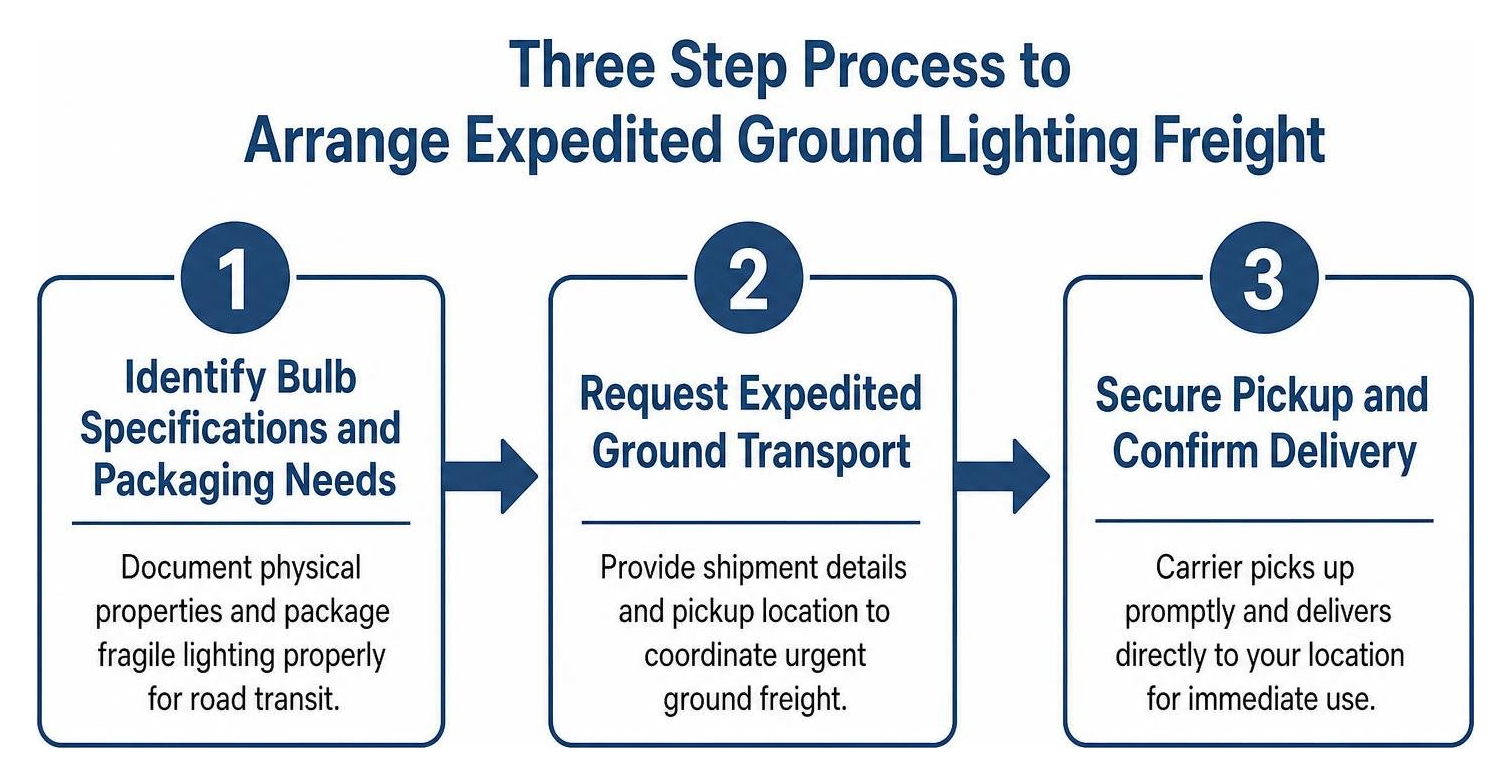
Arranging rapid ground transit for fragile industrial components requires a methodical approach. Because delicate filaments and glass enclosures cannot withstand rough freight transfers, proper planning helps ensure the load arrives intact and ready for installation.
Following a clear workflow for emergency hot shot courier planning streamlines pickup, vehicle assignment, and delivery execution.
Step 1: Identifying Bulb Specifications and Packaging Needs
Before requesting vehicle dispatch, document the physical properties of the cargo. Fragile glass, long fluorescent tubes, and heavy industrial fixtures demand tailored packaging to prevent vibration damage during road transit.
Key preparation steps include:
- Assessing Structural Sensitivity: Determine whether the bulbs contain delicate internal filaments, sensitive quartz sleeves, or sensitive electronic control boards.
- Double-Boxing Delicate Tubes: Place individually sleeved bulbs inside an inner corrugated carton, then suspend that carton inside a heavy-duty outer box lined with at least two inches of high-density foam or bubble wrap. To review proper techniques, follow industry guidelines on packing fragile items for transit.
- Labeling and Orientation: Clearly mark all outer packaging with “Fragile,” “This Side Up” orientation arrows, and DO NOT DOUBLE STACK warnings on all vertical faces.
- Shock and Tip Monitoring: For high-value optical arrays or sensitive quartz assemblies, affix external shock indicators and tilt sensors to verify proper transit handling upon arrival.
Step 2: Selecting the Appropriate Dedicated Ground Vehicle
Matching cargo dimensions and pallet counts to the right vehicle size ensures maximum load stability while avoiding unnecessary empty trailer space. Dedicated ground logistics relies on versatile, direct-transit vehicles rather than massive intermodal trailers.
When evaluating equipment options, consider:
- Cargo Vans and Sprinter Vans: Ideal for small cartons, emergency single-fixture replacements, and delicate tubes up to 10–12 feet in length. These units navigate dense urban streets and industrial driveways easily.
- Small Straight Trucks (12 to 24 feet): Perfect for multiple pallets of commercial fixtures or heavy outdoor floodlight housings. Many units feature air-ride suspension to cushion delicate glass filaments over highway joints.
- Liftgate Capabilities: If your pickup supplier or delivery job site lacks a dedicated loading dock, requesting a vehicle with a hydraulic liftgate ensures smooth, ground-level loading without jolting fragile contents.
Reviewing small truck hot shot options allows shippers to book the exact vehicle class required for their specific freight profile.
Step 3: Coordinating Real-Time Dispatch and Route Planning
Once cargo details and equipment needs are defined, your freight broker coordinates dispatch through a vetted carrier network. Because industrial lighting emergencies demand complete transparency, modern ground coordination provides continuous transit oversight across the lower 48 states.
During this stage, your logistics partner establishes direct door-to-door routing, matching the load with a vehicle dedicated exclusively to your freight. By utilizing time-sensitive same day cargo delivery strategies, operations teams receive automatic milestone notifications from initial loading through final gate check-in, keeping plant supervisors informed every mile of the journey.
Fragile Freight Protocols for Secure Lighting Transport
Transporting industrial glass and sensitive lighting fixtures requires far more diligence than standard dry freight shipping. In standard less-than-truckload (LTL) networks, freight is frequently offloaded, rearranged via forklifts, and stacked under heavier pallets at intermediate distribution terminals.
According to transport packaging research published by the International Safe Transit Association (ISTA), repetitive mechanical shock and dynamic warehouse handling are leading causes of fragile product damage in multi-stop networks.
The table below highlights how dedicated hot shot carriage differs from traditional hub-and-spoke freight models:
| Feature / Protocol | Traditional Hub-and-Spoke LTL | Dedicated Hot Shot Transport |
|---|---|---|
| Handling Frequency | Multiple touches at regional cross-dock terminals | Single touch: loaded at origin, unloaded at destination |
| Cargo Co-Loading | Commingled with heavy industrial freight and drums | Exclusive vehicle use; zero mixed third-party freight |
| Transit Route | Indirect routing via regional distribution centers | Direct, non-stop ground transit from dock to dock |
| Vibration Mitigation | Standard leaf-spring freight trailers | Air-ride suspension and specialized cargo securement |
| Delivery Tracking | Scan events updated at terminal gates | Continuous milestone tracking and direct status updates |
To minimize structural fatigue on delicate lighting assemblies, working with top-rated fragile freight couriers ensures your components receive dedicated, non-stop ground carriage.
Critical Handling for Hot Shot Bulb Delivery and Fragile Tubes
Long glass tubes, such as fluorescent lamps and UV sterilizers, present specific mechanical vulnerabilities during road transit. When subjected to horizontal bending forces, long glass envelopes can fracture along internal stress lines or break away from their end-cap pins.
To safeguard these sensitive components, drivers within vetted carrier networks employ strict securement measures:
- Vertical or Angled Stowing: Transporting long tube cartons in an upright or slightly angled, braced position minimizes resonant flex across the center of the glass tube.
- E-Track and Load Lock Bracing: Cargo boxes are locked directly against the vehicle walls using padded E-track straps, preventing any lateral shifting during acceleration or cornering.
- Strap Tension Calibration: Ratchet straps must be tightened sufficiently to prevent movement without crushing the outer corrugated packaging or cracking delicate internal fixtures.
- Padded Decking and Floor Mats: Placing high-density rubber friction mats underneath palletized lighting boxes absorbs high-frequency road vibrations before they reach the bulb filaments.
Implementing specialized fragile freight transport standards keeps fragile glass envelopes protected throughout long-distance ground transit.
Frequently Asked Questions About Hot Shot Bulb Delivery
How fast can an emergency bulb delivery be dispatched?
Emergency ground shipments are coordinated rapidly through a vetted carrier network operating 24/7 across the contiguous United States. Once cargo details, dimensions, and site access requirements are confirmed, dispatchers identify the nearest available dedicated vehicle to begin transit without intermediate terminal delays. Shippers looking for time-critical options can leverage rapid response courier solutions to minimize facility downtime.
What regions are covered for expedited bulb ground transport?
Expedited hot shot ground services cover the entire lower 48 states, connecting major industrial corridors, regional distribution centers, and remote commercial job sites. Whether coordinating intra-city deliveries across metropolitan areas or interstate hauls along major freight corridors, dedicated ground routing ensures direct delivery. Shippers operating throughout the central states frequently utilize dedicated Midwest same day delivery services for regional plant support.
How are delicate lighting filaments protected from transit damage?
Delicate lighting elements are protected by eliminating cross-dock handling and utilizing dedicated vehicle space where your cargo is never co-loaded with heavy industrial freight. Drivers secure packaging using specialized load locks, padded straps, and vibration-dampening decking to cushion delicate glass and filaments against road shock. Shippers can review best practices for protecting fragile parcels during shipping to ensure proper packaging before pickup.
Conclusion

When an unexpected lighting failure threatens facility safety, security, or regulatory compliance, standard freight networks cannot provide the direct handling that fragile glass and electronic ballasts require. By choosing dedicated hot shot ground transportation, operations managers eliminate intermediate terminal transfers, protect sensitive components from freight damage, and restore vital facility illumination quickly.
Pro Express Inc. is an expedited freight brokerage based in Oak Brook, Illinois, with nearly 20 years of experience coordinating time-critical ground transportation since 2007. Having successfully arranged over 10,000 delivered shipments while maintaining a 99% client satisfaction rate and supporting returning clients for over 13 years, we connect businesses with a trusted carrier network for seamless point-to-point transit across the contiguous United States. When urgent facility lighting demands immediate, dedicated ground coordination, explore our options for exclusive hot shots or reach out directly to arrange your next shipment.