
Why a Two-Man Delivery Service Protects Critical Freight
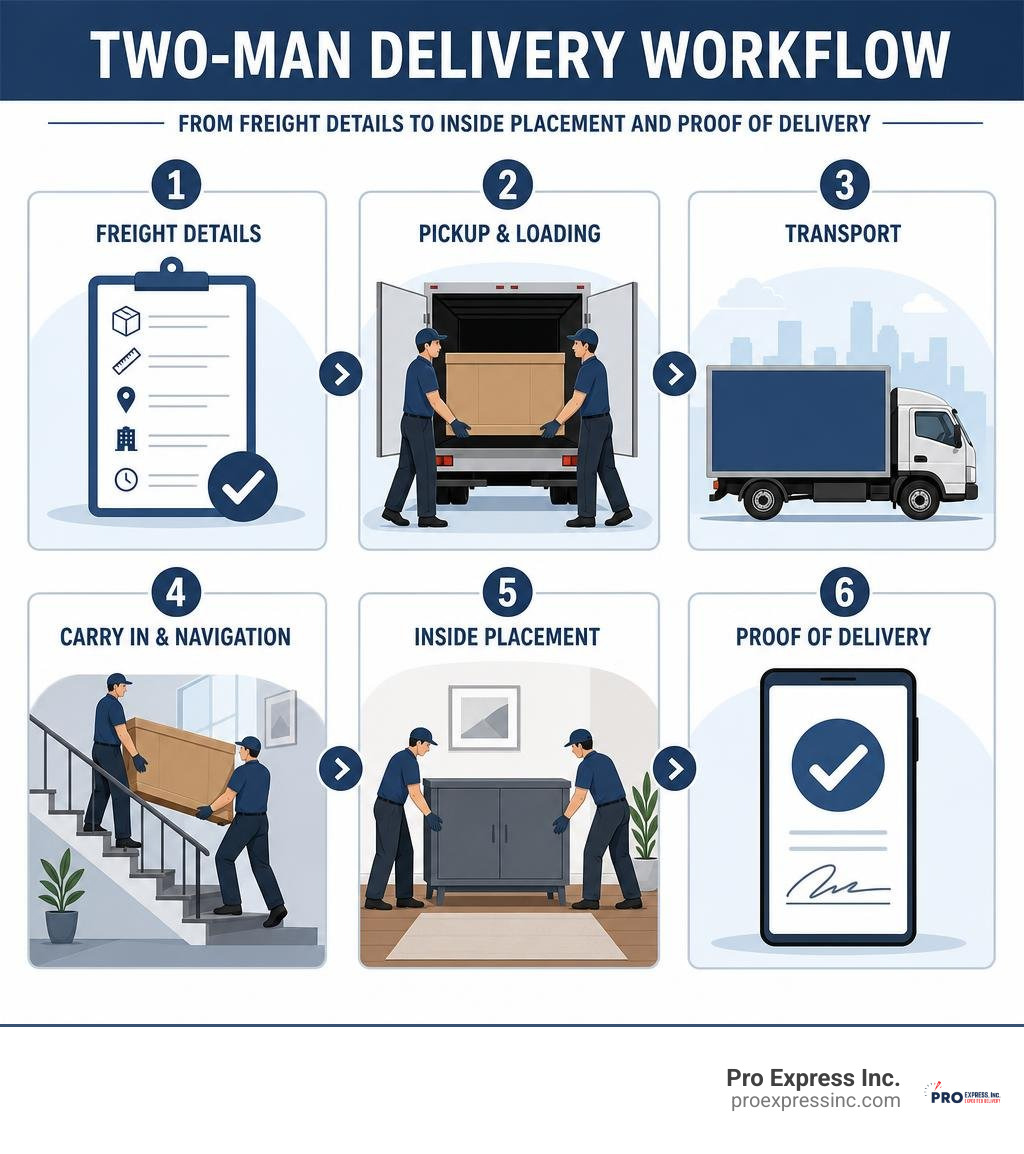
A two-man delivery service arranges for two trained delivery professionals to collect, transport, carry in, and place heavy, bulky, delicate, or high-value freight. For urgent B2B shipments, provide the item weight, dimensions, pickup and delivery locations, access details, room-of-choice requirements, and deadline upfront. This helps match the shipment to a carrier with the right vehicle, equipment, and handling plan.
Unlike a standard curbside drop-off, two-person white-glove delivery can include inside placement, stair navigation, unpacking, assembly, and packaging removal. It is a strong fit for medical equipment, commercial furniture, fixtures, appliances, and other freight that one person should not handle alone.
When a regular carrier fails or a delivery deadline is at risk, Pro Express Inc. coordinates expedited two-man service through a vetted carrier network. With nearly 20 years of freight-broker experience, the team helps businesses arrange reliable handling and clear delivery communication for time-critical shipments.
Two-man delivery service further reading:
1. What Sets a Two-Man Delivery Service Apart from Standard Freight
Standard commercial freight models often end at the curb or the loading dock. For enterprise cargo that demands direct indoor placement, curbside tailgates simply do not cut it. When freight arrives at an active office building, a medical clinic, or a retail showroom, leaving hundreds of pounds of crated equipment on an exterior pavement risks cargo integrity, safety violations, and severe operational disruption.

Coordinating specialized inside delivery bridges the final critical yards of transit. Rather than forcing receiving staff to improvise heavy lifting, a two-person team provides end-to-end management from pickup to final interior placement.
| Delivery Feature | Single-Driver Curbside Delivery | Two-Person Inside Placement |
|---|---|---|
| Drop-off Point | Curb, driveway, or commercial dock | Specified interior room of choice |
| Personnel Deployed | 1 driver | 2 trained freight handling specialists |
| Manual Handling Limit | Tailgate/ground level only | Navigates thresholds, elevators, and stairs |
| Facility Protection | None provided | Floor runners, corner guards, jamb covers |
| Post-Delivery Setup | None (packaging left intact) | Uncrating, assembly, and debris removal |
| Risk of Property Damage | High if receiver attempts movement | Minimized through team-lifting protocols |
Room-of-Choice Placement and Property Protection
Damage to customer property is never an acceptable trade-off for getting an item through a commercial entrance. Navigating large, rigid freight through narrow hallways, finished doorways, and multi-story corporate suites requires synchronized physical control.
Specialized teams employ targeted site protection materials before moving a single crate:
- Heavy-duty neoprene floor runners to prevent scuffs on tile, hardwood, or commercial carpeting.
- Padded door jamb guards and banister sleeves to shield interior architectural surfaces.
- Corner edge covers to prevent impact marks during tight turnarounds.
Carriers trained as the heavy lifters in 2-man courier services utilize mechanical forearm straps, stair-climbing hand trucks, and multi-point dollies. This equipment ensures that awkward loads traverse stairwells and elevators without structural collisions or physical strain.
Why High-Value Shipments Require a Two-Man Delivery Service
Single-driver operations inherently introduce higher risk factors for delicate or irregularly balanced freight. When one person attempts to manage a heavy, cumbersome crate alone, tilting, dropping, or scraping becomes significantly more likely.
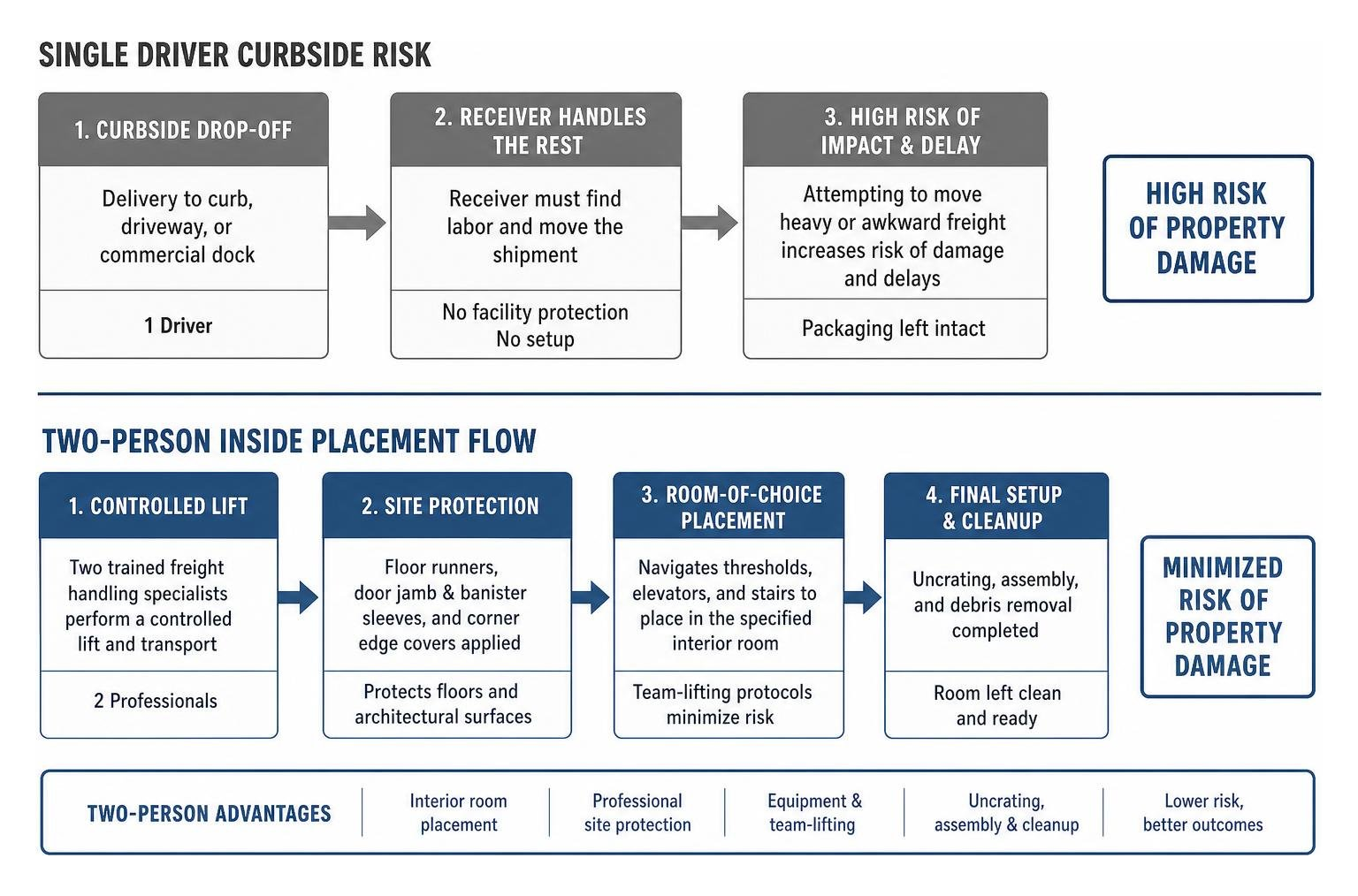
High-value commercial consignments—such as calibrated laboratory instruments, architectural lighting, and high-end executive furniture—require an unbroken chain of custody. By engaging two trained professionals, businesses maintain strict cargo integrity, eliminate tipping hazards, and achieve the seamless outcome of shipping big stuff without stress.
2. Key Commercial Freight Requiring Two-Person Handling
Certain commercial freight categories exceed the physical limits of single-person handling and demand specialized attention. Standard manual handling thresholds generally limit single drivers to packages under 70 lbs, whereas a synchronized two-person crew readily handles freight up to approximately 150 kg (330 lbs) using appropriate manual and mechanical handling gear.

When shipments exceed standard threshold dimensions or involve heavy, sensitive instrumentation, planning ahead for specialized handling and knowing when a liftgate is required for delivery ensures vehicles arrive properly equipped with hydraulic tailgates and interior securing straps.
Medical and Laboratory Equipment
Healthcare environments and diagnostic laboratories demand strict precision and sterile transit protocols. Delivering sensitive diagnostic scanners, centrifuges, dental imaging stations, and blood analysis machinery involves zero tolerance for shock or vibration:
- Sterile Navigation: Navigating hospital corridors and clean rooms without bumping sanitized surfaces or blocking emergency pathways.
- Precision Transit: Coordinating dedicated cargo vans or straight trucks equipped with air-ride suspensions to protect sensitive internal optics and digital sensors.
- Urgent Dispatch: Direct point-to-point transit that bypasses intermediate cross-docks to prevent mishandling.
High-End Commercial Furnishings and Lighting
Architectural design firms, luxury hotels, and corporate headquarters rely on flawless delivery execution for high-visibility interior fixtures. Fragile chandeliers, custom boardroom tables, executive seating, and trade show displays require white-glove care. Ensuring adherence to white glove delivery standards guarantees that heavy, unwieldy materials arrive without hairline cracks, torn upholstery, or scratched veneers.
3. White-Glove Value-Added Options and Inbound Logistics
Modern commercial delivery extends far beyond transport; it encompasses full on-site implementation and streamlined inbound supply chain management.
On-Site Assembly and Packaging Debris Removal
A major pain point for corporate recipients is dealing with unboxing, assembly, and heavy packaging materials after delivery. Arranging full-service logistics solves this issue immediately upon arrival:
- Uncrating & Inspection: Securely opening wooden crates, banded cartons, and shrink wrap, followed by a joint visual inspection with the facility manager.
- Light Assembly & Positioning: Connecting modular elements, installing legs, positioning display panels, and placing units into their operational footprint.
- Packaging Removal: Collecting all corrugated boxes, dunnage, strapping, and foam, then removing them entirely from the site for proper disposal and recycling compliance.
This end-to-end attention mirrors the precision required for high-stakes residential and commercial setups, such as white glove residential freight.
Hub-and-Spoke Warehousing and Route Optimization
Inbound supply chains benefit greatly from strategic freight staging. By coordinating through strategically situated hub locations and micro-depots across North America, logistics networks significantly streamline middle- and last-mile routing.
Industry data demonstrates that optimizing delivery hubs and consolidating direct routes can reduce total transport route length by up to 70 percent. This optimization slashes transit times, mitigates fuel burn, lowers CO2 emissions, and ensures rapid dispatch into commercial city centers.
4. Rapid Implementation: How to Schedule and Track Expedited Deliveries
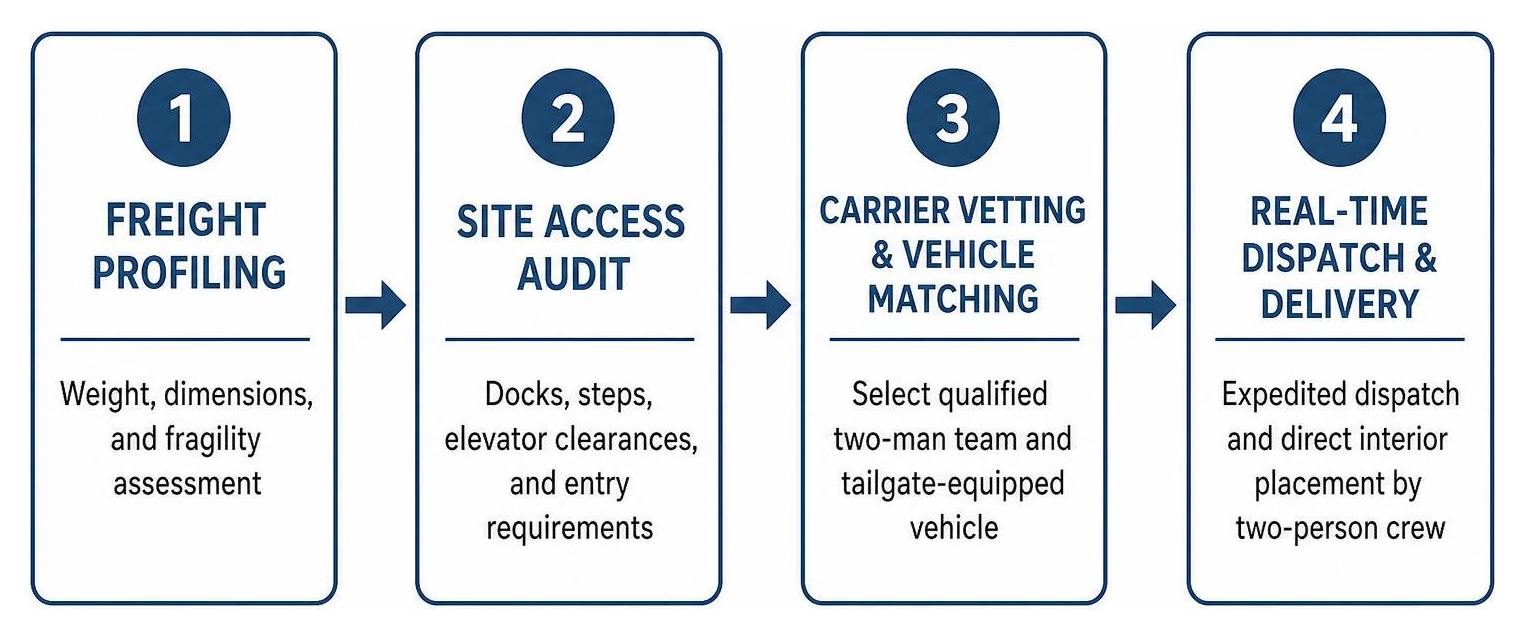
When regular freight schedules collapse or critical project deadlines loom, rapid implementation prevents operational downtime. Scheduling a dedicated two-person crew requires clear communication of freight specifications and site conditions.
How to Book a Dedicated Two-Person Crew
To guarantee a smooth, delay-free delivery, compile the following specifications during initial booking:
- Consignment Dimensions and Weight: Precise measurements of crates, pallets, or unpacked units to verify handling requirements.
- Site Access Clearances: Details regarding loading dock heights, liftgate requirements, doorway widths, elevator dimensions, and stairs (including tight spiral or narrow staircases).
- Time Windows: Specific operating hours, building delivery windows, or after-hours commercial delivery constraints.
- Service Scope: Specifying whether basic threshold placement, room-of-choice positioning, unboxing, or debris removal is needed.
Automated Tracking and Real-Time Notifications
Time-sensitive business freight requires absolute visibility. Through automated status alerts and electronic Proof of Delivery (e-POD), logistics coordinators and project managers monitor each milestone:
- Pre-Arrival Notifications: Accurate dispatch updates and advance calls to site managers to ensure loading docks and hallways are clear.
- Live Transit Monitoring: Continuous tracking from initial pickup through final offload.
- Digital Completion Records: High-resolution delivery photos and time-stamped digital signatures confirming pristine, room-of-choice placement.
Frequently Asked Questions About Two-Person Delivery
What weight limit can standard two-man crews handle?
Standard two-person teams safely handle individual items up to approximately 150 kg (330 lbs) using manual handling techniques and standard equipment like hand trucks and straps. For heavier machinery or dense commercial crates exceeding this limit, shipments are coordinated with specialized machinery, hydraulic stair-climbers, or additional crew members.
How do delivery teams handle tight staircases and upper floors?
Before navigating multi-story commercial facilities without elevator access, teams assess the complete access pathway. Crews use ergonomic shoulder harness systems, stair dollies, and corner protection wraps to navigate stairwells, tight landings, and commercial fire stairs safely without risking injury or property damage.
How is delivery quality and precision measured?
Logistics performance is measured against rigorous Key Performance Indicators (KPIs), including:
- On-Time Delivery Precision: Adherence to scheduled delivery windows.
- First-Attempt Success Rate: Completing inside placement without access delays or returns.
- Zero-Defect Rate: Ensuring cargo and facility structures remain completely undamaged.
- Customer Satisfaction (CSAT/NPS): Fast, transparent resolution of any delivery inquiries via dedicated tracking portals.
Conclusion: Delivering Reliable Expedited Freight Nationwide
When high-value cargo must arrive on time, intact, and placed directly inside your commercial facility, standard curbside delivery leaves too much to chance. Pro Express Inc. brings nearly 20 years of freight brokerage experience to every shipment, connecting businesses with a vetted carrier network across the United States, Alaska, Hawaii, and North America.
Whether you are recovering from a carrier failure, managing critical deadlines, or coordinating high-stakes medical and commercial deliveries, our coordinated carrier network ensures fast, reliable, and secure transit. Partner with our team to arrange specialized expedited courier delivery services and safeguard your critical freight from pickup to final room-of-choice placement.