
Why Choosing the Right Large Parcel Delivery Service Can Make or Break Your Supply Chain
Large parcel delivery is one of the most operationally complex challenges logistics managers face — especially when shipments are time-sensitive, high-value, or oversized.
Here’s a quick breakdown of the top-rated large item delivery services and what sets them apart:
| Service Type | Best For | Key Feature |
|---|---|---|
| Same-Day Hot-Shot Courier | Urgent, last-minute freight | Dedicated vehicle, no stops |
| Next-Day Expedited Ground | Planned critical shipments | Guaranteed delivery windows |
| White Glove Delivery | Fragile or high-value cargo | Two-man team, inside delivery |
| Liftgate Service | Heavy equipment, machinery | Truck-mounted lift for ground-level drop |
| LTL / Partial Truckload | Oversized bulk freight | Cost-efficient for 150+ lb shipments |
Not all carriers are equipped to handle oversized, heavy, or fragile freight — and when a carrier fails, the consequences ripple across your entire operation.
Consider this real-world scenario: a logistics team is prepping a critical shipment when they discover the cargo exceeds standard parcel limits. Without a reliable expedited freight partner on call, that deadline is already at risk.
That’s where having the right provider — one with proven infrastructure, 24/7 dispatch, and specialized handling — becomes essential.
This guide compares the leading large item delivery services so operations and logistics decision-makers can make an informed call before a crisis hits.
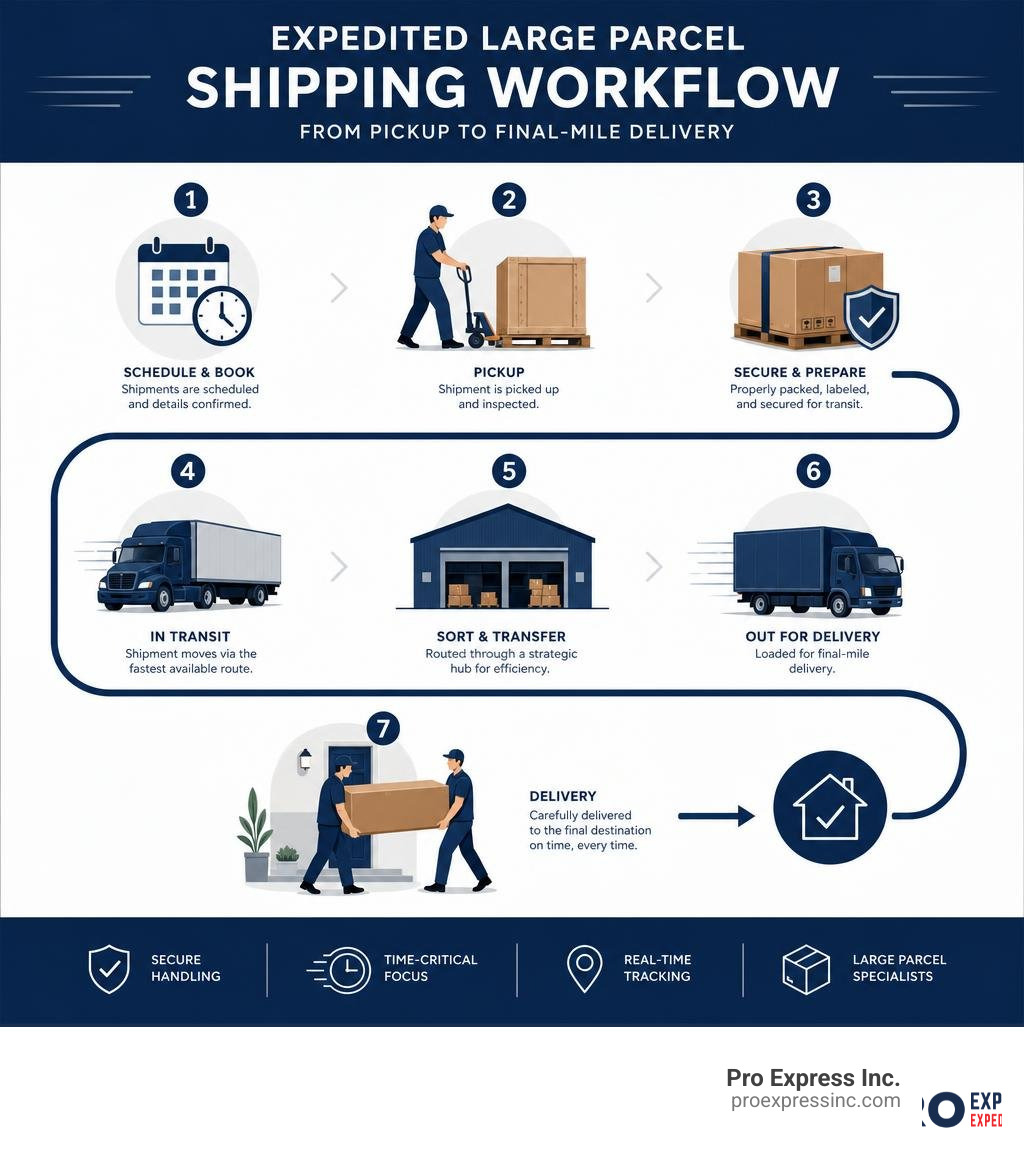
Basic large parcel delivery terms:
Understanding Weight and Size Thresholds for Large Parcel Delivery

Navigating the logistics of oversized shipping requires a clear understanding of where standard parcel networks end and specialized freight services begin. When handling heavy industrial components, medical equipment, or delicate commercial electronics, a minor miscalculation in dimensions can lead to immediate carrier rejection, unexpected handling surcharges, or prolonged transit delays.
To maintain a streamlined supply chain, operations managers must recognize the physical boundaries established by major national carriers. If your cargo exceeds these standardized limits, it transitions into the realm of specialized shipping. To learn more about managing these specialized logistics requirements, read our comprehensive guide on How to Handle Oversized Parcel Delivery.
Standard vs. Expedited Large Parcel Delivery Limits
In the shipping industry, weight and volume dictate the equipment, personnel, and routing required for safe transport. Standard parcel networks are optimized for automated sorting facilities and single-driver delivery vehicles. Consequently, they enforce strict operational thresholds:
- The 70 lbs (31.5 kg) Threshold: Once an individual package exceeds 70 lbs, it is classified as a heavy package. In standard parcel networks, this weight trigger requires specialized heavy package labeling and often mandates multi-person handling or mechanical assistance during sorting.
- The 150 lbs (68 kg) Freight Limit: Any single item weighing more than 150 lbs is officially classified as freight. Standard parcel couriers will reject these packages outright. Moving cargo of this scale requires specialized freight networks equipped with liftgates, pallet jacks, and heavy-duty freight vehicles.
- Length and Girth Limits: Physical size is just as critical as weight. Standard networks typically limit packages to a maximum length of 108 inches and a combined length and girth limit of 130 to 165 inches.
To determine if your shipment complies with basic courier standards or requires high-priority freight intervention, review the fundamentals outlined in Sending a Parcel 101.
How to Accurately Weigh and Measure Heavy Shipments
To prevent transit interruptions, terminal holds, or sudden carrier reclassification, you must establish an accurate measurement protocol within your warehouse or distribution center. Standard residential scales are insufficient for heavy cargo; industrial floor scales or heavy-duty platform scales are required to secure an exact weight.
To calculate the exact dimensions of your cargo, follow this standardized procedure:
- Measure the Longest Side: Determine the absolute longest point of the package, including any protrusions, handles, or protective packaging materials. This is your length ($L$).
- Measure Width and Height: Find the widest and highest points of the package.
- Calculate Girth: Use the standard industry formula: $text{Girth} = (2 times text{Width}) + (2 times text{Height})$.
- Calculate Total Combined Size: Add the length to the calculated girth ($text{Length} + text{Girth}$).
If this combined figure exceeds standard carrier allowances, or if the shape of the cargo is highly irregular, standard automated sorting systems will reject it. For step-by-step instructions on managing these non-conforming shipments, see How to Handle Oversized Parcel Delivery.
Key Service Features of High-Priority Large Item Shipping

When shipping mission-critical, high-value, or physically demanding cargo, basic dock-to-dock transport is rarely sufficient. High-priority logistics requires specialized service features designed to protect your physical assets and keep your operations moving without delay.
Tracking and Security Protocols for Large Parcel Delivery
For operations managers coordinating time-sensitive deliveries, real-time visibility is non-negotiable. High-priority shipping services utilize advanced tracking systems that go far beyond standard milestone scans.
- Real-Time GPS Tracking: Telematics hardware installed on dedicated transport vehicles provides continuous, live location updates, allowing logistics managers to monitor progress down to the minute.
- Photo on Delivery and GPS Verification: Upon arrival, drivers document the physical condition of the cargo at the exact drop-off coordinates, providing immediate, verifiable proof of delivery.
- Inside Delivery Status: For shipments requiring delivery past the loading dock, specialized tracking updates confirm when the cargo has been safely positioned within the receiver’s facility. To demystify these specific tracking updates, read our guide on Inside Delivery and Other Tracking Status Mysteries Solved.
Scheduled Pickup and Dedicated Courier Options
Standard carriers operate on rigid, pre-determined routes, which can result in missed windows and delayed collections. High-priority logistics providers offer on-demand, scheduled pickups tailored to your facility’s operational hours.
For maximum security and speed, a dedicated courier service assigns a specific vehicle solely to your cargo. This eliminates intermediate hub sorting, terminal transfers, and co-mingling with other freight, drastically reducing the risk of transit damage or routing errors. To explore the operational advantages of on-demand collection, read Everything You Need to Know About a Parcel Pickup Service.
Furthermore, for oversized shipments that cannot be handled by a single driver, utilizing a specialized two-man courier team ensures that loading and unloading are conducted safely and professionally. Learn how these specialized teams operate by reading The Heavy Lifters: A Complete Guide to 2 Man Courier Services.
Essential Packaging and Preparation Guidelines for Heavy Shipments
In the demanding environment of heavy freight transport, standard packaging materials will fail. Ensuring your cargo survives high-vibration truck transits, forklift handling, and shifting forces requires robust preparation and heavy-duty materials. For an overview of essential packing principles, read our guide on 7 Easy Steps to Ensure Your Fragile Parcel Arrives in One Piece.
Protecting Fragile and High-Value Large Items
When preparing heavy, fragile, or high-value items for expedited ground transport, consider the following structural guidelines:
- Utilize Double- or Triple-Walled Boxes: Standard cardboard boxes lack the burst strength required for heavy items. Always opt for heavy-duty, corrugated containers with stitched or stapled seams.
- Apply the H-Taping Method: Seal all box seams using heavy-duty, reinforced packing tape. Apply three strips to the top and bottom flaps to form an “H” shape, preventing the box from bursting under pressure.
- The Box-in-Box Method: For highly sensitive electronic or medical equipment, place the item inside a well-padded inner box, and then place that box inside a larger, heavy-duty outer container. Fill the void space with high-density foam or molded cushioning to prevent movement.
- Palletization and Banding: For items exceeding 150 lbs, secure the cargo to a sturdy wooden or plastic pallet. Use heavy-duty metal strapping or unbreakable plastic banding to anchor the load, and wrap the entire unit in multiple layers of industrial stretch wrap.
For professional insights on protecting delicate cargo during transit, refer to How to Pack a Fragile Item for Shipping Like a Pro.
Prohibited and Restricted Items in Heavy Freight
Before booking any expedited ground or air transport, it is critical to perform a compliance check on your cargo. Certain items are strictly prohibited or heavily restricted due to safety regulations, such as standard dangerous goods classifications:
| Category | Restricted Items | Compliance Requirement |
|---|---|---|
| Hazardous Materials | Industrial chemicals, solvents, explosives | Requires certified HAZMAT documentation and specialized vehicle placarding. |
| Power Sources | Lithium-ion batteries, wet-cell batteries | Must comply with strict packaging, labeling, and quantity limitations. |
| Pressurized Items | Aerosols, compressed gas cylinders | Restricted from air transport; requires specialized ground handling. |
| Liquids & Chemicals | Bulk liquids, flammable compounds | Must be sealed in secondary containment systems to prevent leaks. |
Failure to declare these materials can result in severe regulatory fines, immediate shipment seizure, and safety hazards during transit. For a complete breakdown of cargo restrictions, check our guide on Sending a Parcel 101.
Managing Urgent and Time-Sensitive Freight Logistics
In B2B logistics, a single delayed delivery can halt an entire production line, damage client relationships, and result in severe financial penalties. When standard shipping networks face capacity constraints or route disruptions, operations managers must have access to expedited alternatives.
Overcoming Carrier Failures and Last-Minute Delays
Carrier failures — such as missed pickups, terminal backlogs, or unexpected routing delays — are a common pain point for modern businesses. When a primary carrier fails to deliver, relying on standard customer support lines can result in hours of waiting without a resolution.
To mitigate these risks, logistics decision-makers partner with expedited ground specialists who offer 24/7 dispatching and dedicated logistics support. Rather than allowing your shipment to sit in a congested hub, expedited carriers deploy dedicated hot-shot vehicles to collect the cargo directly and transport it straight to the destination. To understand how to navigate these critical delays, read Why Your Package Is Taking the Scenic Route to Your Door.
Optimizing B2B Supply Chains for Heavy Cargo
For operations managers, optimizing the supply chain involves balancing speed, security, and efficiency. Depending on the size and urgency of your cargo, several specialized transport modes can be integrated into your logistics strategy:
- Less-Than-Truckload (LTL) Consolidation: Ideal for shipments that exceed standard parcel limits but do not require an entire trailer.
- Partial Truckload (PTL): A middle ground between LTL and full truckload, PTL shipping minimizes handling by keeping your cargo on a single vehicle from origin to destination, significantly reducing the risk of transit damage.
- Hot-Shot Shipping: Utilizing dedicated, light-to-medium duty trucks for rapid, direct delivery of time-sensitive industrial freight.
To streamline your commercial transport operations and reduce administrative overhead, explore the strategies outlined in Moving Like a Pro Without Lifting a Finger and The Delivery Man Service Guide: Moving Without the Backache.
Frequently Asked Questions About Large Item Shipping
What is the difference between oversized parcel shipping and freight?
Oversized parcel shipping refers to packages that exceed standard carrier size limits (typically over 130 inches in combined length and girth) but still weigh under the 150 lbs threshold. These items can often be handled within standard delivery networks, though they are subject to significant handling surcharges. Freight shipping applies to any cargo weighing over 150 lbs or exceeding 165 inches in combined length and girth. Freight shipments require palletization, specialized handling equipment (such as forklifts and liftgates), and dedicated freight transportation networks.
How can businesses prevent transit damage on heavy shipments?
Preventing damage to heavy cargo requires a combination of structural packaging and professional handling. Always utilize double- or triple-walled corrugated boxes, secure the cargo to heavy-duty pallets using steel or heavy plastic banding, and apply the H-taping method to all seams. Additionally, for highly sensitive, fragile, or high-value items, utilizing specialized white glove or two-man courier services ensures that the cargo is handled with dedicated care rather than being subjected to automated sorting systems.
What should I do if my scheduled carrier fails to collect an urgent shipment?
If your primary carrier fails to collect a time-sensitive shipment, you should immediately contact an expedited ground transport specialist. Waiting for a standard carrier to reschedule can result in missed deadlines. Expedited logistics providers offer 24/7 dispatch and can deploy dedicated hot-shot couriers or expedited ground vehicles to collect your cargo on short notice, bypassing regional terminal hubs to deliver your shipment directly to its destination.
Conclusion
In the world of B2B logistics, reliable large parcel delivery is a critical component of a healthy supply chain. When high-value, oversized, or time-sensitive cargo needs to move without delay, you cannot afford to rely on standard, automated parcel networks that are prone to congestion and rigid scheduling.
At Pro Express Inc., we bring nearly two decades of dedicated logistics experience to every shipment. Offering US-wide operations — including specialized transport services to Alaska, Hawaii, and across North America — we specialize in fast, reliable ground-expedited shipping. Whether your business requires same-day hot-shot delivery, next-day expedited ground, or specialized white glove and two-man courier services, our team is equipped to handle your most demanding cargo challenges.
With a track record of over 10,000 successfully delivered shipments and a 99% client satisfaction rating, our 24/7 customer support team is always ready to keep your operations moving.
Don’t let carrier failures or rigid size limits disrupt your supply chain. Request a Quote for Courier Delivery Services today and experience the difference of dedicated, professional logistics.